English
 Español
 Français
 Deutsch
 Italiano
 Português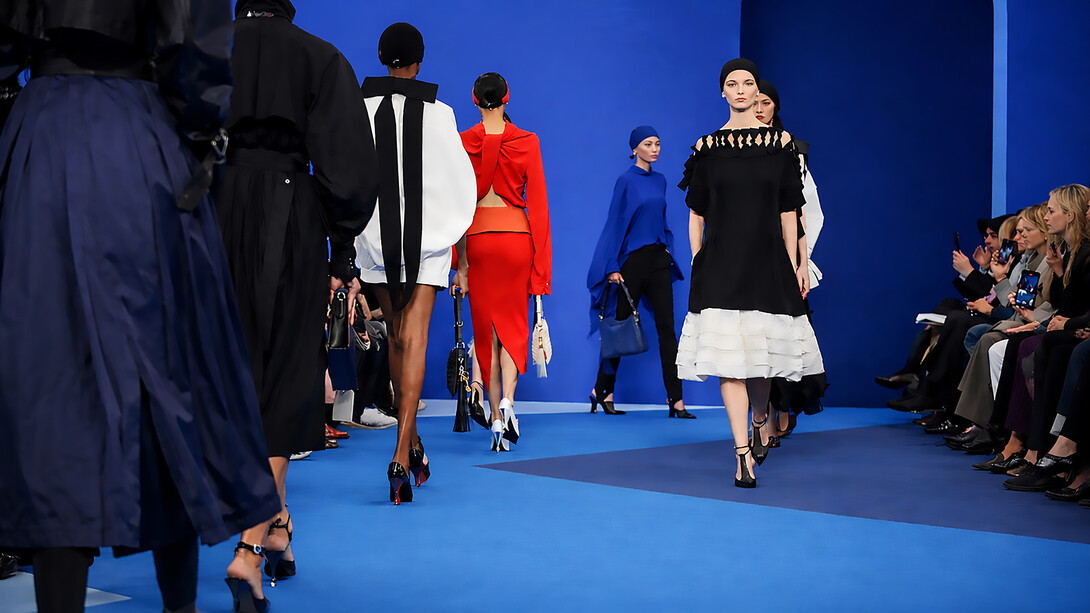
The Spring/Summer 2026 collection presented under Peter Copping introduced far more than a seasonal proposition for dressing—it offered a study in rhythm, atmosphere, and poetic movement. In this collection, the garments were not designed as static objects but as dynamic expressions shaped by beats, intervals, and sonic atmospheres. The runway became a resonating chamber where textiles, models, and light interacted with a carefully orchestrated musical progression. The result was a multilayered narrative that used rhythm to structure emotion, memory, and the gentle evolution of form.
To understand the SS26 show is to listen—to feel the slow-building tension of a prelude, the swelling crescendo that animates the middle passages, and the hushed diminuendo that resolves the final looks. Copping has long been associated with craftsmanship, refinement, and an intuitive understanding of softness. But SS26 revealed something deeper: a willingness to use sound as a narrative device, not as a backdrop but as a structuring force that shaped the entire dramaturgy of the collection. The music became a score for the clothing, and the clothing became an extension of the music’s emotional grammar.
This article explores how Copping integrated each portion of the collection—early serene pieces, mid-show elevated silhouettes, and late-show romantic dénouements—with the beats and cadence of the soundscape. Through this lens, we discover how rhythm guided not only the garments’ construction but also the way the audience experienced the storytelling embedded in the clothes.
Prelude: the first beat—establishing emotional tone
The show opened with an atmosphere of quiet restraint. The music began with a sustained low register, almost like breath: a slow, sustained drone punctuated by faint percussive murmurs. This sound set the emotional key for the opening chapter—an impressionistic environment where stillness and introspection were the dominant moods.
The first look mirrored this sonic minimalism. Lightweight fabrics—crisp poplins, translucent voiles, and matte silks—moved with a considered subtlety, as though they were responding to the quiet beat underneath. These garments were built on straight, vertical lines: elongated shirts, minimal tunics, column skirts, and unembellished trousers. The silhouettes were clean yet emotionally laden, shaped by precision but softened by delicately sloped shoulders and understated volume.
Rhythm became a metaphor for breath. These early silhouettes moved with the pace of an inhale and exhale, never rushing, never forcing. The models appeared almost suspended in time, as if the first beat of the narrative was a memory being recalled gently. In this sense, Copping used the musical prelude not merely to establish mood but to position the audience inside the psychological interiority of the collection. It felt like the story began at dawn, in a moment where silence still carries traces of the night before.
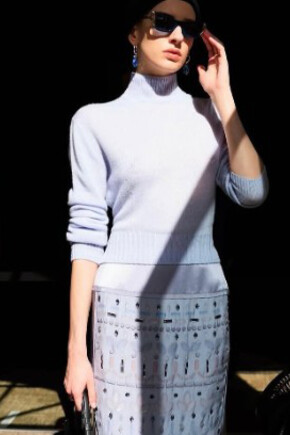
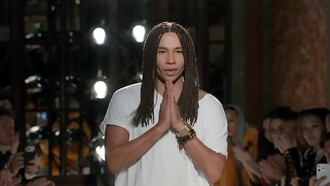
Light, too, played into the rhythm. A sharp diagonal beam cut across the models' faces—much like the dramatic shadow in the photograph the user uploaded—symbolizing the tension between illumination and obscurity, presence and disappearance. This chiaroscuro reinforced a musical motif: the interplay between the steady beat (darkness, weight) and the flickering grace notes (light, translucency).
Thus, the first section of SS26 introduced the collection as an emotional score, situating the viewer inside a world where the beat is slow, intimate, and deeply human.
First crescendo: when rhythm awakes the body
As the musical composition unfolded, the beat began to shift. Soft percussive taps—delicate but intentional—signaled the first crescendo. These beats guided the transition from structured minimalism into garments that embraced motion and complexity.
The silhouettes followed this progression. Dresses became more fluid, blouses gained a subtle ripple through bias-cut draping, and skirts responded beautifully to the increased tempo. The fabrics no longer simply hung; they moved with the rhythm. Chiffons fluttered, satin panels swayed, and unexpected pleats opened and closed in response to each step.
This section of the show demonstrated Copping's mastery of revealing the body without exposing it. The increased musical tempo brought the garments to life, highlighting the tension between control and release. The choreography of the models grew more pronounced—they walked with slightly elongated strides, coordinating their motion with the developing beat, as if their bodies were instruments amplifying the sonic texture.
Layers—once quiet and linear—began to converse. Sheer overlays floated above opaque underpinnings, like echoes of sound. The interplay between transparency and density became a metaphor for harmony: the beat grounding the body while the melody—light fabrics and flowing shapes—rose above it.
Copping’s approach in this segment emphasized the sensuality of movement. Rhythm was not external; it became embedded in the textiles themselves. The garments felt alive, and the audience could sense that the narrative was shifting from contemplation to awakening. SS26 was no longer just a collection; it had become a kinetic poem.
Mid-show climax: beats, structure, and emotional height
Every compelling narrative requires a moment where all its threads come together in full force. In SS26, this moment corresponded to the musical high point, where the beat became assertive, layered, and propulsive. A stronger bass line entered, accompanied by rhythmic strings that injected urgency and emotional density into the space.
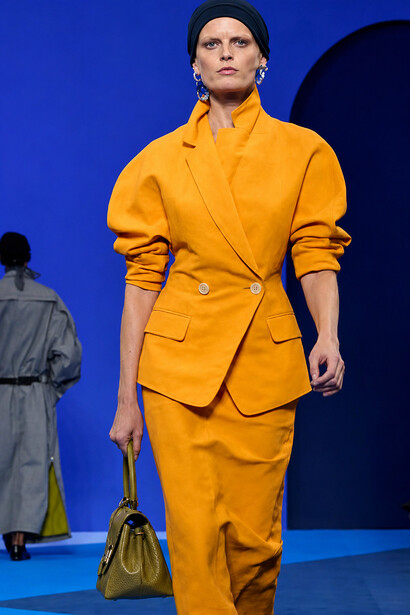
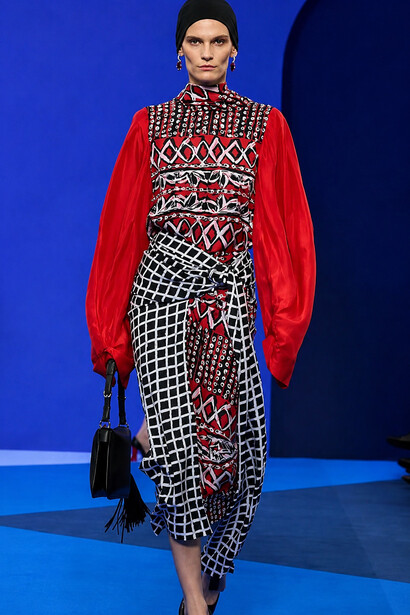
Copping responded with his most architecturally assertive designs. Tailored jackets were sharpened at the shoulders but softened by rounded edges. Corseted pieces appeared, though they refused old notions of rigidity; instead, they curved around the body like musical phrases built on tension and resolution. Skirts erupted with asymmetric folds, echoing the offbeat syncopation of the music. Even the color palette intensified: muted tones gave way to deeper hues—midnight blues, soft aubergines, and mineral greens—signaling emotional depth.
The structural garments interacted with the beat in fascinating ways. Each rhythm seemed to reveal the mechanics of the clothing—how a dart curved, how a pleat expanded, how a sleeve flexed. Viewing these pieces felt like seeing the internal architecture of music: the pattern beneath the melody.
This portion of the show suggested a narrative of confrontation—not aggression, but a grappling with inner complexity. The beat represented uncertainty, drive, and desire, while the garments translated these feelings into form. The audience witnessed a woman stepping into her power: every silhouette expressed a confidence grounded in craftsmanship and emotional intelligence.
Copping’s storytelling reached emotional fullness in this section because the beat was not just a soundtrack; it served as a force of transformation. The garments were sculpted, confident, and emotionally resonant, offering a vision of femininity that balanced vulnerability with strength.
Release and softening: the diminuendo
As the music began its gradual decrescendo, a sense of release entered the room. The beat softened—still present, but no longer dominant. It became a pulse rather than a command. The musical texture shifted toward melodic strings and faint choral notes, evoking a sense of resolution and gentle nostalgia.
Copping mirrored this sonic shift with silhouettes that relaxed and opened. The architectural tension of the mid-show looks gave way to fluid dresses, cascading layers, and airy textiles. Satin bias-cut gowns traced the body softly, as though sliding across the rhythm rather than following it. Organza coats are feathered with movement, creating a halo effect around the models.
In these concluding looks, Copping returned to minimalism but a different kind from the opening chapter. This was not introspection; it was acceptance. The rhythm had carried the narrative through confrontation and intensity, and now the story eased into serenity. The garments felt like the embodiment of an exhale.
Here, Copping’s emotional intelligence shone. The show did not conclude with spectacle but with tenderness. The music, textiles, and silhouettes aligned in a way that conveyed emotional closure. The final looks delivered a kind of peace—an earned quiet, not an imposed one.
The narrative logic of rhythm in SS26
The true brilliance of Copping’s SS26 lies in how the music was not used merely for ambience but as a structural device for storytelling. Rhythm defined the architecture of the collection, shaping each chapter of the narrative:
The prelude set the emotional tone: introspection, restraint, and the slow emergence of memory.
The first crescendo awakened movement, giving life to fabric through rhythm.
The climax demonstrated emotional intensity, translating beats into structure and silhouette.
The diminuendo brought resolution, returning to softness while acknowledging the journey taken.
In essence, SS26 functioned like a symphony. Each look was a measure within a larger composition. Rhythm gave coherence to the emotional journey, ensuring the audience experienced the show not just visually but viscerally.
Copping’s sensitivity to rhythm also reflected his broader design ethos. His work has always balanced classic refinement with subtle experimentation. But SS26 revealed a renewed confidence in emotional storytelling—a belief that garments can carry the weight of feeling, memory, and time.
Music provided the key to unlocking this emotional narrative. Through beats, intervals, and tempo shifts, Copping shaped the perception of each silhouette. The clothes became a living choreography of form and sound.
This approach is particularly relevant in contemporary fashion, where the industry increasingly values emotional resonance over surface-level spectacle. SS26 offered an antidote to maximalist noise: a narrative built through rhythm, where craftsmanship and feeling were equally prioritized.
The human element: a portrait of sensitivity and depth
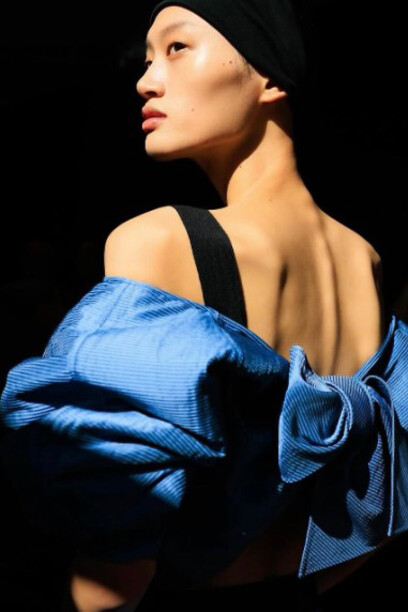
Although fashion shows often focus on the garments, the human presence behind the work is equally essential. The mood conveyed in the photograph—half in shadow, half illuminated—captures the duality that permeated SS26. It suggests a designer who understands the complexity of emotion: the interplay between what is revealed and what remains internal. This sensibility coursed through the entire collection.
The SS26 story was ultimately about the human experience of rhythm. Our lives move in pulses—moments of stillness, moments of acceleration, moments of intensity, and moments of release. Copping distilled this universal rhythm into form. He crafted silhouettes that breathe, react, and respond, translating the immateriality of sound into the materiality of drape and cut.
His vision presents fashion not as an object but as a sensory experience, one that honors the emotional intelligence of its wearer. The rhythm of the show did not force a narrative; it suggested one, allowing each viewer to project their own memories, associations, and desires onto the garments.
This delicate balance—between authorial storytelling and audience interpretation—is what made SS26 resonate so deeply. Rhythm became a shared language, one that connected designer, models, clothes, music, and audience in a single emotional continuum.
Fashion as a score of emotion
Peter Copping’s SS26 collection stands as a testament to the integration of music and fashion as parallel modes of storytelling. The beat shaped the narrative, guiding the evolution of silhouettes and the emotional shifts in the runway’s atmosphere. Through rhythm, Copping explored softness, structure, tension, and release, crafting a collection that felt like a living musical composition.
What SS26 ultimately demonstrated is that fashion can transcend the visual. It can activate a multisensory dialogue—between body and beat, fabric and sound, and memory and movement. Copping used rhythm to humanize design, grounding it in emotional cadence rather than superficial gesture.
In a fashion landscape often driven by speed and spectacle, SS26 offered a rare experience: a reminder that beauty can be quiet, powerful, and deeply felt. The beats of the music did not just accompany the clothes—they carved the emotional arc of the show, allowing Copping to tell a story of vulnerability, power, and renewal.
Through rhythm, SS26 became not just a collection but a resonant score of emotion.