English
 Español
 Français
 Deutsch
 Italiano
 Português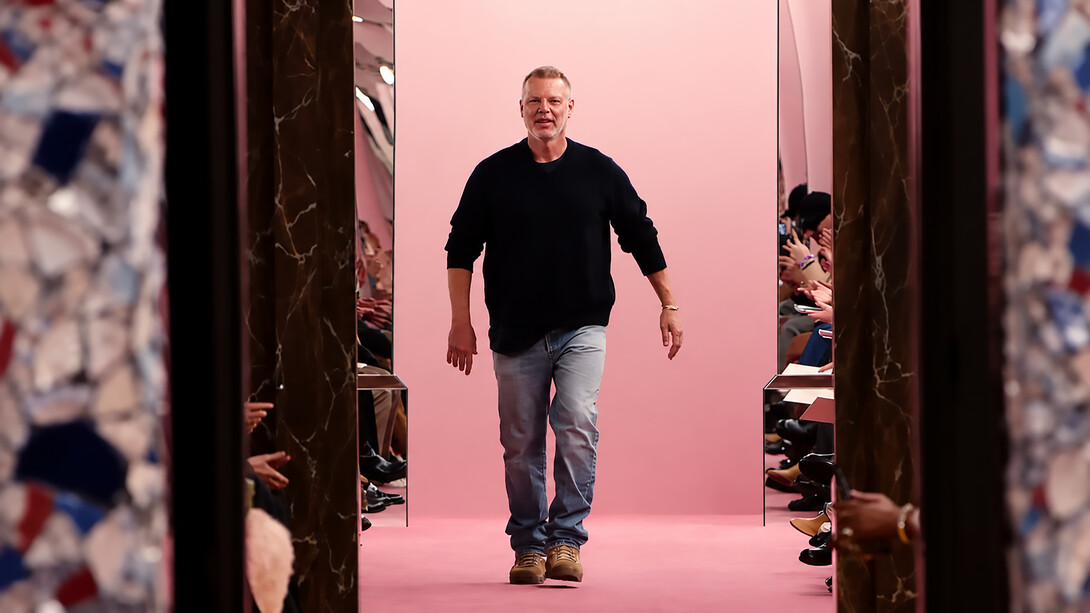
Acne Studios has never functioned as a fashion house in the conventional sense. Under the long-standing creative direction of Jonny Johansson, the brand operates instead as a living system of tension—between art and utility, emotional introspection and urban pragmatism, Scandinavian restraint and continental excess. Since its inception, Acne Studios has resisted linear brand narratives, favouring ambiguity, contradiction, and process over polished resolution. The SS26 fashion show once again confirms this stance, presenting a collection that feels less like a seasonal offering and more like a philosophical checkpoint within an evolving cultural inquiry.
Johansson’s design language has always been deeply autobiographical yet intentionally opaque. Rather than communicating personal stories directly, he translates emotional states into material negotiations: stiffness versus fluidity, opacity versus translucency, structure versus collapse. SS26 marks a subtle but significant recalibration of these tensions. It introduces a heightened sensitivity to silhouette distortion, surface instability, and visual interruption—suggesting that Acne Studios is moving toward a new phase where form becomes a site of hesitation rather than assertion.
This article situates the SS26 show as a critical hinge between past and future—reading it not only as a standalone presentation but also as a preparatory field for FW26, where Acne Studios may further radicalise its visual language. By examining Johansson’s creative philosophy, the SS26 runway’s visual and spatial strategies, and emerging signals within material and image-making, this essay proposes possible directions for Acne Studios’ FW26 season and beyond.
Jonny Johansson: designing from emotional friction
Jonny Johansson’s creative methodology resists spectacle in favour of emotional friction. Unlike designers who foreground narrative clarity or overt political statements, Johansson operates through internal disturbance. His collections are rarely about what is seen at first glance; instead, they unfold gradually, often requiring repeated encounters to be fully understood.
This approach is deeply rooted in Johansson’s Scandinavian background, but crucially, it is not nostalgic. Acne Studios does not romanticise Nordic purity or minimalism. Rather, Johansson consistently destabilises those associations, inserting discomfort into what might otherwise feel serene. His silhouettes frequently appear incomplete, garments look shifted or misaligned, and proportions resist classical harmony. These gestures are not stylistic quirks—they are philosophical acts.
At its core, Johansson’s work interrogates the idea of identity as something fixed. Clothing, in his universe, is not an instrument of self-definition but of self-questioning. Acne Studios proposes that identity is porous, transitional, and often unresolved. SS26 extends this philosophy, presenting garments that appear caught mid-transformation—neither fully constructed nor entirely undone.
SS26: the aesthetics of suspended resolution
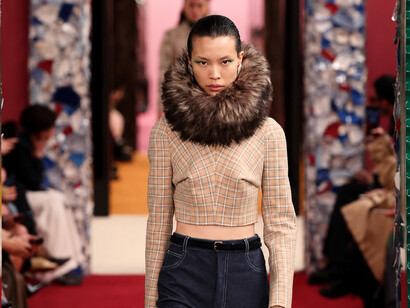
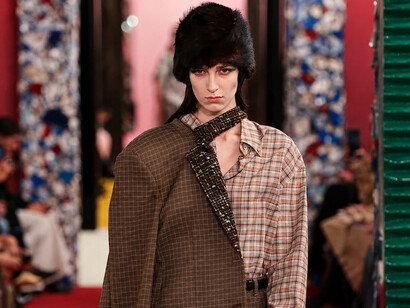
The SS26 collection can be read as an exploration of suspended resolution. Rather than offering visual closure, the show foregrounds moments of pause, interruption, and delay. Silhouettes appear elongated but unsettled; tailoring is present yet softened, almost hesitant. There is a palpable sense that garments are holding their breath.
Key visual characteristics of SS26 include the following:
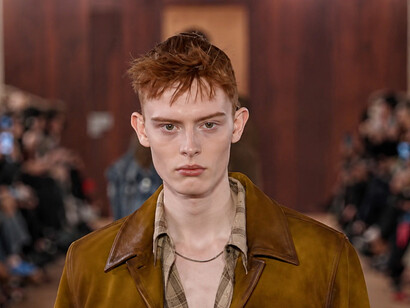
Disrupted tailoring: jackets and coats retain classical frameworks but are destabilised through asymmetrical closures, unexpected fabric junctions, or softened shoulder lines. The authority of tailoring is present, yet quietly undermined.
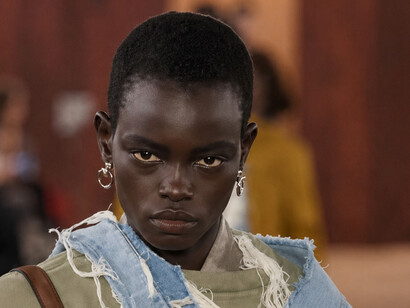
Material ambiguity: fabrics oscillate between technical smoothness and tactile irregularity. Matt surfaces are interrupted by subtle sheen; rigid textiles collapse into draped forms mid-body.
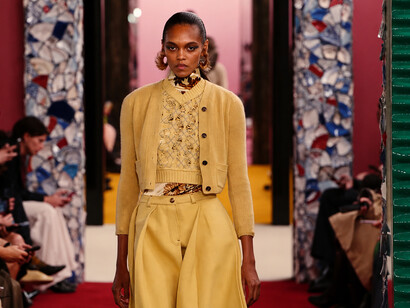
Chromatic restraint with emotional undercurrents: the colour palette remains characteristically restrained—muted neutrals, washed pastels, and desaturated tones—but carries emotional weight through layering and tonal friction.
Visually, SS26 avoids theatricality. There are no dramatic gestures meant to dominate social media feeds. Instead, the collection demands proximity. It is a show designed to be looked at closely, reinforcing Acne Studios’ long-standing resistance to instant legibility.
The runway as a psychological space
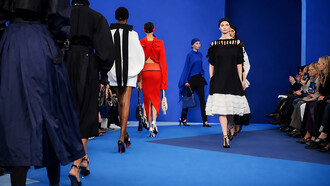
The spatial and visual presentation of the SS26 show plays a crucial role in articulating Johansson’s intentions. Rather than treating the runway as a neutral platform, Acne Studios constructs it as a psychological environment—one that amplifies the emotional ambiguity of the garments.
Lighting is subdued, often flattening the space rather than dramatising it. This flattening effect denies hierarchy; no single look dominates the visual field. Models move with deliberate neutrality, neither empowered nor submissive. Their presence reinforces the idea that the garments are not costumes for performance, but extensions of inner states.
This refusal of spectacle aligns Acne Studios with a broader shift in contemporary fashion toward anti-spectacular luxury. In a landscape increasingly saturated with algorithm-driven aesthetics, SS26 positions itself as an act of quiet resistance—suggesting that true relevance may now lie in opacity rather than exposure.
Material as narrative: the politics of texture
One of the most compelling aspects of SS26 is its treatment of material as narrative. Johansson does not rely on overt storytelling devices; instead, meaning is embedded in texture, weight, and movement.
The garments often appear to negotiate with gravity—some resisting it through stiffness, others surrendering through fluid drape. This dialogue creates a visual rhythm across the collection, echoing the emotional oscillation between control and vulnerability.
Notably, SS26 avoids decorative excess. Any embellishment feels functional, almost incidental. This restraint reinforces the idea that Acne Studios is less interested in visual pleasure than in sensory engagement. The wearer is invited to feel the garment, to experience its tension against the body.
This approach anticipates a potential FW26 direction where material innovation may become even more central—possibly incorporating hybrid textiles, layered transparencies, or surfaces that evolve over time through wear.
Acne Studios and the question of gender fluidity
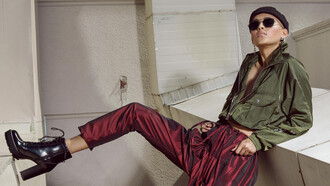
Gender fluidity has long been integral to Acne Studios’ identity, but SS26 treats it with renewed subtlety. Rather than blurring gender through overt androgyny, the collection destabilises gendered codes through proportion, texture, and posture.
Garments traditionally associated with masculinity—structured coats and tailored trousers—are softened or elongated, losing their authoritative stance. Conversely, fluid garments resist romanticisation, maintaining a sense of restraint that avoids overt femininity.
This refusal to clearly signal gender aligns with Johansson’s broader philosophy: identity is not something to be displayed but something to be negotiated. In SS26, clothing becomes a site of quiet ambiguity, offering wearers space to project themselves rather than conform to predefined categories.
Looking toward FW26, this approach may evolve into even more radical forms of gender-neutral construction—possibly through modular garments or adaptable silhouettes that shift depending on movement or layering.
From SS26 to FW26: signals of an emerging direction
While SS26 remains grounded in Acne Studios’ established vocabulary, it also contains subtle signals pointing toward future evolution. These signals are not declarations; they are whispers—visible only to those willing to read between the seams.
Increased structural experimentation: several SS26 looks hint at a growing interest in architectural experimentation. Panels appear displaced, seams are intentionally visible, and garments suggest internal frameworks. FW26 may expand on this by exposing construction more explicitly, turning garments into diagrams of their own making.
Expanded emotional palette: though SS26 maintains chromatic restraint, there are moments of unexpected warmth—soft earth tones and gentle, skin-like hues. These suggest a potential shift in FW26 toward a more emotionally expressive palette without sacrificing Acne Studios’ signature restraint.
Visual slowness as strategy: perhaps most importantly, SS26 reinforces Acne Studios’ commitment to slowness—both in consumption and perception. FW26 may push this further, challenging seasonal logic altogether by introducing pieces designed for long-term wear, adaptation, and reinterpretation.
The future visual identity of Acne Studios
Beyond garments, Acne Studios’ future visual direction likely lies in the continued refinement of its image-making practices. Johansson has consistently collaborated with artists, photographers, and set designers who share his interest in ambiguity and restraint.
For FW26, one could imagine the following:
Campaign imagery that resists narrative closure, favouring fragmented compositions or obscured bodies.
Store environments that feel more like contemplative spaces than retail destinations.
A continued blurring of boundaries between fashion, art, and installation.
In this sense, Acne Studios may increasingly position itself not merely as a fashion brand but as a cultural platform—one that produces clothing alongside images, spaces, and emotional experiences.
Acne Studios has an ethics of uncertainty
The SS26 fashion show confirms Jonny Johansson’s enduring relevance in an industry often driven by immediacy and excess. Rather than chasing novelty, Johansson refines uncertainty as an ethical and aesthetic position. Acne Studios does not promise clarity, empowerment, or transformation. Instead, it offers companionship in ambiguity.
As fashion moves toward increasingly polarised extremes—hyper-spectacle on one end, algorithmic uniformity on the other—Acne Studios occupies a crucial third space. It reminds us that clothing can still function as a site of thought, emotion, and resistance.
Looking ahead to FW26, the future of Acne Studios appears neither revolutionary nor nostalgic but intentionally unresolved. And perhaps that is Johansson’s most radical gesture: insisting that fashion, like identity itself, does not need to be solved – only continuously re-examined.