English
 Español
 Français
 Deutsch
 Italiano
 Português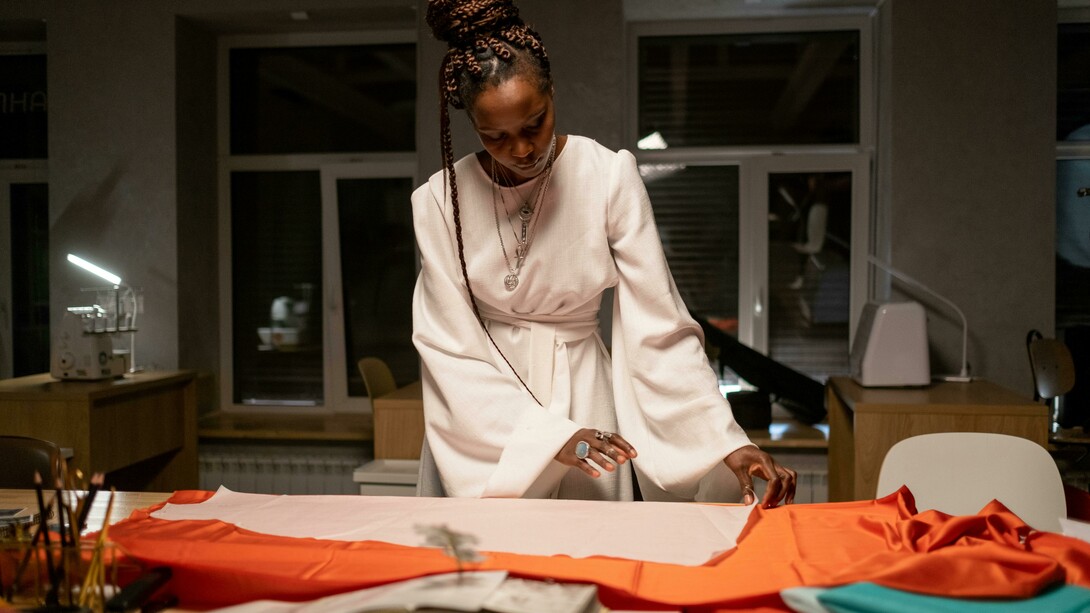
In a world drowning in discarded fabrics, lost scraps, and overflowing landfills, fashion is being challenged to rethink itself — not just slowly, but radically. What if our clothes could be made so thoughtfully that no fabric is wasted at all? That’s the ambition behind zero-waste design: a philosophy and a practice that turns production waste into a solved problem and transforms how we conceive, cut, and consume garments.
Zero-waste design isn’t about half-measures. It’s about designing from the first pencil stroke, pattern draft, or computer file so that every centimetre of cloth is used, and nothing ends up as off-cut. It’s not a fringe trend but a growing movement that reimagines what fashion could be: efficient, creative, and resource-respectful.
Why zero-waste design matters, beyond good intentions
The statistics are staggering: textile production and fashion create vast amounts of waste globally. According to research, conventional garment manufacturing discards around 15% of fabric during cutting alone.
That means for every 100 garments produced, a share of material—enough to make several additional items—is thrown away before the piece ever even leaves the factory. Multiply that across the millions of garments made annually, and the result is a mountain of waste, an unnecessary environmental burden, and a glaring inefficiency in resource use.
Zero-waste design challenges that paradigm by shifting waste prevention upstream—into design and planning—rather than downstream, where scraps are recycled (or not) after production. It’s not just “less bad”, but potentially “zero bad”. By doing so, it can save water, energy, and chemicals, and reduce the carbon footprint associated with textile waste production.
Moreover, zero-waste design forces designers and brands to innovate creatively. With constraints comes challenge — and with challenge, unexpected beauty. Garments born from zero-waste methods often look different: they reimagine silhouettes, seams, and assembly. In other words, zero-waste isn’t only a sustainability tool — it’s a catalyst for design innovation.
How zero-waste design works: techniques & philosophy
So how do designers translate this ideal into actual clothes? The approach centres on smarter pattern-making, clever cutting, and thoughtful material sourcing. Some of the most common and effective techniques:
Zero-waste pattern cutting: instead of laying out pattern pieces in a conventional way on fabric and leaving large margins of off-cut, designers rethink clothing patterns so that pieces fit together like a jigsaw—using the full width and length of the fabric. This may require geometric or modular pattern shapes or reimagined garment construction.
Draping, seam innovation & minimal cut-and-sew: some zero-waste garments rely more on draping, folding, or “fold-and-cut” strategies instead of traditional multi-piece construction. By reducing seams and parts, there is less waste, less production complexity — and a different aesthetic.
Use of deadstock or reclaimed fabric: often, zero-waste designers pair their pattern strategies with materials that might otherwise go unused—surplus fabric rolls (“deadstock”) or leftover textiles—giving new life to materials before they are discarded.
Upcycling & creative reuse of scraps: even when zero-waste cutting is imperfect, the remaining scraps are often creatively repurposed—into accessories, quilting details, patchwork, linings, or smaller garments—thereby minimising what ends up in waste streams.
Importantly, zero-waste design isn’t just a technical fix. It represents a shift in mindset — from seeing fabric as limitless to recognising material as precious, from an attitude of surplus to one of respect.
Tradition & innovation: it’s not a new idea
Interestingly, zero-waste is not purely a modern invention. Many traditional garments across cultures embody similar principles: the rectangular simplicity of a Japanese kimono, the draped grace of an Indian sari, or the uncomplicated wrapping of a Scottish kilt — all maximise fabric use with minimal cutting or waste.
What modern zero-waste designers are doing is not inventing a brand-new ideal but revisiting ancestral wisdom armed with contemporary tools: better materials, precise pattern software, global awareness of environmental impacts, and demand for sustainable fashion.
This fusion of traditional logic and contemporary creativity gives zero-waste garments a powerful potential: they are rooted in heritage but built for the future.
What zero-waste design means for the fashion industry & consumers
For the industry, adopting zero-waste design can lead to multiple benefits:
Reduced material costs, since less fabric is wasted per garment.
Lower environmental footprint: fewer discarded scraps, less energy and water wasted in producing surplus fabric, and less waste to manage.
Competitive advantage and brand reputation among increasingly eco-conscious consumers.
Sparks creative innovation: limitations often breed originality, encouraging designers to experiment with new shapes, minimalism, modularity, and upcycling.
For consumers, zero-waste design can offer clothing that is not only better for the planet but—often—more thoughtful, unique, and durable. When every cut of fabric is planned, and materials are used with respect, garments tend to have a different quality: less mass-produced, more meaningful.
And in a broader sense, zero-waste design invites a cultural shift: from consumption toward consideration, from fast fashion toward mindful use, and from disposable garments to lasting pieces.
Challenges, limits, and what it doesn’t solve (alone)
That said, zero-waste design isn’t a magic wand. There are trade-offs and limitations:
Design constraints: not all silhouettes, fits, or styles are easily compatible with zero-waste patterning — especially tailored, highly structured garments. The creative challenge can limit what is possible.
Complexity and cost: for large-scale mass production, mapping zero-waste patterns can be more time-consuming and require skilled designers. Sometimes it might be more expensive — at least at first — than conventional cutting.
Lifecycle not covered: zero-waste design addresses pre-consumer waste (fabric scraps during manufacture) but doesn’t automatically solve post-consumer issues — like garment disposal, microfibres, wear-and-tear, or overconsumption.
Scale & accessibility: For small artisans or niche designers, zero-waste may be easier. For large fast-fashion brands producing millions of garments with tight margins, scaling zero-waste can be difficult.
Thus, while zero-waste design is a powerful tool, it should be seen as part of a broader shift — not a sole solution.
Real-world moves: who’s embracing zero-waste (or could)
Around the world, a growing number of designers and small brands are experimenting with zero-waste design — not as a marketing label, but as a foundational philosophy. This approach is no longer theoretical: several pioneering designers and brands are proving it can work at scale.
One of the most cited examples is Timo Rissanen, a Finnish designer and academic who helped lay the foundations of modern zero-waste pattern cutting. During his time at the Parsons School of Design, he developed garments that utilised 100% of the fabric, demonstrating that zero-waste design is achievable even for complex silhouettes. His jacket and trouser designs — often showcased in exhibitions and academic publications — became benchmarks for the entire field. His work also influenced major fashion houses looking to rethink their cutting-room logistics.
Another influential figure is Holly McQuillan, co-founder of the Make/Use project in New Zealand. Her approach merges open-source pattern cutting with experimental silhouettes. The Make/Use garments are not only zero-waste but also engage the wearer as co-designer: pieces often come with modular patterns or adjustable constructions that encourage repair, transformation, and longevity. McQuillan’s work has been featured in museums and sustainability research hubs, helping bridge fashion innovation with public education.
In Europe, Pauline van Dongen, a Dutch fashion designer specialising in wearable technology, has integrated zero-waste principles into several collections by developing modular pattern blocks that reduce off-cuts to nearly zero. Her work demonstrates how zero-waste thinking can coexist with advanced materials and tech-infused textiles.
At the brand level, Tonlé, a Cambodian label known for its vertically integrated zero-waste cycle, has become a reference point. They use cutting-room leftovers from other companies, hand-weave new textiles from tiny remnants, and transform micro-scraps into accessories and paper. Their model shows that zero-waste is not only a design method but also a complete business philosophy that can generate social impact while reducing waste.
Independent designers working with deadstock fabric, vintage textiles, or remnant rolls are also building limited-run collections using zero-waste principles — proving that even small-scale fashion can be resource-smart. These practices show that sustainability is not reserved for luxury conglomerates; it can thrive in ateliers, collectives, and local design studios.
And consumers, too, hold power: by favouring garments made through waste-conscious production, by caring for clothes longer, by repairing rather than discarding, and by embracing quality over quantity, they help close the loop beyond design.
In industry terms, zero-waste design joins a wider systemic movement: circular fashion, thoughtful sourcing, sustainable material innovation, and increasing consumer awareness. When these elements converge, they begin to challenge the harmful cycles of fast fashion — turning garments into long-term companions, not disposable items.
A personal & cultural shift: why we should all care
Thinking of fashion as a puzzle to be solved — where every piece matters — invites a change in perspective. It makes us consider: how many clothes do we really need? How can design respect the materials and the process? What does “good clothes” mean — mere disposability, or longevity, ethics, and care?
Zero-waste design restores dignity to creation. It honours fabric as a finite resource, designers as craftsmen, and consumers as custodians rather than just buyers. It asks fashion to grow up, to stop pretending resources are infinite, and instead to embrace responsibility.
For the wearer, choosing zero-waste is a small but meaningful act of solidarity — with makers, with the planet, and with future generations. It can turn a simple dress or shirt into a statement: that fashion can be beautiful, functional, and kind.
Conclusion: waste not, want not, rethinking fashion’s footprint
Zero-waste design presents a compelling alternative to the wasteful, extractive logic that has long dominated fashion. By beginning not at cut or production, but at design, this approach seeks to eliminate waste before it even happens.
It’s not effortless. It demands creativity, discipline, sometimes greater cost, or slower processes. But it also offers an opportunity: to redefine what clothing is — not as disposable commodities, but as considered creations.
If we—designers, producers, consumers—embrace zero-waste not as a niche ideal but as a baseline, we could breathe new life into fashion’s promise. Garments would become less about volume, more about value; less about trends, more about attention; less about waste, more about meaning.
Because when every thread counts, clothes become more than fashion. They become a choice.