English
 Español
 Français
 Deutsch
 Italiano
 Português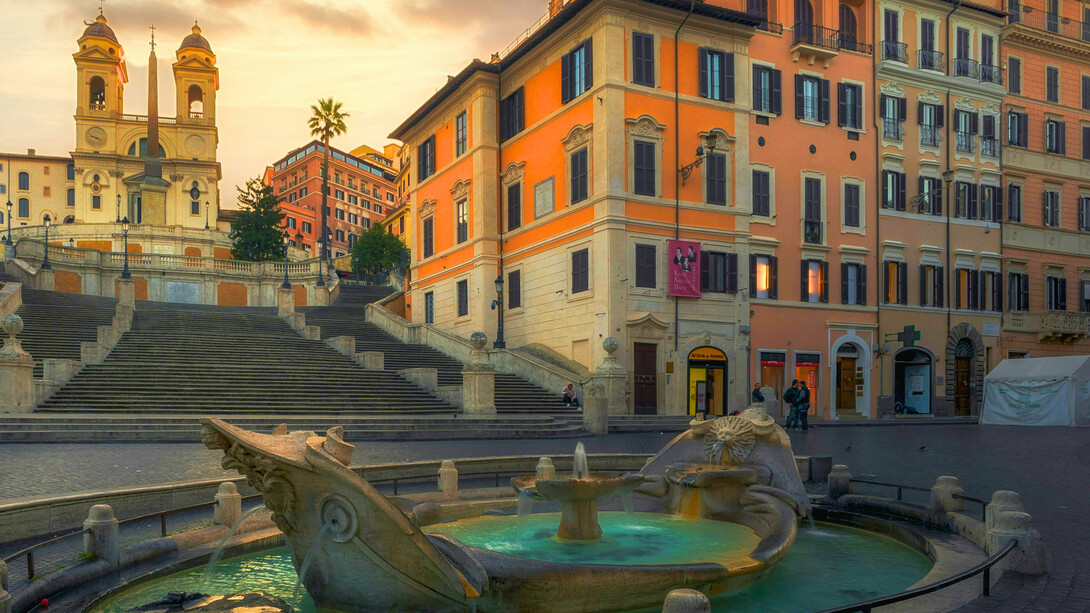
A century-old hotel near Piazza del Popolo becomes the base for a more personal Rome, shaped by family history, small museums, contemporary art, bicycles, and some memorable meals.
Rome has never been an entirely neutral city for me.
My grandfather, the photographer Erwin Blumenfeld, died here on July 4, 1969. He was 72. Born in Berlin, he had survived the First World War, internment in France during the Second, and eventual escape to New York, where he became one of the most successful fashion photographers of his generation. He worked for Vogue, Harper’s Bazaar, and Life, creating images that still look startlingly modern. Rome was the last chapter. He died here of a heart attack and was buried in the Italian capital.
I remember my father disappearing from our family’s Fourth of July celebrations to fly to Italy for the burial. Many years later, when I made a documentary about Erwin, The Man Who Shot Beautiful Women, I began asking questions that had been largely off limits when I was growing up. Why had he been in Rome? Why was he travelling with his much younger assistant, Marina Schinz? And what exactly had happened on the day he died?
The circumstances have always carried an element of mystery. Erwin had heart disease. The story that emerged through my research was that he had deliberately stopped taking his medication and exerted himself in the intense Roman heat, inducing the heart attack that killed him. Within the family, his death came to be understood as suicide. Perhaps inevitably, Rome became embedded in our family mythology long before I understood the city for myself.
So returning to Rome is never entirely about the Pantheon, the Colosseum, or deciding whether another Caravaggio can reasonably be fitted in before lunch.
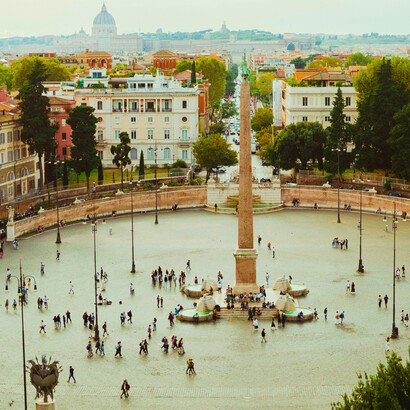
This time our base was Hotel Locarno, tucked into Via della Penna, behind Piazza del Popolo. The hotel opened in 1925, founded by Swiss hoteliers, and last year celebrated its centenary. Its history is unusually dramatic even by Roman standards. It was occupied first by Nazi forces and later by American soldiers during the Second World War. In the 1970s, decorator Maria Teresa Celli began restoring the property and rebuilding its reputation as a gathering place for artists, writers, and filmmakers. Federico Fellini was among its celebrated habitués.
There are luxury hotels that seem to have been completed last Thursday, every cushion approved by a committee. Hotel Locarno belongs to another species.
The place feels accumulated rather than styled. Art Nouveau lines, old furniture, patterned fabrics, chandeliers, mirrors, and slightly theatrical corners coexist without appearing to have received instructions from a global brand manual. It has personality, which is considerably rarer in a five-star hotel than marble.
We stayed in a Premium Corner room with balcony, a generous 40 square metres with Veneziana-style floors, a sitting area and a private balcony looking towards the domes around Piazza del Popolo. There was a large bathroom with a soaking bath and, most importantly, enough room to unpack without immediately turning the bedroom into the aftermath of a burglary.
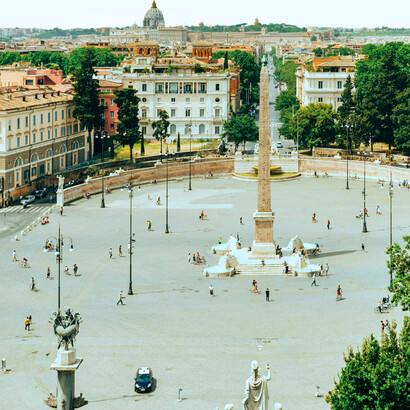
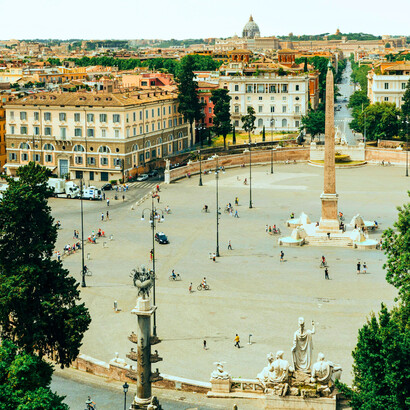
The balcony was a particular pleasure. Rome changes when viewed from slightly above street level. The noise becomes atmosphere. Domes appear between rooftops. Scooters cease to look life-threatening and become picturesque.
Much of the Locarno’s appeal lies outside the bedroom. Bar Locarno has the glamour of a bar that existed before bartenders needed to explain the narrative arc of a cocktail. Behind it is a garden dense with greenery, while the seasonal rooftop terrace looks across the Roman skyline towards Trinità dei Monti. The hotel serves food throughout the day and into the evening, allowing guests to eat in the garden, the bar, or on the terrace rather than being marched obediently towards a designated restaurant.
The location also encourages the sort of Rome I increasingly prefer: one discovered laterally rather than monument by monument.
One morning we took Lime e-bikes to the Museo Hendrik Christian Andersen, housed in the Norwegian-American sculptor’s former home and studio. Andersen commissioned the neo-Renaissance building in the nineteen-twenties and called it Villa Helene after his mother. Inside, enormous plaster and bronze figures inhabit two monumental studios, many connected to Andersen’s fantastically ambitious scheme for a utopian “World City” devoted to art, science, philosophy, and human improvement. There are more than 200 sculptures in the collection.
Arriving by electric bicycle somehow suited it. Andersen dreamed on an almost absurd scale; we arrived after negotiating Roman traffic using two battery-powered bicycles rented by telephone. Civilisation progresses in peculiar ways.
Rome is especially rewarding in its smaller museums, where the relationship between a person and a place remains intact.
At the Keats-Shelley House, beside the Spanish Steps, you enter the building in which John Keats spent the final months of his life and died of tuberculosis in 1821. The museum is devoted to Keats and the English Romantic circle, its intimacy made all the more striking by the torrent of visitors moving across Piazza di Spagna immediately outside.
The Casa Museo Mario Praz offers a completely different form of biography. Praz, the great scholar and Anglicist, spent some 60 years assembling more than 1,200 pieces of furniture, paintings, sculpture, porcelain, bronzes, silver, and other objects. Walking through the rooms feels less like visiting a museum than entering a highly cultivated mind that has somehow been converted into furniture.
There is also the Museo Carlo Bilotti, in the orangery of Villa Borghese, and nearby the much larger Galleria Nazionale d’Arte Moderna e Contemporanea. The latter holds around 20,000 works spanning two centuries of Italian and international art yet can feel remarkably uncrowded compared with Rome’s archaeological blockbuster attractions. Its Caffè delle Arti has a large outdoor terrace, providing a useful opportunity to recover from culture with coffee and lunch. Museums would probably attract even more visitors if humanity were told more often about their cafés.
One house I have still not visited is Casa Balla, the extraordinary apartment in which Futurist artist Giacomo Balla and his daughters transformed furniture, walls, and everyday objects into a complete work of art. It remains on the list for another trip. At the time of writing, the house is temporarily closed, which at least absolves me of personal failure.
Photography provides another reason to stray from the standard Roman programme. At the Ara Pacis, the current exhibition Robert Mapplethorpe: Le forme della bellezza brings together more than 200 photographs examining Mapplethorpe’s preoccupation with form and beauty. There is something particularly satisfying about seeing one of the twentieth century’s great manipulators of the photographic image beside Augustus’s ancient altar to peace. The exhibition runs into October 2026.
For contemporary art, Galleria Lorcan O’Neill and Maja Arte Contemporanea provide useful anchors for another kind of expedition. Lorcan O’Neill occupies a space at Vicolo dei Catinari, while Maja Arte Contemporanea is on Via di Monserrato.
But Via di Monserrato is one of those streets where having a destination rather defeats the purpose.
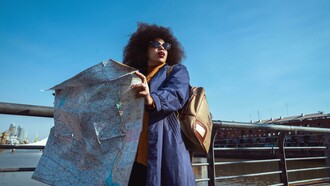
Enter it from Piazza Farnese and then, at some point, turn into one of the small streets on the right. Stop consulting the map. The reward is an older centre of Rome in which the volume seems to have been turned down: handsome façades, workshops, specialist shops, small galleries and artisan studios, with surprisingly few people apparently heading anywhere urgently.
This is the Rome I find increasingly compelling. Everyone should see the Sistine Chapel once. After that, getting mildly lost can be considerably more fun.
Food supplied its own geography.
At Sciccherie, in the Salario neighbourhood, we found a place built around small dishes and excellent ingredients rather than ceremony. Sciccherie describes itself as a bottega viva, a living food shop, rather than a restaurant with a continuously operating kitchen. That catches something of its character.
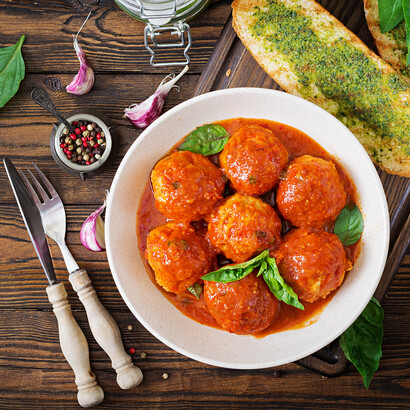
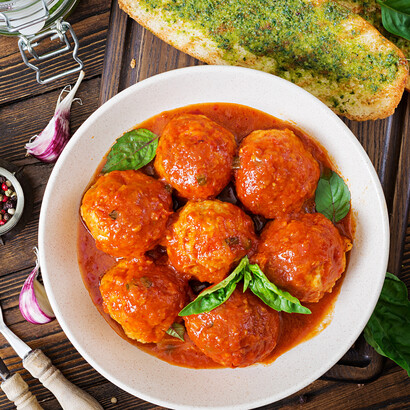
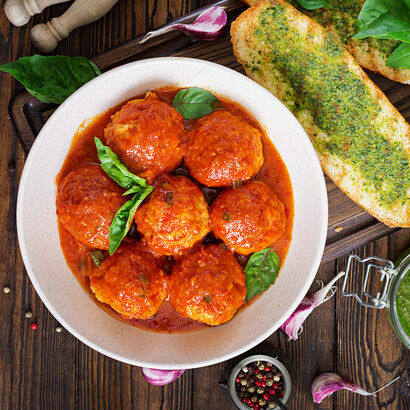
We ate meatballs in tomato sauce, an aubergine parmigiana unlike any I had previously encountered, and finished with lemon cheesecake. These were uncomplicated dishes in theory, but each arrived with the kind of concentration on ingredients that makes you realise how often supposedly simple cooking is anything but simple.
La Matricianella, where we later had dinner, offered another version of Rome. Founded in 1957 by a family from Amatrice and now run by brother and sister Giacomo and Grazia Lo Bianco, it is firmly rooted in traditional Roman cooking.
Roman menus can venture enthusiastically into tripe and assorted offal. We do not. This proved no impediment whatsoever. We navigated around the anatomical department of the menu and found plenty to eat in a restaurant that feels connected to an older, more domestic Rome. It was an instructive contrast with Sciccherie: one playful and contemporary, the other proudly traditional.
Another address worth knowing is Caffè Doria, inside Palazzo Doria Pamphilj at Via del Corso 305. It combines a bistro and cocktail bar with the rather considerable advantage of being inside one of Rome’s great palaces.
The instructions I received for meeting there were wonderfully Roman: come for drinks at 6:30; enter through the museum entrance and turn immediately left.
In most cities this would constitute inadequate directions. In Rome, it sounds like the beginning of a very good evening.
And that, ultimately, is what I increasingly want from the city.
Rome’s great monuments are so monumental that they can obscure the lives being lived around them. The pleasure of returning is being able to abandon the obligation to see everything. Instead, there are electric bicycles, a Norwegian sculptor’s utopian fantasy, an English poet’s bedroom, a collector’s apartment, an almost empty modern art museum, aubergine parmigiana, a small balcony above Piazza del Popolo, and a street where the best instruction is to get lost.
Hotel Locarno made an unusually appropriate base for such a visit. It has survived 100 years by absorbing different versions of Rome rather than erasing them. Artists, filmmakers, soldiers, writers, and travellers have passed through its doors. The city outside has repeatedly changed around it.
For me, there is another layer.
More than half a century ago, Rome became the city where my grandfather’s life ended. For years that fact existed separately from the Rome I knew as a traveller. On this visit, the two began to occupy the same landscape.
I could think of Erwin and still enjoy an aperitivo. I could remember my father flying here for his burial and then climbing onto an electric bicycle. Memory and pleasure do not cancel each other out. Cities are capacious enough to hold both.
Rome certainly is.
And perhaps that is the reason to return: eventually, somewhere between the monuments, you stop visiting somebody else’s Eternal City and begin to find your own.