English
 Español
 Français
 Deutsch
 Italiano
 Português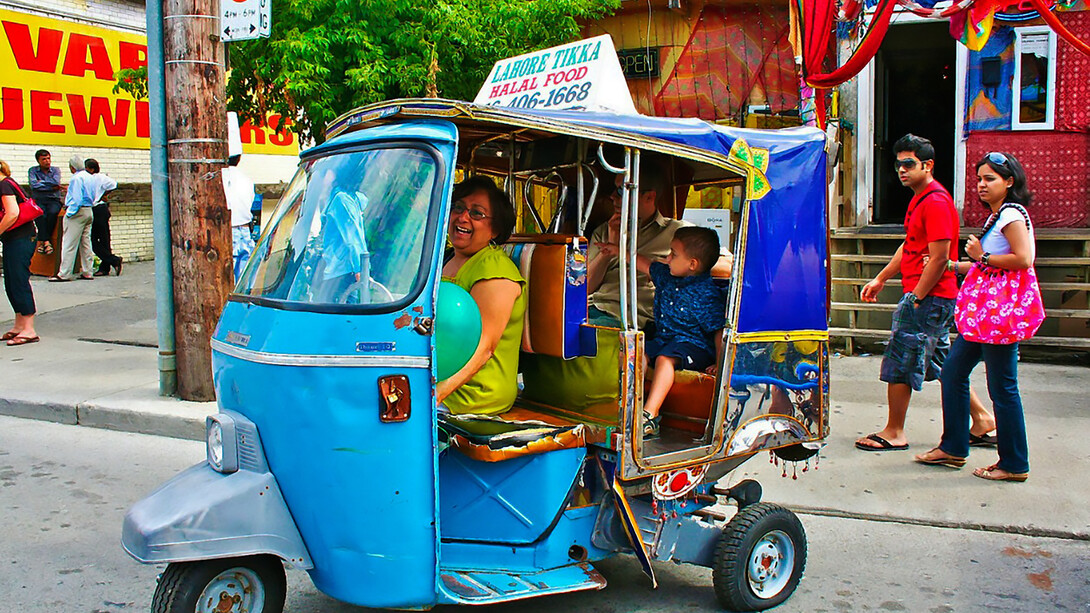
This article examines the rickshaw as a spatial, economic, and political agent in Lahore’s urban landscape. Through a historical and contemporary lens, the piece examines how rickshaw drivers negotiate their presence in the city amidst rising digital transportation platforms, changing urban policies, and informal tax regimes. Drawing on lived experiences, adda-based (stationed) operations, and regulatory precarity, the article positions rickshaw drivers as mobile protagonists asserting their right to the city: a right that is constantly undermined yet repeatedly rehearsed.
Overview: a wheeled city
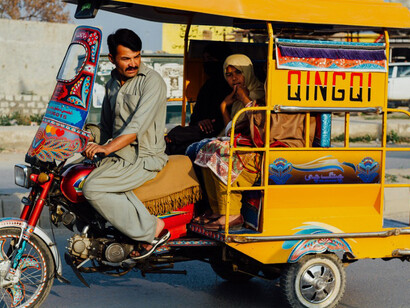
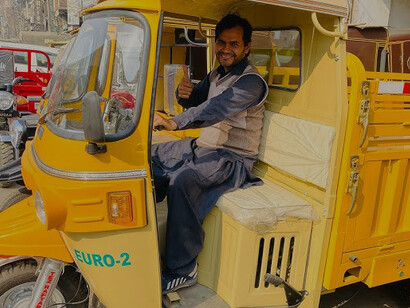
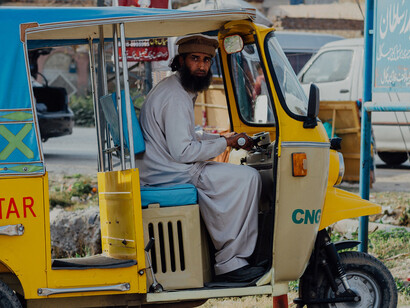
One of the most recognizable and timeless images of Lahore's streets is the rickshaw. They are mobile shelters, microbusinesses, and urban claim-makers, distinguished by their blaring horns, buzzing motors, and ornate exterior decorations. The purpose of this piece is to present rickshaw drivers as urban actors navigating and negotiating their role in a city that is fast changing due to neoliberal and technological influences, rather than only being carriers.
In addition to being made of concrete, the city is a living, breathing organism that is sustained by its inhabitants. Rickshaw drivers are one of these characters in Lahore; they are common, noisy, and sometimes disregarded, but they are inextricably linked to the socio-spatial dynamics of the city. This article views the rickshaw driver as a protagonist, a mobile urban actor whose work enacts the right to movement, informality, and survival, rather than as a supporting character in Lahore's urban theater.
The theoretical foundation for this is Henri Lefebvre's groundbreaking concept of the "right to the city." According to Lefebvre, the right to the city encompasses more than just access; it also entails involvement in creating and influencing the urban environment. Despite being informal, rickshaw drivers are a part of this production. In a city that is formalizing and digitizing at a rapid pace, their addas, routes, and resistance to regulation may be viewed as spatial rehearsals of everyday actions of negotiating mobility, survival, and belonging.
The historical development of autorickshaws from Tonga
Lahore's rickshaw history is interwoven with a broader background of urban transportation. In Lahore, autorickshaws developed from colonial and early post-colonial cycle rickshaws. The advent of automated rickshaws in the late 1960s and early 1970s gave the growing metropolis a faster and more effective means of transportation. Tongas, or horse-carts, and cycle-rickshaws were the primary modes of transportation on Lahore's streets before the introduction of auto-rickshaws in the 1960s.
As cities became more populated and people needed quicker ways to get about, motorized rickshaws were introduced. By the 1980s, two-stroke autorickshaws were the most popular and reasonably priced mode of public transportation for middle-class and lower-class people. But in the 2000s, four-stroke, CNG-powered variants were introduced in response to pollution concerns. Thus, the rickshaw turned into a place where public pressure, commercial demands, and environmental regulations met.
As a vital service for commuters and a source of income for many, these cars came to represent urban working-class life. In an otherwise anarchic transport ecosystem, the "adda" system, informally known as waiting spaces or taxi ranks, marked the creation of a spatial order. Over time, rickshaw addas were semi-institutionalized after developing naturally as a result of demand patterns and their close proximity to industrial areas, schools, and marketplaces. In order to maintain their right to occupy urban space, drivers frequently pay "unofficial taxes" or rent to the police or local government.
As an urban stage, "Adda or Stop": imperceptible mobility institutions
More than just parking lots, these rickshaw addas serve as urban gathering places where drivers wait, relax, mingle, bargain, and make plans. These are resistance spots as well. Drivers have demonstrated against the competition from app-based taxis, police harassment, and increases in gasoline prices. As a result, the adda becomes a microcosm of urban dynamics, serving as a community, workplace, protest venue, and social safety net. In a metropolis that constantly forces them to the outside, rickshaw drivers assert their place through this adda structure.
According to recent research by urbanist Muhammad Imran (2019), the adda is a "temporary commons" that is jointly created by state neglect, labor, and need. These commons must be reaffirmed every day via presence, dialogue, and perhaps bribery because they are not permanent. The rickshaw adda is a location of "rehearsal" in urban space because of this ongoing renegotiation.
There are hundreds of unofficial but well-organized rickshaw addas spread out around Lahore where rickshaw drivers congregate, relax, fix their cars, and wait for clients. These addas, which include those close to Chowk Yateem Khana, Bhatti Gate, Kalma Chowk, and Mochi Gate, serve as small centers for labor organizing and transportation.
These addas are structured even if they are casual. Drivers provide bhatta, or informal tax, to thugs, local transport unions, or occasionally dishonest police officials who let them use public areas. Particularly for drivers who do not own their cars and are paid daily, these addas provide some measure of stability and routine in an otherwise uncertain work environment.
Handling precarity: state control and informality
Despite their significance, rickshaw drivers face illegality and precarity in their work. The Lahore Traffic Police often carry out crackdowns, particularly before high-level events or foreign visits, when the city's image has to be cleaned up for diplomatic purposes. Additionally, rickshaw operators are subject to licensing, route permits, and emissions control requirements under the Motor Vehicles Ordinance of 1965 and its later revisions. Despite the fact that these rules are crucial for environmental and public safety reasons, drivers who cannot afford to deal with the red tape are sometimes disproportionately impacted by their implementation.
According to anthropologist David Harvey (2008), neoliberal urbanism restructures cities to make them "investment-ready," frequently at the expense of the people who develop and service them. In this reasoning, rickshaw drivers are considered disposable visual and spatial garbage that must be removed from the formal cityscape. Rickshaw drivers operate in a legally gray area. Although rickshaws are registered automobiles, their drivers' rights and safeguards are still unclear. Formal contracts, social protection, and union representation are frequently absent for drivers.
Many older vehicles were forced off the road in 2010 when the Punjab government tried to control rickshaws through route licenses and pollution requirements. For a lot of drivers, this meant losing their sole source of income or having to pay hefty upgrading fees. Bribery occasionally takes the place of official ticketing procedures, and traffic police extortion is still a common problem.
Their marginalization is further demonstrated by the absence of rest areas, public restrooms, and medical assistance. Rickshaw drivers continue to adapt, resist, and survive in spite of these obstacles.
The platform capitalism and the decline of informal agency
The introduction of ride-hailing companies like Careem, Uber, and InDrive has profoundly transformed Lahore's transportation landscape. While these platforms initially included auto-rickshaws, they also introduced new types of algorithmic control. Rickshaw drivers who register with platforms are exposed to dynamic pricing, customer evaluations, and location monitoring, frequently without enough training or technological literacy. Many rickshaw drivers, particularly older ones, avoid platforms due to skepticism, data fear, or the inability to acquire a smartphone.
On the other hand, commuters today want cleaner, quieter, GPS-enabled transportation, resulting in a cultural gap between the "traditional" rickshaw and the "modern" ride-hailing service. This transformation has an impact on both income and the dignity of labor. The rickshaw, once a symbol of movement and inventiveness, is today regarded as obsolete or dangerous.
According to mobility research conducted in Lahore by the Urban Resource Centre (2022), rickshaw usage has decreased by 27% since 2016, but app-based mobility has increased by more than 40%. This change is not neutral; it symbolizes a socio-technical push for data-driven formalization, which systematically excludes individuals who do not have digital access.
Many drivers are now in worse shape as a result of algorithmic control, commission reductions, and customer ratings. A two-tiered transportation system was produced by the platforms' disregard for established urban players; one was viewed as contemporary and effective, while the other was viewed as antiquated, noisy, and disorderly. The transportation industry in Lahore has changed as a result of the introduction of Uber, Careem, and inDriver. These platforms have resulted in digital precarity instead of the freedom and increased revenue that drivers were promised. Although some rickshaw drivers tried to make the switch by using these platforms (such as Careem Tezz or Uber Auto), the advantages have been negligible.
Additionally, many elderly drivers are further marginalized because of the digital gap, which makes it difficult for them to use app-based solutions.
Drivers of Rickshaws as urban residents
By rerouting through unofficial roadways, negotiating with law enforcement, establishing unofficial unions, or just carrying on without official documentation, rickshaw drivers continue to defy these constraints and establish their presence. Their daily work serves as a kind of citizenship-in-practice, whereby their presence in the city is demonstrated via mobility and service rather than official documents.
This is where anthropologist Asef Bayat's concept of "quiet encroachment" comes in handy. Bayat explains how marginalized groups occupy space, form networks, and become essential to urban life in order to progressively and non-confrontationally assert their urban rights. This type of covert intrusion is exactly what rickshaw drivers do regularly.
In Lahore, rickshaws have long provided families and women with affordable, safe transportation. Rickshaws provide you more discretion over where you go and how much room you have, unlike buses, which are frequently packed and gender-neutral. Mobility planning frequently ignores this factor in favor of mass transit over individualized or semi-private transportation. Women commuters who might not be able to afford private vehicles or ride-hailing fees have fewer alternatives as a result of the gendered impact of the rickshaw drop brought on by platform competition.
Class is also very important. For Lahoris in the working class, including students, daily wage earners, and manufacturing workers, rickshaws continue to be a necessary service.
Urban sustainability and climate policy
Rickshaw phase-outs have frequently been justified by environmental concerns. Although two-stroke rickshaws were polluting, modern CNG rickshaws emit fewer pollutants. However, rickshaw drivers are often singled out in climate policies that do not advocate for more environmentally friendly improvements.
Policy interventions, such as bans, fuel conversions, and initiatives to bring electric rickshaws, have been sparked by environmental disputes around rickshaws, namely their two-stroke engines and air pollution. Although some drivers have embraced these modifications, many are excluded from cleaner futures because they lack the funds to do so.
Instead of excluding these actors, a truly sustainable urban transportation design should incorporate them. Climate objectives and livelihoods would be better served by initiatives like government-subsidized repair workshops, microfinance for e-rickshaws, and pollution inspections that provide support rather than punishment.
Securing urban identity: demonstrations and opposition
Rickshaw drivers have shown considerable political agency in times of collective action. These drivers practice their right to the city through rallies against platform commissions, police corruption, and increases in gasoline prices.
Hundreds of vehicles stopped on Ferozepur Road in 2021 in a well-known demonstration, calling for lower petrol costs and an end to police harassment. Their catchphrases focused on recognition and being viewed as legitimate members of the urban economy rather than merely on pay. Drivers utilize their mobility as a technique to disrupt, retake, and renegotiate urban life in what might be considered types of mobile insurgency.
Rickshaws in Lahore: will they be integrated or erased?
Whether or if city planners, legislators, and urban developers decide to integrate or eradicate informal systems will determine the future of rickshaws.
The idea that informal actors are outdated or ineffective is the true threat. The people who now carry the city physically on their shoulders (or wheels) must be at the core of Lahore's urban transportation future if it is to be inclusive.
Conclusion: toward urban justice
Rickshaw drivers are an integral element of Lahore's emotional and cultural landscape, serving as more than simply a means of transportation. The right to the city, which encompasses the freedom to roam, work, negotiate, and oppose, is spatially expressed by their presence on the streets.
In addition to romanticizing informality, seeing rickshaw drivers as urban actors means recognizing the political and economic systems that both support and restrict them. Instead of discarding these mobile residents, a truly inclusive urban future must work with them. Urban policy has to shift from formalization and monitoring to social safeguards, technological literacy, care infrastructures, and geographical awareness. Then and only then can we say that we are creating cities for everyone.
Through their daily discussions, routes, and resistances, rickshaw drivers in Lahore do more than just carry passengers; they also change urban landscape. Through informal networks, they oppose digital exploitation, transform Adda spaces into community centers, and represent an urban belonging that is frequently denied to them. This paper urges a reconsideration of urban inclusion, acknowledging rickshaw drivers as vital and innovative urban players rather than as incidental or transitory people. Even if their legal right to the city is unwritten, it is constantly practiced through every ride, protest, adda, and key turn.
References
Lefebvre, Henri. The Right to the City, 1968.
Harvey, David. The Right to the City, 2008.
Bayat, Asef. Life as Politics: How Ordinary People Change the Middle East, 2010.
Muhammad Imran. Transport and Urban Commons in South Asia, 2019.
Urban Resource Centre Lahore. Mobility and Informality Report, 2022.
Batool, Z. (2020). Negotiating Mobility: Rickshaw Drivers in Urban Pakistan. Journal of South Asian Mobility Studies.