English
 Español
 Français
 Deutsch
 Italiano
 Português
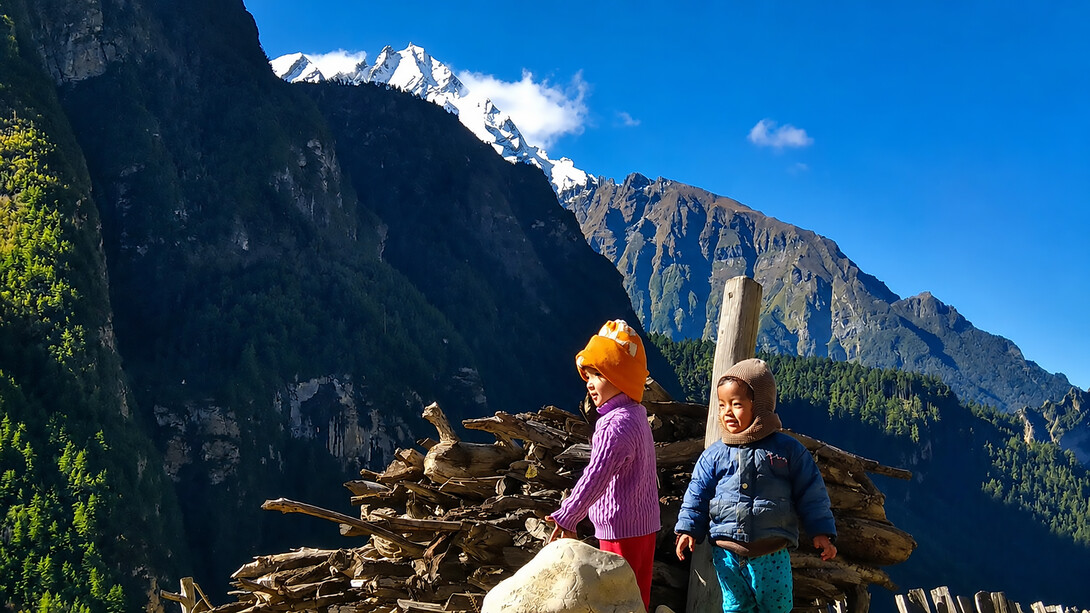
As a wandering soul in the Himalayas for the past decade, I have come to realize one thing: the importance of a native guide/advisor. And to be honest, I am fortunate that divinity has blessed me with a trusted friend, philosopher, and guide, Chandan Singh Koranga, a native Kumaoni who knows the Himalayas inside out, particularly Uttarakhand, popularly referred to as Devbhumi, or the “Abode of Gods."
If one is on a soul-searching, immersive, and transformational trip, exploring the Himalayas is a daunting task, especially with regard to safety, navigation, and logistics. Immersion in the Himalayas demands expertise in local cultural contours, weather patterns, and the routes to be followed, all of which enhance the overall Himalayan experience.
These days, I am based in Almora, Chandan’s hometown—a quaint hill station and the cultural melting pot of Uttarakhand. With Almora as my base, I am exploring the Uttarakhand Himalayas, one spiritual circuit at a time, rather than overlapping them—a mistake most explorers make in their hurried itineraries.
Adhering to Chandan’s advice, I chalk out my itinerary, carefully planned and curated, and once everything is foolproof, I make my movements.
This approach has brought me immense rewards and hassle-free journeys, whether on foot, through 4x4 drives, off-roading, or treks through unknown terrain. My meticulous pre-departure homework has meant that I have access to secret spots, the best views, and stellar cultural experiences that no tourist guidebook could offer.
Journey to Champawat
After a week’s well-deserved rest at Chandan’s Wood Villas in Dhamas village (hamlet), following a relatively tough trip to Munsiyari, we chose to visit Champawat District, located in the eastern part of Uttarakhand at an altitude of 2,000 meters.
Why Champawat?
As a yoga enthusiast and a history buff, I have always been fascinated by art, architecture, and heritage. This passion for things historical gives me a sense of tapping into an ancient energy reservoir and makes me feel grounded in my roots.
Champawat has history written all over it. Ancient temples and monuments, pillars, rare manuscripts, archaeological collections, and folklore steeped in legends bear ample testimony to Champawat’s rich past.
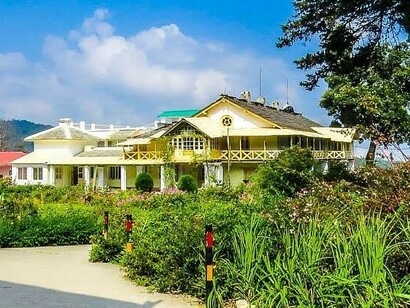
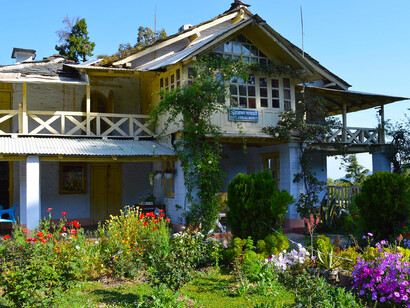
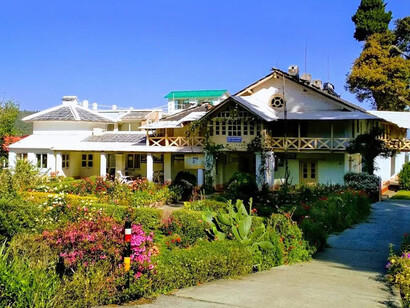
Legend has it that many dynasties have ruled Champawat, the Chand dynasty in particular. The British, too, have left behind significant historical remnants of their regime.
Champawat is not all that crowded. Covering an area of 1,766 sq. km, the district is spread across four administrative blocks and comprises 705 villages, making maneuvering and traveling around the region a seamless Himalayan experience.
On the ootsteps of legends
Swami Vivekananda Trail
One of the primary motives for exploring Champawat was the fact that this destination held a very special place in the heart of the great cyclonic monk of India, Swami Vivekananda.
As a devotee of the Ramakrishna Order and having received my initiation (Mantra Dikshya) from Revered Swami Gahananda Maharaj, the 14th President of the Ramakrishna Math and Mission, way back in 1997, this visit to Champawat was the culmination of my long-held desire to walk in the hallowed pilgrim circuit of the great Swami.
Swami Vivekananda, a disciple of Sri Ramakrishna, embarked on a spiritual journey through Uttarakhand with his student Akhandananda in 1890, seeking enlightenment. Their only possessions were their clothes and begging bowls. Champawat, then a part of the Almora District, was one of the significant places where Swami Vivekananda spent a considerable amount of time.
We spent two days at the 100-year-old Advaita Ashram in Mayavati, and it was a spiritually elevating experience to be in the serene Himalayan ambience of the ashram and to share those Zen-like moments with devotees who had come from many different corners of the world to follow in the footsteps of the great Swami.
It was wonderful to learn how Swamiji’s teachings and philosophy continue to inspire the people of Uttarakhand and beyond. To facilitate the spiritual experience of devotees and admirers, the Swami Vivekananda Trail, conceptualized by the Department of Tourism, takes visitors through the places associated with Swamiji’s travels in the Himalayas.
Swami Vivekananda aside, great spiritual masters such as Guru Gorakhnath and Guru Nanak Dev were also inspired by Champawat’s Himalayan serenity.
Guru Gorakhnath trail
Guru Gorakhnath Ji, an 11th-century spiritual giant of India and the founder of the Nath Hindu monastic order, found his true calling in Champawat. He is considered a Maha-yogi in the Hindu spiritual tradition.
We were told that Guru Gorakhnath followed the Kumarila and Adi Shankara schools of thought, along with Advaita Vedanta. His presence in Champawat remains palpable, with countless temples and ashrams associated with his legacy.
Guru Nanak Dev trail
Since our visit to Champawat coincided with the annual Jor Mela—a three-day festival held in June (9–11 June 2025), commemorating Guru Nanak Dev’s visit to Champawat 500 years ago—the spiritual fervor left us spellbound.
The festival, featuring Akhand Path, langar, and devotees receiving the customary sweet reetha (soap nut) as prasadam, transformed the venue into a vibrant spiritual gathering in the Himalayas.
Let me reiterate that Guru Nanak Dev, the first Sikh Guru, embarked upon his signature spiritual journeys, known as the Udasis, traversing the length and breadth of the Indian subcontinent. Legend has it that during his third Udasi, from 1514 to 1518 AD, Guru Nanak Dev visited the Kumaon Himalayas and stayed at places such as Champawat, Pithoragarh, Tanakpur, and Lohaghat.
Today, in Champawat, there is a Gurudwara dedicated to this great Sikh Guru—Meetha Reetha Sahib Gurdwara—located at the confluence of the Lodhiya and Ratiya rivers, where we were provided with modest accommodation and access to langar seva amidst the stupendous Himalayan surroundings.
Yoga in Champawat
While in Champawat, can yoga be far behind? No way!
In Devbhumi Uttarakhand, the birthplace of yoga, the practice remains an integral part of the region’s cultural and spiritual identity.
With a steady stream of respected yoga masters combining India’s traditional yogic practices with the naturally healing environment of the Himalayas, travelers are offered opportunities for rest, reflection, and well-being.
Yoga and beyond
As a yoga practitioner, I am yet to immerse myself in an exclusive Himalayan festival.
However, by divine coincidence, in Champawat, I met a solo traveler from New York City who had participated in the seven-day Grand Champawat Saras Corbett Mahotsav 2025. Based on her recommendation, I hope to participate in the Grand Champawat Saras Corbett Mahotsav in 2027, which is scheduled to take place during the second week of February in the Champawat district.
The festival brings together Champawat’s folk culture, heritage, women’s empowerment initiatives, and tourism on a single platform.
Wrapping up
No wonder the Kumaon Himalayas, including Champawat and its surroundings, blessed as they are with majestic Himalayan peaks, are also home to tribal and indigenous communities such as the Tharus, Bhutiyas, Jaunsaris, Buksas, and Rajis, whose fascinating lifestyles, belief systems, cuisine, jewelry, and folklore continue to captivate discerning travelers.
Embarking on a journey to Champawat can be life-changing and transformative.
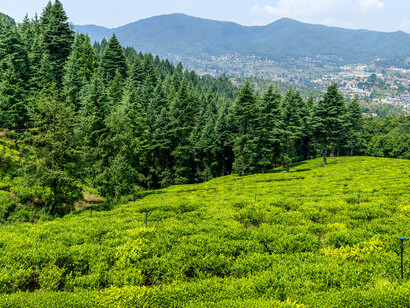
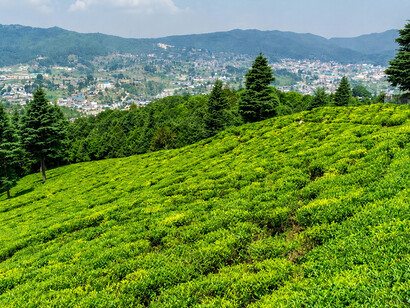
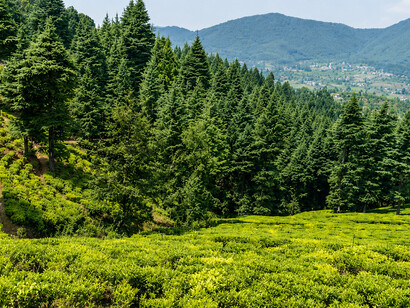
Here, travel is slow. The emphasis is on immersion and engagement with local people. The roads can be intimidating, yet the natural vistas, flora, and fauna are simply fabulous. Sometimes, one can hike for hours without seeing another soul.
The mesmerizing charm of the Kumaon Himalayas is best summed up by an anonymous traveler: “Kumaon is so beautiful that there is nothing wrong in calling it the staircase to heaven.”