English
 Español
 Français
 Deutsch
 Italiano
 Português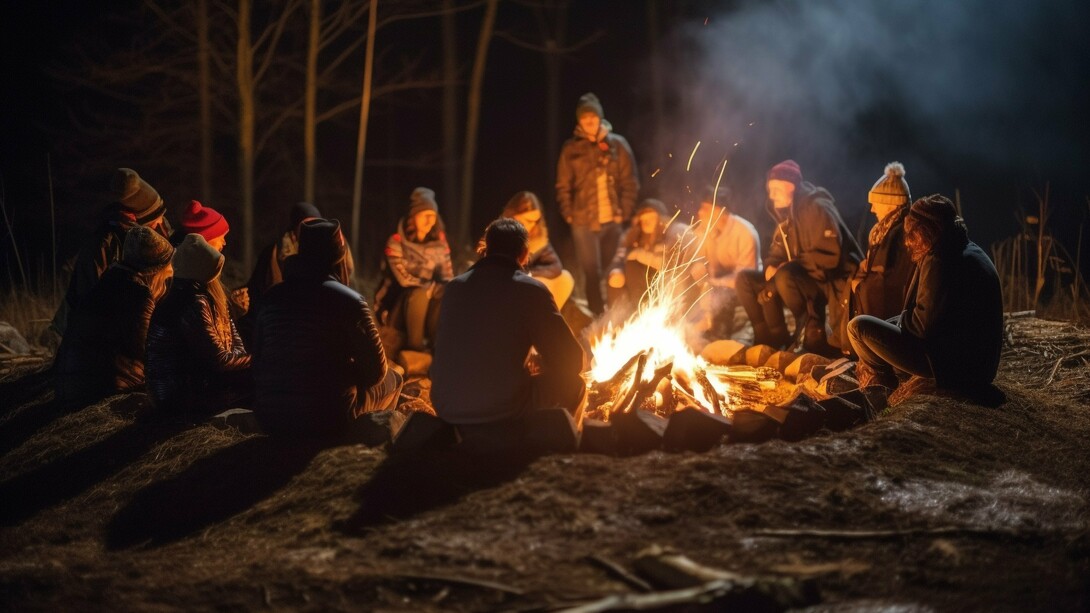
Can you visualise the image of a solo traveller? You might visualise a person in a cafe, lost in their thoughts as they make their quiet journals. Or perhaps someone standing alone on the peak of a mountain. Even though those typical examples of a solo traveller still exist, a version of solo travel that is new and more communal is emerging quickly. These modern-day explorers travel on their own not because they want to escape other people but because they want to discover them.
In these present times, where local disconnection and digital saturation are common, these solo travellers are making use of travel as a powerful instrument for building communities that are authentic, even if those communities might be temporary in nature. This is the contradiction that defines today's solo travel: the urge to go anywhere on your own in order to experience the feeling of profound connection with other people.
The solo travel paradox: a search for deeper connection
Discovering who one is through the use of solitude has always been the classic narrative of solo travel. However, an increasing number of individuals, especially those who are Gen Z and millennials, are giving their own definitions to what this journey entails. In spite of having digital connections, they describe feeling loneliness in the lives they live every day. For this group of people, whenever they decide to travel all by themselves, they have made a strategic decision to break out of their social bubbles and routines. Being by yourself is not the goal; the goal is to put yourself in an expertly selected context where meaningful interactions are not only possible but almost unavoidable. It is a forward-looking strike against the epidemic of loneliness using a passport.
Beyond the backpacker hostel: the new architecture of traveller community
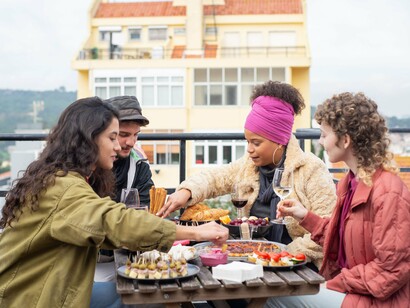
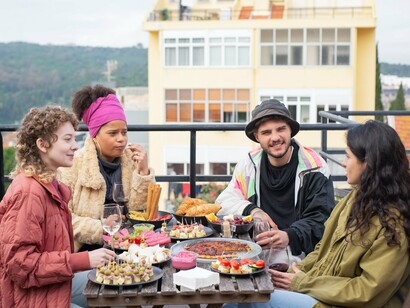
The common room that is usually found in traditional hostels is now being joined by a new wave of structures and spaces explicitly designed explicitly for making connections. It is no longer about finding a drinking buddy and a cheap bed. The new infrastructure is now more interest-based and more intentional.
You’re going to now discover the following:
Platforms for planners: There are now apps and websites which assist you in creating or finding small-group excursions for specific activities. The activities could be a market tour or a group hike, and they remove the awkwardness of showing up all by yourself.
Co-living spaces: Destinations such as Selina and Outsite provide private rooms with beautiful, shared workspaces and communal kitchens. These places attract a global network of remote workers who desire both fellowship and focus.
Specialised retreats: Here, travellers get to enjoy gatherings that can last for weeks. Such week-long events focus on everything from coding and conservation to yoga and writing. In these retreats, the shared passion is the immediate social glue.
These spaces act as catalysts for socialisation; they are engineered to turn "me" into "we".
The digital catalyst: how apps are fuelling IRL travel friendships
Even though the cause of isolation is always considered to be social media, a new breed of digital appliance is achieving the opposite for travellers. People do not only use apps when they want to book a flight; apps are now also being used to book friends.
Platforms such as Backpackr and Tourlina are particularly designed for connecting travellers based in the same area. You can imagine it as a network for professionals who also desire platonic travel companions. Through these apps, you can discover someone with whom you can get a meal without dining all by yourself, share a cab to a remote landmark, or just explore a museum. These tools can be regarded as digital icebreakers. They confirm the wish for companionship and make it easy to arrange a meetup. As a result, these apps have increasingly transformed the solo trips of various travellers from an experience that was likely going to be isolating into one that is socially rich.
The psychology of the "temporary tribe": why these bonds feel so intense
Why is it that friendships created while one is on the road usually feel so intense, so quickly? It is because there is a very strong psychology that takes place. Whenever a person embarks on a trip, they tend to be their most original self. You are free from all the expectations and labels of your life that you have left back at home. This situation of authenticity and originality fosters a very fertile environment for what is referred to as "fast-track intimacy" by sociologists.
These connections are supercharged as a result of different factors, such as:
A clean slate: You can make genuine connections based on who you are in the present moment because you are not with any baggage from your past.
The "Stranger on a Train" effect: People tend to be more vulnerable and open when they know that the interactions might be temporary.
Shared novelty: When you experience wonderful and new things together, it creates a very positive and powerful associative memory.
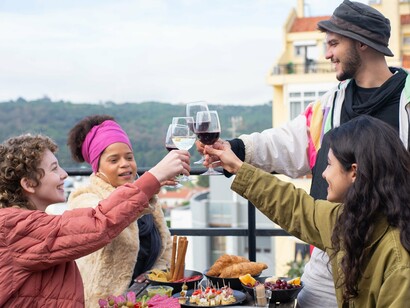
These "temporary tribes" provide a distinctive form of companionship that is supportive, intense, and not burdened by the complexities of long-term history.
The local equation: are we building bubbles or bridges?
There are lots of criticisms against this trend. One valid question that is always asked: Does this new model of a community that is based on travel simply create a new, mobile bubble? Another question is if you are always making connections with other travellers, are you having any true and authentic engagement with the local culture you came to visit?
The answers are both interesting and complex. Yes, there is a real risk that insulated social pods which would keep moving from one co-living space to another co-living space but never touching the local fabric would be created. However, this model can equally serve as a bridge.
When a solo traveller is full of confidence and inspired by how secure they feel in their new "tribe", such a traveller is probably going to venture out and embark on explorations. Such adventurers are confident in their endeavours because they know that they have a group to return to. The community can even become more emboldened by their shared experience so that they enter into engagements with the locals in ways a person that is truly solitary would not do.
The future of belonging: is travel the new third place?
In many parts of the world, community centres, local clubs, churches, and other traditional "third places" continue to experience a decline in patronage, establishment, and attendance. As a result of this decline, individuals are looking for different places where they can connect with each other. This raises a serious question: has travel now become a major avenue for adults to achieve a sense of belonging?
The answer to this question appears to be yes. This is because a growing number of people want to experience community-seeking solo travel. The destination is no longer what the journey is about; it is now about the social ecosystem that you can have access to while you are there. This suggests that in the future, the travel industry is probably going to see innovations that pertain to curated community experiences. That future might equally involve a permanent transformation of our understanding of what “solo” travel entails. Its significance is that it is a profound hunger in human beings to discover their own tribe, even if it would involve crossing the entire world to achieve it.
Conclusion: the journey back to each other
Our oldest assumptions about wanderlust are now being challenged by the new solo traveller. What it reveals is that one of the most powerful destinations is a feeling of connection, not a place on a map. This advancement in travel is a mirror. And that mirror is reflecting society's broader needs for tackling isolation with intention, as well as using the wide world as a way to find other human beings, rather than as an escape from them.
Ultimately, this trend is not about how solo travel is going to come to an end. It's about its growth. It’s the acknowledgement that stunning vistas or ancient ruins are not going to be the most unforgettable sightings. Rather, the discoveries that would remain the most memorable would be the unforeseen and sincere connections we make with other people during the journey. It appears that, ultimately, we all share a common destiny as humans. And that shared, common destiny is that we are to discover ourselves while we are within the company of other people and not while we are in solitude.