English
 Español
 Français
 Deutsch
 Italiano
 Português
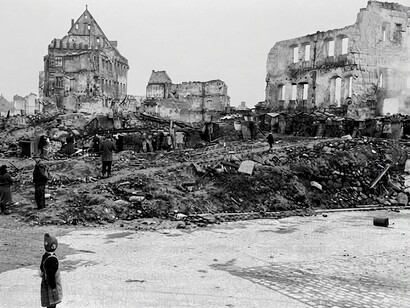
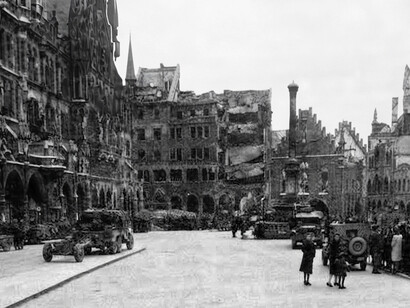
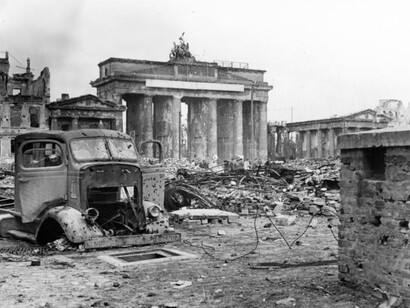
When the Allies of the Second World War drafted the Charter of the United Nations, they sought to establish a global system of collective security. Its aim was to ‘save succeeding generations from the scourge of war’. With the adoption of the UN Charter, all UN Member States undertook to settle their disputes in the future exclusively by peaceful means and not through military force. Decisions on the use of force to maintain or restore peace were only to be taken collectively, initially by the eleven and now by the fifteen members of the United Nations Security Council.
However, the UN Charter contains an exception that has been largely forgotten today: the so-called ‘enemy states clause’ in Articles 53, 77 and 107. It grants the former Allied powers the right to take military action against the enemy states of the former Axis powers, without a Security Council mandate, in order to prevent renewed aggression by those states against them. As the Security Council is expressly excluded from this, it could mean that each of the former Allies is free to assess for itself whether a former Axis power is once again adopting an aggressive stance.
By far the most important countries to which the Enemy States Clause referred were Germany and Japan. But does this clause still apply more than 80 years after the end of the Second World War? The Federal Government answers this question unequivocally with a ‘no’. However, the legal situation does not appear to be quite so clear-cut.
The German Government takes the view that the Enemy States Clause has long been ‘obsolete’. In this regard, it refers primarily to two aspects: firstly, a resolution of the UN General Assembly from 1995 and, secondly, the Two-Plus-Four Treaty of 1990.
In 1995, the General Assembly stated in a resolution that reunified Germany was now one of the peace-loving members of the United Nations and that the Enemy States Clause was therefore obsolete. Even before that, according to the Federal Government’s argument, the four Allied Powers had waived their special rights vis-à-vis Germany in the Two-Plus-Four Treaty, and this would also include rights arising from the Enemy States Clause.
But do these arguments actually hold water? Here are a few considerations:
The enemy states clause was never removed from the UN Charter
The General Assembly merely stated that the clause was to be regarded as inapplicable to a peace-loving Germany. However, the wording of this resolution does not state that this clause is now permanently invalid. Following a request by Germany, the General Assembly adopted a further resolution on this matter a year later, asking that steps be taken to remove the relevant Articles. This resolution was never followed up. The text hence remains. If, in future, Germany were no longer regarded as a ‘peace-loving state’, could the enemy states clause be applied again? There is probably no clear-cut answer to this.
Resolutions of the UN General Assembly are not legally binding
Resolutions of the General Assembly are generally of a recommendatory nature. Under the UN Charter, binding decisions can, in principle, only be taken by the Security Council. However, there has never been a Security Council resolution formally repealing the enemy states clause. The relevant provisions therefore remain in the text of the Charter.
Removing the clause would require an amendment to the UN Charter
Removing the enemy states clause would require a formal amendment procedure in accordance with the rules of the Charter. This would presumably also require ratification of this amendment by all member states; nothing of the sort has happened, and the relevant articles therefore remain in force.
The Two-Plus-Four Treaty cannot amend the UN Charter
Whilst the Two-Plus-Four Treaty is a legally binding treaty under international law, a treaty between Germany and the four Allied Powers cannot decide on an amendment to the Charter. Nor does the treaty contain any reference to an explicit repeal of the Enemy States Clause in the UN Charter.
Russia could potentially terminate the Two-Plus-Four Treaty
Russia could argue that Germany has violated the spirit and letter of the Two-Plus-Four Treaty, for example, due to Germany’s participation in the NATO mission against Yugoslavia in 1999, the stationing of German troops in Lithuania, or the establishment of NATO military structures on the territory of the former GDR.
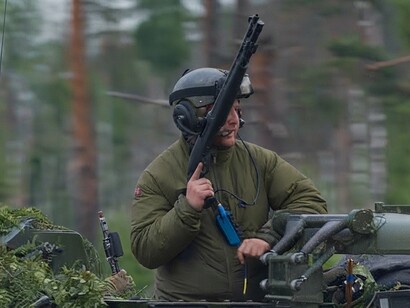
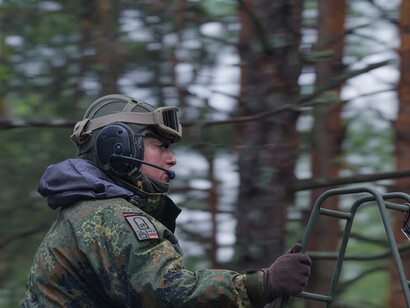
In view of the growing tensions between Germany and Russia, the ‘enemy states clause’ could regain political significance in this conflict1. Russia might attempt, as it has already threatened, to use it as justification for military operations against German production facilities manufacturing long-range drones for the war in Ukraine. In doing so, it could be argued that Germany has, through its support for Ukraine, effectively become part of the confrontation. Furthermore, Russia could point out that the German government has developed a new military strategy directed exclusively against Russia. To make matters worse, it could be argued that the last German military strategy was drawn up in 1939 and led directly to the Second World War. By applying the ‘enemy states clause’ – or even merely threatening to do so – Germany could find itself haunted by its past. One wonders whether Germany could count on international support in such a scenario. Let us hope it will never come to this!
The German government should therefore not simply dismiss the possibility of the deployment of the ‘enemy states clause' but should remember that, given its past, Germany has a special obligation to work towards a peaceful resolution of the war in Ukraine, to avoid escalation, and not to further exacerbate political tensions. Particularly at a time of increasing military confrontation, it would therefore be both sensible and prudent for dialogue between Germany and Russia to be pursued and ways sought to de-escalate the situation.
References
1 China has already done this in the case of Japan. ‘On Friday, the Chinese embassy in Japan posted on X that China would have the right to carry out “direct military action” without needing authorisation from the UN Security Council if Japan took any step toward renewed aggression.’