English
 Español
 Français
 Deutsch
 Italiano
 Português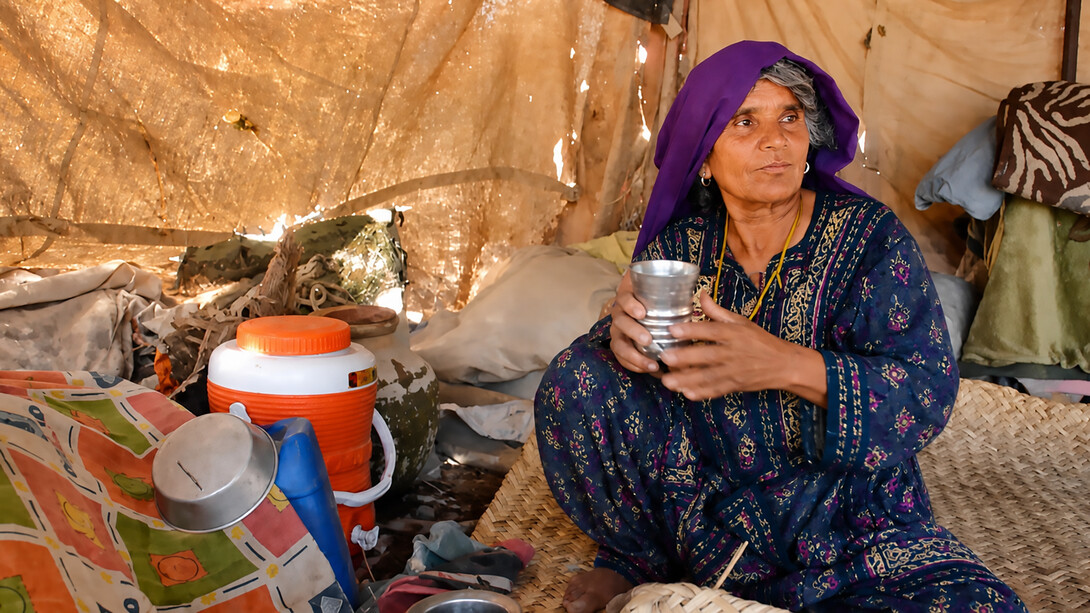
As summer settles sulkily once more over Delhi, India, the season resumes its oldest civic function: revealing inequality.
Winter flatters. It allows layering, performance, and even a certain romance. Summer is less forgiving. It strips things back. Who has shade. Who has backup power. Who can retreat indoors? Who must work outside. Who can leave town for a week? Who can summon cold water, groceries and comfort at the touch of a screen? Heat comes for everyone, but it does not arrive equally.
This is why summer may be the great unequaliser in theory and the great revealer in practice.
The city already knows the rituals. Tempers shorten. Metal burns to the touch. The roads radiate resentment. WhatsApp groups circulate forecasts like wartime intelligence. Ceiling fans become matters of faith. Air conditioners hum with the smug certainty of private victory. Somewhere, inevitably, someone announces that it is “a dry heat", as if this were consoling.
Yet beneath the annual comedy lies an old truth. In hot societies, privilege has often meant the ability to purchase distance from summer.
Long before compressors, coolant and climate control, rulers across antiquity understood this principle well. In the Indian subcontinent, ice and snow were transported down from mountains so that emperors and nobles could enjoy chilled sherbets in months when the plains blistered. Consider the image for a moment. While ordinary people endured the season directly, caravans and labour networks moved winter itself toward the powerful.
That is class history in a cup.
The Mughal courts, among history’s more serious students of comfort, refined the art. Gardens with water channels cooled the air. Thick walls slowed the day’s assault. Khus screens, shaded courtyards and carefully orientated architecture all served practical ends beneath aesthetic ones. Power did not merely command armies or levy taxes. It edited the climate.
Elsewhere, the story took different forms but followed the same logic. In ancient Rome, snow was stored in insulated pits and brought down from mountains for elite consumption. In Persia, yakhchals, those remarkable domed ice houses, preserved ice through desert summers with an ingenuity that still feels improbable. In China, imperial ice cellars ensured chilled comforts for the court long before refrigeration. Across geographies, the pattern repeats with almost stubborn consistency: those with power rearranged nature through labour and logistics.
The centuries have passed. The instinct has not.
Today, the methods are modern, the principle ancient. The wealthy no longer need mountain caravans. They have supply chains, delivery apps, inverter backups, imported insulation, pre-cooled vehicles and thermostats set to foreign latitudes. What once required retainers and empire can now be approximated with a payment gateway.
If anything, the scale has expanded. The globalisation of logistics has turned luxury into a year-round condition. Out-of-season fruit appears on demand. Cold chains carry perishables across continents. Materials are sourced from one geography, assembled in another, and consumed in a third. Even environments are constructed. Desert cities import sand for beaches more suitable for leisure than the ones nature provided. Indoor ski slopes rise in climates that have never seen snow. Temperature, increasingly, is a setting.
The upper tiers of urban life promise not luxury in the old decorative sense, but exemption. Premium housing advertises power redundancy, air purification, central cooling and private green space. Malls function partly as climate sanctuaries with escalators. Summer holidays are less about exploration than temporary migration from the weather. Convenience platforms offer chilled beverages in ten minutes, delivered by someone crossing the heat so that another may avoid it.
The old aristocracy summoned ice. The new one summons apps.
Technology, we are often told, democratises comfort. Sometimes it does. Cheap fans matter. Better housing matters. Public cooling spaces matter. But technology also conceals hierarchy elegantly. Every frictionless experience for one person often requires friction for another. Someone rides through forty-four degrees to deliver the iced coffee. Someone unloads crates beside a loading dock furnace. Someone repairs the transformer. Someone stands over industrial stoves while the city wilts.
Comfort has not been eliminated. It has been reassigned.
This divide between the buffered and the exposed is not new, but it is perhaps more pervasive now. Earlier, privilege insulated moments. Today, it can insulate entire lives. One can move through weeks, even months, with only curated encounters with discomfort. The city becomes a network of cooled interiors connected by transit. Weather becomes an abstraction glimpsed through glass.
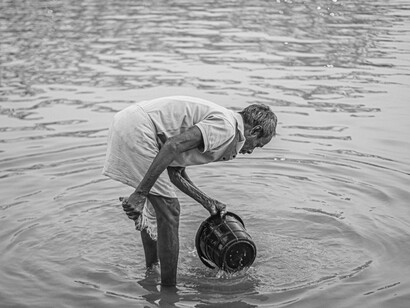
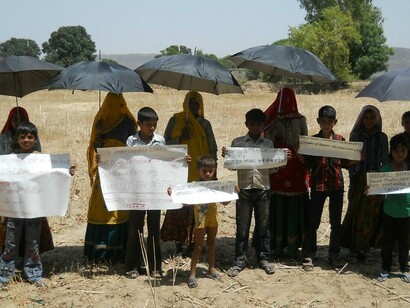
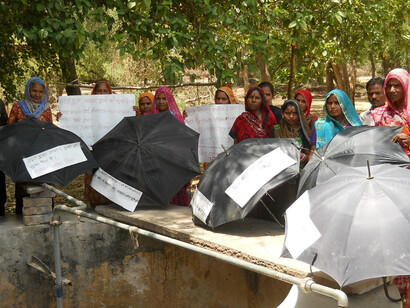
For those without such insulation, nothing is abstract. Summer dictates routine. Work hours shift. Water storage becomes essential. Travel is planned around shade. Bodies adapt because they must. There is no opting out, only enduring or adjusting.
There is, of course, nothing uniquely Indian about this. Roman elites fled to villas. Colonial administrators the world over developed, and escaped, to hill stations that peppered their dominions. The privileged everywhere have shown remarkable consistency on one point: if weather becomes inconvenient, outsource it.
But India’s summers sharpen the contrast because they are so absolute. The heat of this scale is clarifying. It turns electricity into status, water into strategy, mobility into privilege and patience into a finite resource.
Which is why each year the same lesson returns with the dust and glare. Inequality is not only about income statements, stock portfolios or visible consumption. It is also about exposure. Who bears the city directly and who is buffered from it? Who waits in it, works in it, and travels through it? Who pays to make it someone else’s problem?
As Delhi moves deeper into the months ahead, there will be the usual seasonal chatter: mango rankings, monsoon rumours, and complaints about humidity yet to come. But beneath all that lies a simpler truth.
Heat may come for everyone. Relief does not.