Michael von der Schulenburg served for more than 34 years in United Nations peace and development missions worldwide and, for a brief period, with the OSCE in Vienna. Over the course of his UN career, he spent nearly 28 years living in countries weakened or shattered by war, internal conflict involving armed non‑state actors, or foreign military interventions. His long-term postings included Haiti, Pakistan, Afghanistan (on several occasions), Iran (also repeatedly), Iraq, and Sierra Leone. Shorter assignments took him to Syria, Somalia, the Balkans, the Sahel, and Central Asia. He participated in a number of assessment missions for the UN Secretary-General and the UN Security Council.
From 1992 onwards, Schulenburg held senior positions in UN peace and development operations, serving during his final eight years as assistant secretary‑general. In this capacity, he reported regularly to the UN Security Council. He supported four UN Secretaries‑General—Javier Pérez de Cuéllar, Boutros Boutros‑Ghali, Kofi Annan, and Ban Ki‑moon—on their peace missions in conflict zones and accompanied numerous heads of UN agencies and senior UN officials addressing issues of global concern, including conflict prevention and resolution, human rights, nuclear non‑proliferation, chemical weapons, drug trafficking, environmental protection, international and social justice, water rights and sustainable development.
Schulenburg has written extensively on peace‑making, peace‑keeping, and peacebuilding, as well as on UN reform, international law, armed non‑state actors, and internal armed conflicts—including analyses of the wars in Afghanistan, Iraq, and Ukraine. Since his retirement, his papers have been published primarily as articles. In 2017, his book On Building Peace: Rescuing the Nation‑State and Saving the United Nations (Amsterdam University Press) appeared. On the 80th anniversary of the UN Charter in 2025, he published the brochure Never Again War – The Charter of the United Nations. His recent articles and frequent interviews can be found on his website.
Following his retirement, Schulenburg delivered keynote speeches and participated in conferences across major global cities, including Geneva, London, Oxford, Wilton Park, Reading, Washington, New York, Beijing, Berlin, Hamburg, Dresden, Krems, Alpbach, Freiburg, Turin, Vienna, Guangzhou and Moscow.
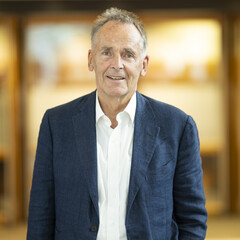
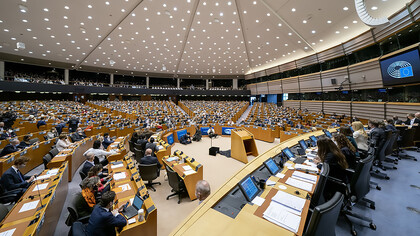
Since 2024, Schulenburg has been an independent Member of the European Parliament for Germany, affiliated with the Sahra Wagenknecht Group (BSW). His parliamentary work focuses on issues of war and peace—particularly the wars in Ukraine and Iran—as well as on upholding international law and, in that context, also safeguarding the rule of law within the European Union. He sits on the foreign relations (AFET) and the security (SEDE) committees of the parliament. Schulenburg remains an active supporter of the German peace movement.
Schulenburg was born in 1948 in Munich, but his family moved to East Germany (DDR) in 1952. Both his parents came from German families that came out of Russia (his mother was born in Riga, his father in St Petersburg; both died early) and had returned after the Bolshevik revolution to Germany as refugees. During the Nazi time, neither was regarded as being 'Aryan'.
He spent his youth in the GDR, where he completed his Abitur, earned a carpenter’s diploma, and fulfilled his obligatory military service. In 1969, he and his twin brother escaped across the Baltic Sea as stowaways on an East German freighter transporting military equipment to Vietnam. Arriving in the Federal Republic of Germany, his first impressions were shaped not only by the stark contrast in living standards but also by an unmistakable self‑righteousness that, in his view, continues to influence Western decision‑making negatively to this day.
Schulenburg studied economics with philosophy as an additional subject. He completed this with a master's degree and a thesis on John Rawls' “Theory of Justice” at the Free University in Berlin. His studies brought him also to the London School of Economics (LSE), the Ecole Nationale d’Administration (ENA) and the German Institute for Development (DIE).
As part of his wide-ranging assignments and work for the United Nations, Schulenburg undertook numerous special assignments, many of them in highly dangerous environments:
During the Iraqi long‑range missile attacks on Tehran in early 1988, he remained in Iran. When Iran accepted the ceasefire mandated by Security Council Resolution 598 in July 1988, ending eight years of war, he received and supported the UN missions deployed to negotiate and implement the ceasefire and the return of all war prisoners.
Following the Geneva Peace Accord of April 1988, which led to the withdrawal of all Soviet forces from Afghanistan, he joined a four‑member UN mission sent across the Hindu Kush into Afghanistan. Its purpose was to negotiate with Mujahedeen commanders—who had been excluded from the Geneva negotiations—to secure their support for the accord and their participation in a political transition. The mission lasted two and a half months and was conducted largely on horseback.
As Chief of Mission in Kabul from 1989 to 1991, he opened the northern regions of Afghanistan to UN operations and undertook multiple missions between government‑held and Mujahedeen‑controlled areas. He also opened, for the first time, three UN crossing points from the Soviet Union into Afghanistan.
In 1991, he led a special inter‑agency mission to Syria to assist the government in addressing the humanitarian consequences of the first Gulf War. Later that year, he negotiated with Kurdish Peshmerga forces in the Kandil Mountains to facilitate the return of nearly one million Kurdish refugees.
Also in 1991, he undertook an exploratory mission by travelling on the back of a pick‑up truck belonging to a local resistance group from Iran into Iraq to investigate reports that 400,000–600,000 Iraqi Shia had taken refuge in the marshlands of southern Iraq. These reports were ultimately found to be inaccurate.
In 1998, Schulenburg was sent to Taliban-held Kandahar/Kabul to hold successful negotiations with the Taliban supreme leader Mullah Omar that led to the release of 40 Iranian hostages.
In 2001–2002, he supported the UN mission tasked with establishing the Karzai administration following the US-led removal of the Taliban regime after 9/11 and subsequently participated in repeated UN assessment missions to Afghanistan.
In 2005, 2006, and 2007, during the height of the civil conflict in Iraq, he was responsible for negotiations among feuding religious and ethnic communities and their respective conflicts with the US-led occupation force. This included travel to areas considered "forbidden", such as the Hanifa Mosque, a central location of Sunni Arab resistance.
In 2009, he helped prevent a potential resurgence of civil war in Sierra Leone by personally intervening during violent disturbances in Freetown to save 24 young people from the risk of being lynched by a large and highly excited crowd.
Schulenburg faced numerous physical dangers during his assignments, yet he was injured only once—during a cluster-bomb attack in Kabul in 1990. Because most of his postings were in non‑family duty stations, he spent many years separated from his family, sometimes seeing them no more than three times a year. The greatest burden of this life fell not on him but on his family, and above all on his courageous and wise wife, who carried the weight of these long absences with remarkable strength.





 English
 Español
 Français
 Deutsch
 Italiano
 Português
 Español
 Français
 Deutsch
 Italiano
 Português