English
 Español
 Français
 Deutsch
 Italiano
 Português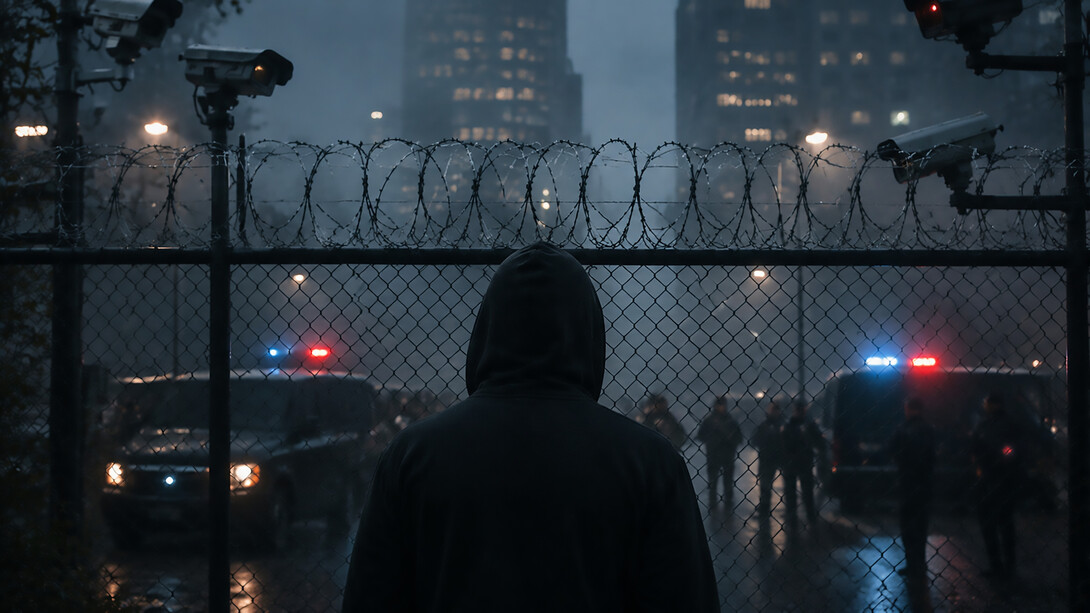
In the following essay, I will examine the "Mirage of Absolute Security"—a political phenomenon where the promise of safety is used to justify the erosion of democratic foundations. I will argue that contemporary shifts toward authoritarianism are not merely reactions to external threats but are rooted in a deeper structural transformation of the state and its citizens.
To explore this, I will draw on two primary theoretical frameworks. First, I will utilize Wendy Brown’s (2006) analysis of the "cannibalism of liberal democracy," focusing on how the intersection of neoliberalism and neoconservatism de-democratizes the subject and "tacticalizes" the law (691-695). Second, I will apply Giorgio Agamben’s (1998) conception of the "state of exception" to demonstrate how temporary emergency measures are increasingly being transformed into permanent spatial and legal arrangements.
The essay will proceed in three parts. I will begin by analyzing the rhetoric of "pure" homogeneity and perpetual siege as seen in isolationist models like Orania. I will then examine the "new normal" of sovereign power through the case of El Salvador’s current security regime, where the citizen is replaced by a subject of "inclusive exclusion" or "bare life." Finally, I will address the "European Orania," arguing that democratic nations are currently hovering at a threshold of absolutism, where the search for safety inadvertently builds a distorted reality of permanent emergency. Ultimately, this essay seeks to demonstrate that the true threat to a free society is not chaos, but an order obtained through the systematic suspension of the law.
The contemporary Right-wing promise to the world is deceptively simple: a return to a "pure" homogeneity where the removal of the "Other" equates to the disappearance of fear. This rhetoric, exemplified by the isolationist ideals of Orania, relies on a narrative of perpetual siege. In this worldview, survival demands total control, transforming the state into a leviathan that governs both the physical and the psychological. By mandating military service and censoring "subversive" thought, the state doesn't just manage borders; it manages the mind. In such systems, ignorance is a structural requirement, and governance is fueled not by real threats but by a manufactured paranoia where every shadow is an enemy and every silence is a suspicion.
This manufactured paranoia is not an accident; it is the product of what Wendy Brown (2006) identifies as the 'cannibalism of liberal democracy' (691) by the twin forces of neoliberalism and neoconservatism. As Brown argues, this combination leads to a "de-democratization that destroys the foundation of democracy in the cultivation of a people’s needs, desires, and orientation toward powerlessness" (692).
Under the neoliberal rationality, the state views citizens "exhaustively as rational economic actors in every sphere of life," reducing citizenship to a matter of "individual entrepreneurs and consumers whose moral autonomy is measured by their capacity for self-care" (694). This reduction undermines any investment in an active citizenry. As Brown notes, as "law is tacticalized or instrumentalized, it produces the conditions for its routine suspension or abrogation" (695).
While neoliberalism figures a future of erased borders and monetary nexuses, neoconservatism "scrambles to re-articulate and police cultural and national borders, the sacred, and the singular through discourses of patriotism, religiosity, and the West" (699). The intersection of these two rationalities produces a "consumer-citizen as available to a heavy degree of governance and authority" (703). We are left with a subject "at once required to make its own life and heavily regulated in this making" (705). In this political culture, the suspension of rights does not spur a "legitimation crisis" because neoliberalism has already devalued the very democratic institutions that neoconservatism then consecrates or bypasses (702).
From emergency to the new normal
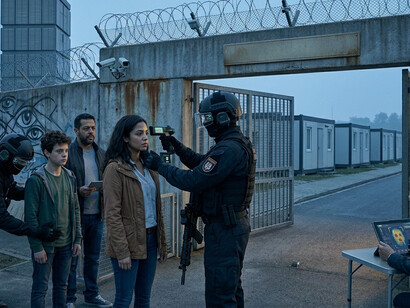
We see the apex of this logic in El Salvador’s "state of exception." Here, the suspension of constitutional guarantees—originally intended as a 30-day emergency measure—has been renewed dozens of times, effectively turning a crisis into the permanent norm. This transition illustrates what Agamben (1998) describes as a "temporary suspension of the juridico-political order" being "progressively turned into a permanent spatial arrangement. In this model, the state of exception is not the chaos that precedes order but rather the specific situation that results from its suspension. While Bukele offers a pact of "total security" in exchange for the citizen's voice, the result is a society where nearly 2% of the population is incarcerated.
This reflects a shift in biopower; while Foucault (2004) argued that modern states shifted toward a power to "make live and let die" through the optimization of the population, Agamben reintroduces the role of sovereign power into this analysis. The Salvadoran state now operates through the "inclusive exclusion" of bare life—where the prisoner is "taken outside" (ex-capere) the law’s protection while remaining entirely subject to the state's force. The citizen with rights disappears, replaced by a subject in a "clean, orderly, open-air prison."
The European "Orania"
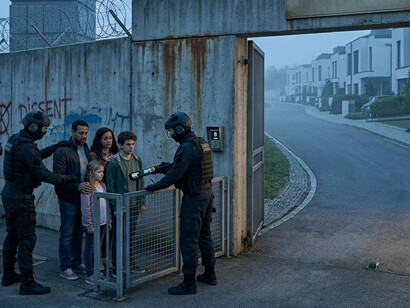
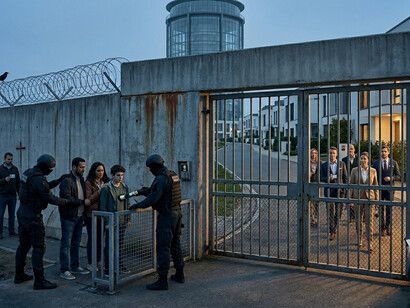
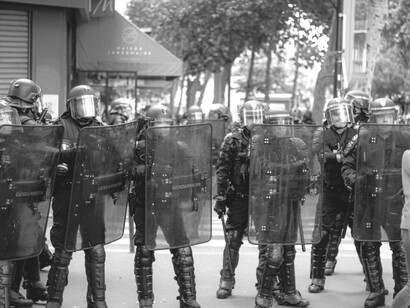
The danger of this model is no longer distant; it is taking root within Europe. By increasingly equating civil protest with terrorism and greeting "security decrees" with public applause, democratic nations are hovering at the threshold of absolutism. By engaging with Carl Schmitt’s theories, Agamben reminds us that the sovereign "legally places himself outside the law" by having the power to suspend it. This "state of exception" creates a dangerous zone of indeterminacy where the rule of law is suspended in the name of protecting it. We must recognize that the true threat to a free society is not the presence of chaos but an order obtained through the systematic suspension of the law. In our search for safety, we are inadvertently building our own versions of Orania, transforming temporary emergencies into a distorted, permanent reality.
Ultimately, the mirage of absolute security persists only as long as we remain what Wendy Brown calls 'de-democratized' subjects. If we accept the neoliberal pact—trading our political voice for the promise of a 'clean, orderly prison'—we confirm the state of exception as our permanent reality. However, as philosophers from Arendt to Habermas have argued, democracy is not a gift bestowed by a leviathan but a practice sustained by an active citizenry. The challenge for the contemporary subject is to question the very definition of 'safety' being sold to us. Are we willing to embrace the inherent 'chaos' of a free society, or will we continue to applaud the security decrees that build our own versions of Orania? To reclaim our autonomy, we must move beyond the market logic of self-care and rediscover the courage to act in a world where fear is no longer the primary currency of governance.
References
Agamben, Giorgio (1998). Homo sacer. Sovereign power and bare life. Heller-Roazen, D. trans. Palo Alto: Stanford University Press.
Brown, Wendy (2006). “American Nightmare, Neoliberalism, Neoconservatism, and De-Democratization." Political Theory, Vol. 34, No. 6, pp. 690-714.
Foucault, Michel (2004). Society Must Be Defended: Lectures at the College de France 1975-6. London: Penguin.