English
 Español
 Français
 Deutsch
 Italiano
 Português
James Cameron didn’t enter the world of cinema so much as he exploded onto the scene. Famously selling his script for a dollar, on the stipulation he be allowed to direct, The Terminator was a kind of thesis statement. A grimy, pulsing new genre he called ‘technoir,’ a term Cameron didn’t just flirt with but openly defined, echoing throughout his later work on Strange Days with ex-wife and collaborator Kathryn Bigelow. From the jump, he shows an obsession with mood, machinery, and momentum—stories engineered as much as they are written.
Other films like The Abyss and True Lies round out his oeuvre, cementing a tone unique to his own work, establishing high-concept environments with ticking precision. He has a strong affinity for moments and images—faces lit by digital blue monitors, bodies suspended in crystal-clear water, giant machines groaning under their immense size—and he has the technical means to drag them out of his imagination fully intact.
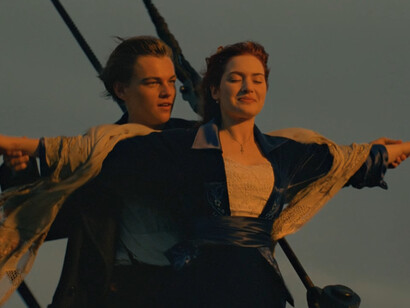
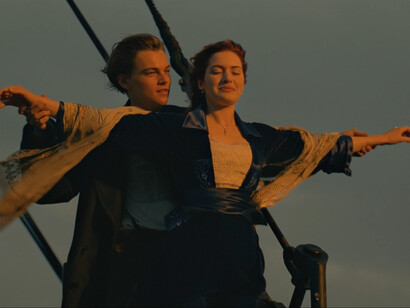
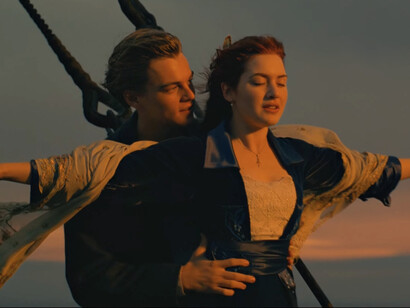
Instead of staying comfortably in that action sci-fi niche, he remodels it completely with Titanic. A sweeping epic that folds romance, tragedy, and melodrama into something just as overwhelming in scale but more intimate in sensation. With the extended sinking sequence, Cameron revels in his lifelong fixation with water—controlled chaos rendered with terrifying clarity. The film would go on to become the highest-grossing film of all time and tie the record for most Academy Awards won by a single picture. In any other medium that would crown him the undisputed GOAT; for Cameron, it’s a stepping stone.
Ghosts of the Abyss (2003)
With Ghosts of the Abyss, Cameron turns his back on fiction but ups the ante in terms of immersion. Despite the name, this isn’t an extension of The Abyss—that would be Aliens of the Deep, not to be confused with Cameron’s 1986 film Aliens. This is something more akin to a museum exhibition with a pulse. A deep-sea descent into the wreckage of the Titanic, framed with narrated reenactments and cutting-edge 3D that, at the time, was borderline unbelievable.
You’re not just watching cheap b-roll footage of the Titanic; you’re there, cramped in a submersible with Bill Paxton, staring out into dark water as the ship’s massive, decaying form emerges like a specter. Cameron deploys state-of-the-art robotic cameras to capture details no human eye had seen in nearly a century—personal artifacts, fragments of lives frozen in time. The most striking of which are these leaded glass windows, preserved against all logic. And because he’s James Cameron, simple observation isn’t enough—he has to stage a shot 12,000 feet underwater, lighting them from behind with another submersible to create the illusion of life behind the glass.
A lost camera triggers a recovery mission that plays less like a documentary and more like a miniature spy thriller. Tiny robots drifting through the abyss like soldiers in enemy territory, every movement deliberate, every second stretched. It’s absurdly compelling—arguably more interesting than the historical material itself. Cameron manufactures suspense out of logistics, turning nothing into something, then undercuts that intensity with a needle drop of Bill Withers’ “Just the Two of Us.” It’s a cute little sequence that showcases his tremendous skill as a storyteller, as well as a meticulous manufacturer of moments.
Avatar (2009-2025)
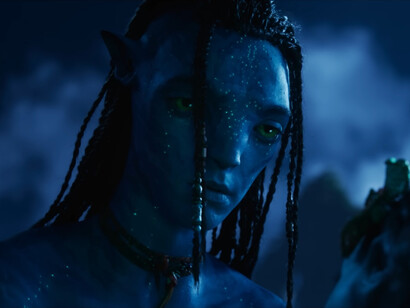
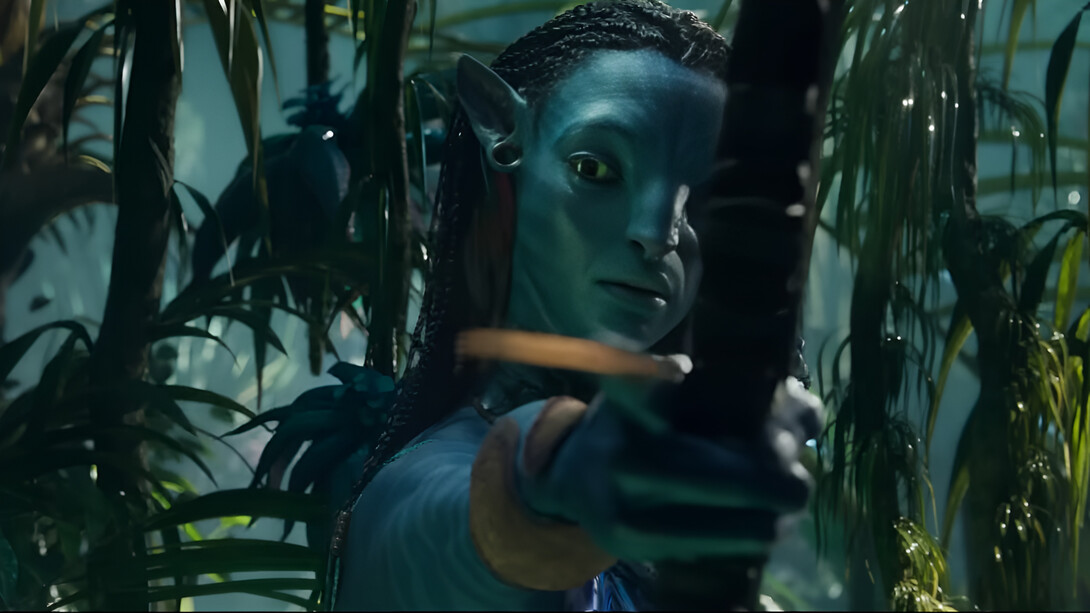
If Cameron’s earlier work was all about pushing cinema forward, Avatar and its sequels are about redefining what cinema even is. Not a screen, but a space, an environment. The leap here isn’t just in visual effects—though they’re flawless—it’s the fusion of 3D, motion capture, depth of field, and frame rate into something closer to a waking dream.
The first Avatar lives in motion. Cameron uses RealD technology not as a gimmick but as a tool of spatial manipulation—foreground elements reaching toward you, background layers stretching back as far as the eye can see. When a creature nosedives, clouds don’t pass by on a flat plane—they rush right past your face. Your body reacts physically; there’s a jolt in your chest, a phantom sense of velocity.
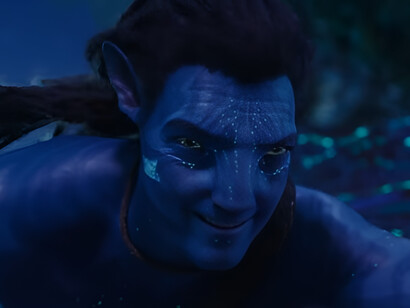
Then The Way of Water somehow goes further. Cameron, returning to his elemental obsession, crafts these mythical underwater sequences that feel like actual submersions. Light fractures through the surface, particles drift, and sound dulls into that familiar aquatic hush. The high frame rate smooths motion, removing the stutter between movements that usually reminds you you’re watching a movie.
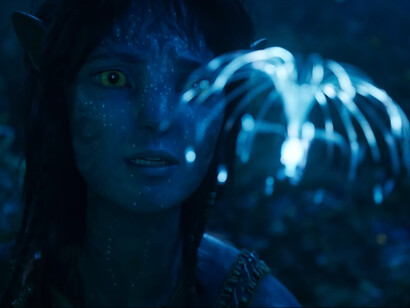
Fire and Ash is like a convergence point, a deliberate synthesis of everything Cameron has been building toward across the first two films. Where Avatar is defined by air and motion and Way of Water by depth and immersion, Fire and Ash plays like a collision of elements—heat, particulate, and texture—an environment that’s at once expansive and suffocating. The same 3D spatial trickery now has extensive material to work with: embers drifting into the foreground, ash hanging in the air like volumetric fog, flames licking across layers of depth stretching far beyond the frame.
It’s not just a spectacle for escalation’s sake but a kind of recalibration, folding the language of flight and submersion into something singular. In that way, it lands as a sort of capper to an introductory trilogy—not an endpoint, but a culmination of Cameron mapping out Pandora in sensations. Air, water, fire. Motion, immersion, intensity. By this point, the technology isn’t announcing itself anymore—it’s fully absorbed into the experience, leaving only the feeling of having been somewhere else.
Even in stillness, Pandora overwhelms. Forests glow with bioluminescent life, wood sprites float like constellations, and waterfalls crash with a force you can almost feel as mist. Cameron layers sensory detail until the illusion becomes total. When the credits roll and the glasses come off, there’s a strange comedown. Honest to god, when I got out of Way of Water, I felt like there were flecks of water on my cheeks. Even way back in 2009, people talked about “post-Pandora depression.” It wasn’t like leaving any old movie; it felt like you were returning home from a long journey to another world.
Billie Eilish - Hit Me Hard and Soft: The Tour Live in 3D (2026)
Cameron’s first project after Avatar shows his mastery extending into unexpected territory. With Hit Me Hard and Soft, he applies the same immersive philosophy to performance. Unlike most cookie-cutter concert flicks, this one doesn't so much feel like you're attending a concert—it’s more like occupying multiple vantage points at once.
One moment you're in the crowd, the next you're on stage, then suddenly beneath it, tucked into spaces the audience never sees. And the backstage access feels genuinely intimate: corridor walks, pre-show rituals, the quiet before the storm. These aren't filler sequences; they collapse the distance between icon and human in a way that makes the performances hit harder when they arrive.
Cameron himself is a prominent figure here too, whether he’s interviewing Billie or her weeping fans following the performance. The film opens with tour prep documentation: rehearsal footage, production meetings, the behind-the-scenes architecture of a stadium show being assembled from the ground up. A Cameron move through and through—build the world before you drop someone into it. By the time Eilish takes the stage, you understand the scale of what you're watching because you've seen it being constructed.
Then of course there’s the show. Eilish's stage presence is rapturous—there's no other word for it. Cameron lets the camera linger, holding on her long enough that you stop thinking about the 3D and just watch someone completely in command of an enormous space. When the confetti drops, it falls in front of your face, around your face, and through your field of vision in drifting layers, the way Cameron deployed woodsprites over Pandora. Same trick, different context, same gut response.
Flames shoot from the stage with shimmering heat exactly like the embers of Fire and Ash—with weaponized depth. The orange glow presses through your tinted glasses with a warmth that feels almost physical, foreground fire against receding smoke, the whole frame radiating heat. You feel as though you have to lean back slightly to avoid getting singed.
Plenty of filmmakers use these tools; few integrate them well, and almost none wield them with Cameron’s level of control. His tools have evolved—3D, HFR, and digital environments—but the intent never changes: put you somewhere else and make you feel it in your body. Whether it’s a submersible drifting through wreckage, a Na’vi gliding through open sky, or a performer surrounded by open flames, the barrier between viewer and image simply stops existing.