English
 Español
 Français
 Deutsch
 Italiano
 Português
Art is meant to confront ideas and inspire people to question or reflect on behaviours and feelings that exist within society. I recently watched The Drama, directed by Kristoffer Borgli, and despite many negative reviews criticising the film for not fully confronting the racial tension created by the narrative of a Black woman who once considered committing a mass shooting after feeling like she did not belong, I don’t want to review the film itself here. I’m more interested in reflecting on what it made me feel.
Let’s start with the title itself: what is drama?
Today, we usually use the word “drama” to describe exaggeration, emotional chaos, or people overreacting to situations. But historically, drama has always been tied to conflict and revelation. Aristotle described drama as the imitation of human action — a process through which people reveal themselves under pressure. Conflict exposes character. Fear, guilt, shame, desire, and anxiety: these things become visible only when life stops functioning normally. In that sense, drama is not artificial. Drama is what appears when the illusion of stability begins to collapse.
That is exactly the territory the drama wants to explore.
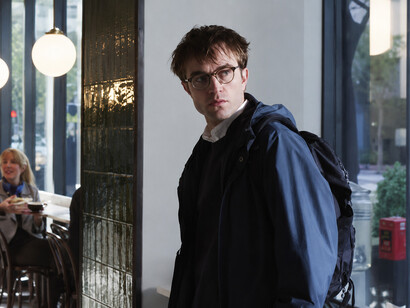
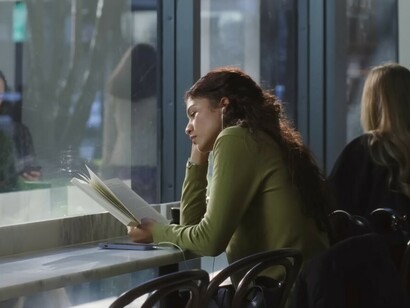
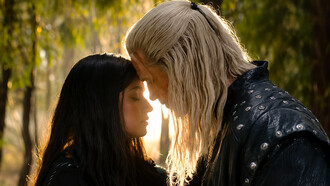
The film presents drama almost as a hysterical reaction embodied by Charlie Thompson, played by Robert Pattinson. Charlie’s life appears perfectly structured: he is financially stable, emotionally functional, successful, and about to marry Emma, played by Zendaya. Their house, their relationship, their conversations — everything suggests the polished image of contemporary upper-middle-class stability. The type of life social media teaches us to envy.
But that image begins to fracture when Emma confesses that, years earlier, as a teenager, she once fantasised about committing a mass shooting at her school after enduring bullying and social isolation. Suddenly Charlie’s entire emotional reality collapses. The revelation contaminates his idealised image of her. The woman he believed he knew becomes unpredictable, dark, and frightening.
The film seems to use the idea of a mass shooting less as a realistic exploration of violence and more as a bizarre metaphor for anxiety before commitment. Charlie becomes obsessed with the possibility that he might be marrying the “wrong person". His emotional spiral almost turns Emma’s confession into a relationship inconvenience, something that interrupts the fantasy of romantic perfection he had constructed in his head.
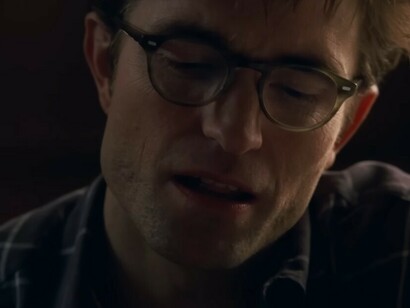
What interested me most while watching the film was not necessarily Emma’s confession itself, but Charlie’s inability to process complexity. He reacts as if he has suddenly discovered darkness exists in the world. It feels like he spent his whole life inside a Disney castle and only now realised human beings can carry violent thoughts, resentment, rage, trauma, or emotional instability.
And this is where the film accidentally becomes very close to Friedrich Nietzsche. Nietzsche believed great drama exposes the irrational forces hidden beneath civilisation. Society survives by building structures that create the illusion of order: marriage, morality, politeness, emotional control, social success, and romantic ideals. But underneath those structures exist chaos, fear, desire, humiliation, insecurity, loneliness, and violence. Civilisation works because people collectively agree to suppress these uncomfortable realities.
In the drama, Emma’s confession functions like a crack in that civilised surface. Charlie is not horrified only because of what she thought about doing as a teenager. He is horrified because her confession destroys the fantasy he built around his own life. Suddenly his perfect relationship no longer feels pure, safe, or aesthetically coherent. Emma becomes evidence that darkness exists even inside beautiful people, successful people, and loved people.
The film almost satirises Charlie’s reaction. His panic feels disproportionate because he treats Emma’s past thoughts as if they belong to another species of humanity, rather than understanding them as an extreme response to alienation and emotional abandonment. The irony is that Emma never actually committed violence. She was a lost teenager drowning in isolation and anger. Yet Charlie reacts as though her thoughts permanently corrupted her humanity.
What the film captures surprisingly well — even if unintentionally — is how differently society responds to different forms of suffering.
Charlie’s suffering is familiar and socially acceptable. Anxiety before marriage, fear of commitment, emotional insecurity: these are forms of pain modern audiences immediately recognise. They fit comfortably within contemporary conversations about mental health and relationships.
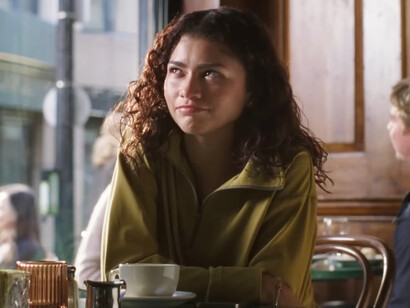
Emma’s suffering is much more uncomfortable because it forces the audience to confront questions about exclusion, race, loneliness, and rage. Society is often willing to empathise with sadness, but not with anger. Especially not the anger of people who grew up feeling invisible. Emma’s violent fantasy becomes shocking not simply because it is morally horrifying but because it reveals emotions society prefers to ignore until they explode.
Regardless of whether one judges Charlie for overreacting or Emma for having violent fantasies, one thing cannot be denied: all dramas are real to the people experiencing them. Drama is always relative to life experience.
If you grow up wealthy, protected, white, and heterosexual and are untouched by racism or financial instability, your first major trauma might genuinely be a broken knee, rejection, or a failed relationship. And that pain is still real. Pain does not stop being painful because someone else suffers more. But for people like Emma, the drama begins much earlier. Bullying, racism, humiliation, social rejection — these experiences shape the nervous system from childhood. People who grow up constantly negotiating exclusion often develop emotional realities completely different from those who grew up feeling safe inside society.
And yet, the strange thing is that we don’t really connect through privilege. We don’t look at a neighbour and think that because they have the same car as we do, we understand them. What actually creates connection is pain. If two people have gone through something that fractures them in a similar way — loss, grief, abandonment, early instability — there is an immediate recognition. If both have lost someone important at an early stage in life, for example, they tend to connect more deeply, even without explaining it. There is a kind of silent empathy that comes from shared wounds. We sympathise not because life looks the same, but because something inside has been broken in a familiar way.
In that sense, it also seems to me that people who have endured hardship — the wounded ones, the ones who struggle with money, insecurity, and instability — are often more capable of understanding others. Not in an idealised way, but in a more instinctive emotional intelligence. There is less judgement, more tolerance for contradiction, and more awareness that people are shaped by what they survive. And Emma, in a strange way, seems to demonstrate that. She does not judge others at the table after their confessions. She listens. She absorbs. She understands complexity without immediately reducing people to their worst moments. But at the same time, the people around her seem far more ready to condemn her past, to define her entirely through one moment of emotional extremity, without holding space for the life that produced it.
That is also where Charlie’s struggle becomes more interesting. His inability to connect with Emma is not just about fear or morality — it is about a lack of shared emotional reference points. He cannot locate her experience inside his own world. There is no overlap in suffering that allows him to translate what she went through into something recognisable. And without that translation, he can only see her confession as something alien, something that breaks the logic of his own emotional safety.
It also raises a more uncomfortable question about how judgement is distributed. It often feels like certain people are given the benefit of doubt more easily than others, while others are immediately defined by their worst possible interpretation. I won’t go into specific actions here so as not to spoil the film, but it is hard to ignore how quickly some lives are framed as “complex” while others are reduced to “dangerous” or "unacceptable", especially when race, background, and social position are part of the equation.
And maybe that is one of the underlying tensions in the film: connection is supposed to come from love, attraction, and shared life — but in reality, it often comes from recognising pain. Without that recognition, people remain strangely close in proximity but far apart in understanding.
Still, maybe that discomfort is exactly why the film lingers in the mind. Great drama is not meant to comfort us. It is meant to disturb the stories we tell about ourselves and about others. Nietzsche understood that civilisation depends on maintaining illusions: the illusion that love is pure, that successful people are emotionally stable, and that darkness belongs only to monsters. The drama tears holes in those illusions. It reminds us that beneath the polished surfaces of modern life there are human beings carrying resentment, fear, insecurity, loneliness, and contradictions they themselves barely understand.
The real horror in the film is not Emma’s confession. It is Charlie realising that the person he loves is not a fantasy but a human being.