English
 Español
 Français
 Deutsch
 Italiano
 Português
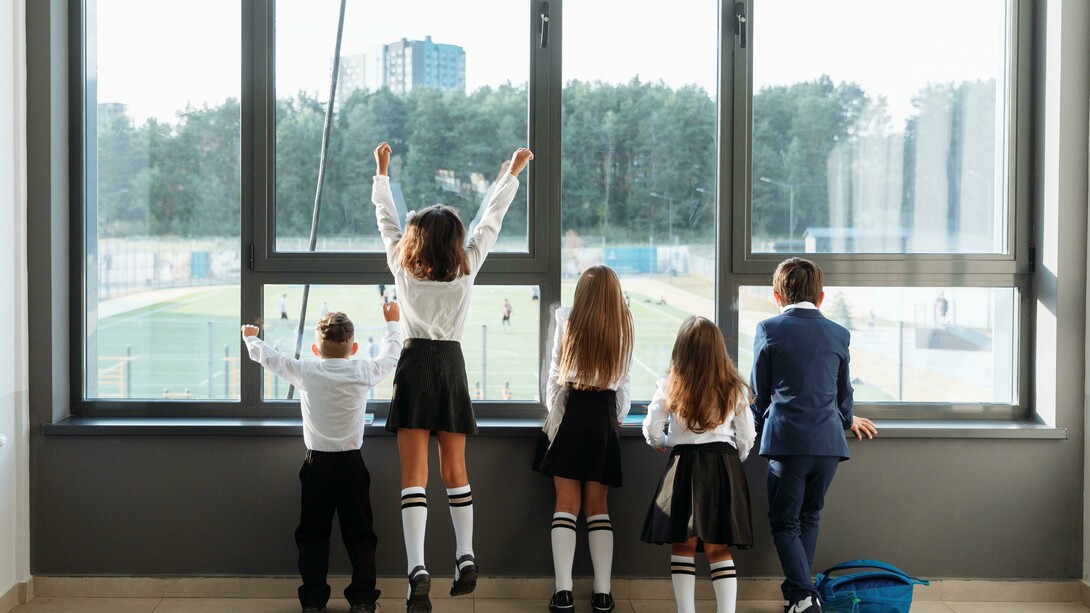
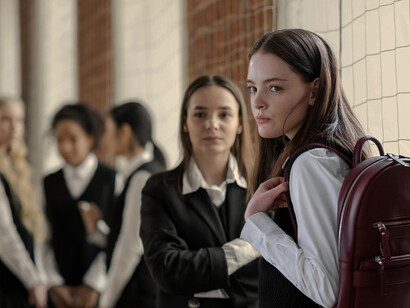
School uniforms are not the simplest choice: some love it, some hate it! So what to believe about it? In reality, uniforms are one of the most complex garments with first-hand experience we give to children. They sit at the intersection of equality and control, comfort and discipline, belonging and erasure. Yes, that is a lot to ponder on as a kid! What we place on children’s bodies at school is not just being practical only, as it can carry assumptions about how they should behave, how visible their differences are allowed to be, and how much space they are permitted to take. It can be determinant at those ages of identity shaping.
Uniforms can genuinely reduce certain pressures while creating others. They can simplify daily life for families and calm visible money or brand competition while simultaneously imposing rigid norms on bodies that are still developing. They are often justified as neutral solutions, but honestly, are uniforms really neutral clothing?
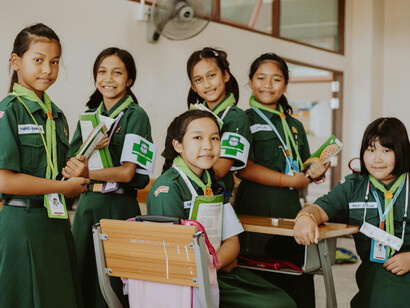
As a fashion professional working internationally, it seems to me that school uniforms are not just individual garments, but that they rather refer to an actual system. They are designed around ideals of posture, discipline, gender, and an imagined “average” body. Listening to teachers, parents, and students from all over the world has given me a wide and nuanced view of the topic’s complexity, with no one-size-fits-all answer.
What school uniforms do well
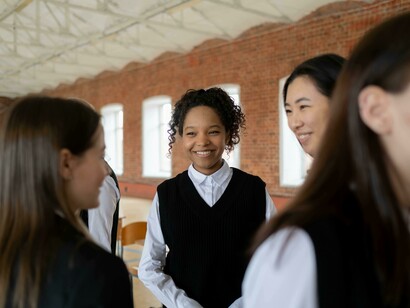
One of the most consistent benefits students mention is simplicity. Wearing the same outfit every day reduces decision-making in the morning and frees up mental space. Interestingly, especially for girls, it reduces shaming and image issues, as they don’t have to care much about fashion at all until the rare non-uniform days, which often can become unexpectedly stressful, loaded with pressure to perform individuality. Several teachers described a visible drop in body comparison and sexualized attention once uniforms were introduced. One noted that on non-uniform days, girls often appeared more self-conscious and distracted, while uniform days created a calmer and more focused atmosphere.
Parents frequently point to equality as a major advantage. Uniforms reduce visible economic differences and soften daily comparisons between students. In schools with strong secondhand systems, uniforms can genuinely limit exclusion based on clothing access for every family. Some schools actively organize second-hand uniform sales or discreetly provide uniforms to families who cannot afford them, making it difficult to tell who comes from wealthier or more modest backgrounds. Several parents also note practical benefits: fewer clothes overall, less laundry, clearer budgets, and easier routines, etc. Which, if you are a modern mum of two, can represent a huge gain in time and invisible labor.
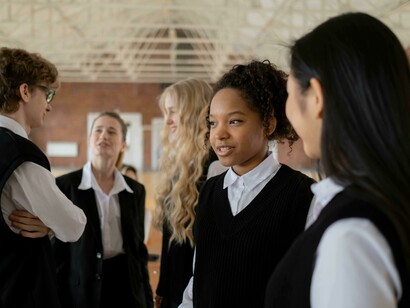
Teachers often observe behavioral effects. Students in uniform tend to appear more focused, more formal, and sometimes more confident. The clothing seems to signal expectations such as how to sit, how to speak, and how to behave. One teacher described a striking contrast between days when students wore blazers and days when they were allowed casual clothing: posture changed, confidence shifted, and classroom dynamics became noticeably more formal. For some students, this structure is grounding and positively influential.
Uniforms also reduce sexualized pressure, particularly on girls. By limiting body-revealing clothing, schools often see less distraction, fewer comments, and a calmer social environment. All the above can naturally contribute to better mental health in both the classroom and the home.
Where uniforms fall short
The strongest critiques of school uniforms are physical and practical. Complaints about itchiness, rigid fabrics, poor breathability, bad design, terrible cuts and sewing, and low durability are common. Students often describe jumpers that feel scratchy, skirts with no shape at all, or bulky blazers that are uncomfortable to wear for long days. More importantly, many uniforms are poorly adapted to real body diversity. Larger bodies, petite frames, varied shoulder widths, hip shapes, and proportions are often not treated at all in the design parameters. And I will not even start discussing the topic of colors, in which some will look great and others terrible. (Imagine seeing your face colored mortified every day!)
Uniform grading systems tend to assume a standard body that we know does not exist, as there are as many body types as there are people in the world. Same for coloring systems of warm, cool, deep, light, soft, or saturated undertones. It gives you 1 chance out of 6 to get the right color for you, which is, to me, quite a bad metric luck.
When clothing is uncomfortable or ill-fitting, it can become a daily reminder of not fitting the rank. Several former students recalled how uniforms were particularly unforgiving for those whose bodies didn’t match the expected silhouette, creating discomfort and quiet shame rather than neutrality. Imagine the healthiness of your body self-image after a few years feeling like looking like a potato bag. Sometimes, the possibility of tailor-made uniforms can help support this gap in some schools with those options at a cost.
Gendered design is another recurring issue. Mandatory skirts, restrictive grooming rules, and gender-coded silhouettes disproportionately affect girls and queer students. For some, these rules directly undermine safety and self-acceptance. One teacher shared that as a queer student, a mandatory skirt policy would have been enough for her to avoid school altogether. Clothing policies, in that sense, can quietly dictate who feels welcome… and who does not. To be careful.
Uniforms also create an illusion of equality. While everyone may wear the same colors, differences reappear elsewhere: in shoes, bags, tailoring, cleanliness, and how easily worn items can be replaced. Uniforms can regulate appearance, but it might be that they cannot fully erase social hierarchies.
Finally, uniforms can enforce behavioral conformity. Teachers often notice a sharp contrast between uniform days and casual days, not only in dress but also in posture, confidence, and conduct. This raises an uncomfortable question: are uniforms supporting learning or is it training compliance?
What students actually do
Despite strict rules, students rarely wear uniforms passively. Skirts are shortened, socks styled deliberately, and shoes chosen carefully. Bags, jewelry, and grooming become sites of expression. These micro-adjustments are fashion in its most political form: small acts of agency within constraint. Even when options are limited, students find ways to signal individuality. Unless accessories, bags, shoes, and hairstyles are also strictly regulated and rigid.
Not all students need clothing to express identity. Some say fashion simply isn’t important to them. But for some minorities, such as queer students or those already marginalized, clothing can be one of the few visible tools of self-definition available to them. Or, depending on the rules, it can do the opposite.
Sitting or fitting with the tension
The debate around school uniforms englobes a lot of topics and is not only about clothes. It shows as a collective how we attempt to produce equality, often through sameness, and whether this is truly the best decision for students is a big, healthy question to ask. Uniforms can reduce certain social pressures while invisibly reinforcing others. They can create belonging and, at the same time, signal exclusion.
Rather than asking whether school uniforms are good or bad, it may be more honest to recognize them for what they are: powerful social tools but complex too. They shape behavior, identity, and belonging in ways that extend far beyond the classroom and can influence future professional self-image. Will having structure make you rigid and prevent you from exploring your identity at an early age? (It is called killing creativity, by the way). Or will walking daily in an image that is not you slowly erode personality and affect mood during adolescence? Or, on the contrary, will it teach polish, structure, and a sense of collective belonging that will make you reflect a great image and self-confidence or remove your attachment to superficial appearance? I say “you” because I want you to put yourself in their shoes and wonder what is best for the kids and what we wish they would experience in the future and what the future needs.
I once read that the way we are introduced to clothing shapes how we later behave with our own clothes as adults. Many adults who grew up with strict school uniforms seem either to gravitate toward minimalist wardrobes or to swing in the opposite direction, using clothing as a space of delayed colored funky expression.
Sitting with this tension (without rushing to resolve it) might be the most responsible place to begin answering the question of how we create garments that unify while remaining inclusive and diverse. This exact same dichotomy already sits at the center of every individual clothing experience. How do we create balance within such systems? How to belong and unify at the same time as being authentic and respectful of oneself?
I often wonder how different uniform experiences could be if schools worked more closely with professional stylists and image consultants trained in bodies, color, fit, and identity so that dress codes are not only coherent but also make the wearer feel alive and fulfilled.