English
 Español
 Français
 Deutsch
 Italiano
 Português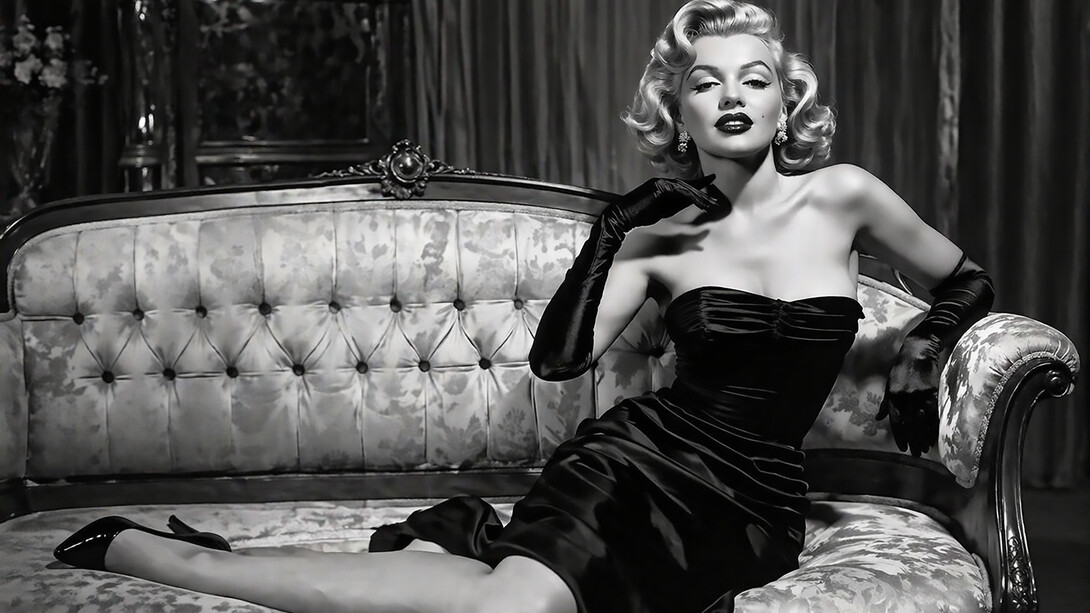
Few garments in fashion history have achieved the cultural resonance and enduring relevance of the Little Black Dress (LBD). Simple in appearance yet infinitely adaptable, it has transcended trends, decades, and even ideologies of femininity. What began as an exercise in restraint and elegance has become a global symbol of empowerment, reinvention, and individuality. The LBD is not just a piece of clothing; it is a mirror reflecting how women’s roles, identities, and expressions of self have evolved over the past century.
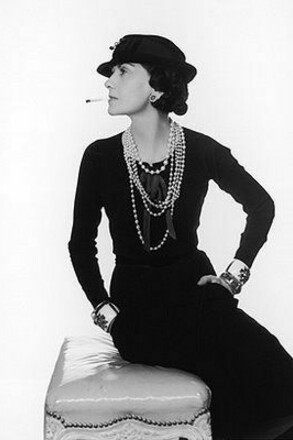
The story of the Little Black Dress begins in the 1920s with Coco Chanel, a designer who fundamentally reshaped modern women’s fashion. At the time, black was largely associated with mourning or domestic service uniforms. Chanel challenged this perception by introducing a simple, elegant black dress in 1926, published in Vogue, which famously predicted it would become a “uniform for all women of taste".
Her vision was radical in its simplicity. The original LBD was straight-cut, unfussy, and designed to be accessible. It rejected the corseted silhouettes and ornate embellishments that had dominated women’s fashion. Instead, it embraced comfort, versatility, and a quiet sophistication that allowed the wearer—not the garment—to take centre stage.
In Chanel’s hands, black was no longer restrictive or sombre. It became democratic. It was a blank canvas that allowed women of different social classes and identities to project elegance without excess. This was not merely a design innovation; it was a cultural shift.
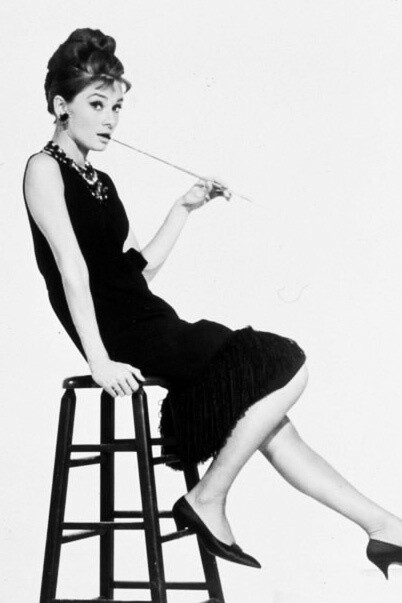
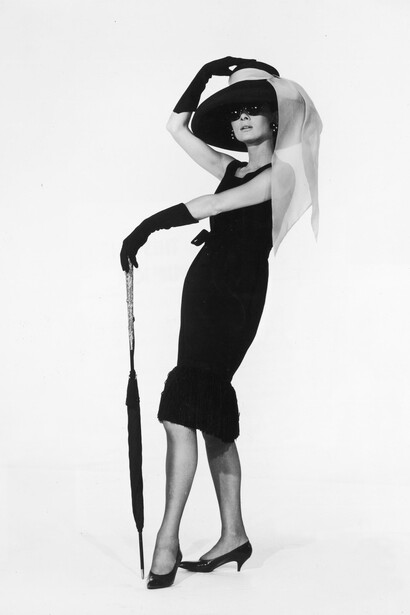
By the mid-20th century, the LBD had moved beyond Parisian couture and into the global imagination, largely through cinema. Hollywood transformed the dress into a symbol of allure and mystery. Actresses such as Audrey Hepburn, Grace Kelly, and Marilyn Monroe each contributed to its mythology, although in very different ways.
Audrey Hepburn’s appearance in Breakfast at Tiffany’s remains one of the most iconic fashion moments in film history. The sleek black Givenchy dress, long gloves, and pearls redefined the LBD as the ultimate expression of refined elegance. It was no longer just practical—it was aspirational. The dress could now signal sophistication, independence, and a modern femininity that balanced innocence with confidence.
At the same time, Hollywood used the LBD to explore the duality of women’s identities on screen: the femme fatale, the ingénue, the mysterious outsider. Its versatility made it the perfect costume for storytelling, capable of shifting meaning depending on how it was styled or worn.
After World War II, fashion underwent another transformation. As societies rebuilt, there was a renewed emphasis on practicality and restraint. The LBD thrived in this environment. Designers such as Hubert de Givenchy, Cristóbal Balenciaga, and Yves Saint Laurent refined its silhouette, each adding their own interpretation of modern elegance.
During this period, the LBD became more accessible to a wider audience. It was no longer exclusively haute couture; it entered department stores and everyday wardrobes. Women began to own not just one dress but also a version of the LBD that could adapt to multiple roles—office wear, evening events, or social gatherings.
This democratisation reflected broader social changes. Women were entering the workforce in greater numbers, gaining financial independence, and redefining their public identities. The LBD, with its adaptability and understated elegance, became a natural companion to this evolving lifestyle.
By the 1980s, fashion entered an era of boldness. Power dressing dominated, with structured silhouettes, exaggerated shoulders, and statement aesthetics designed to project authority. Yet even in this maximalist context, the LBD persisted—though it evolved.
Designers began experimenting with its form, introducing asymmetry, lace, leather, and unconventional cuts. The dress became less about uniformity and more about expression. It could be aggressive, sensual, minimal, or avant-garde depending on the designer’s intent.
In the 1990s, minimalism returned with force. Designers like Calvin Klein and Helmut Lang stripped fashion down to its essentials. The LBD aligned perfectly with this aesthetic shift. Sleek slip dresses, simple jersey cuts, and understated silhouettes became symbols of modern cool. The dress was no longer just elegant—it was effortless.
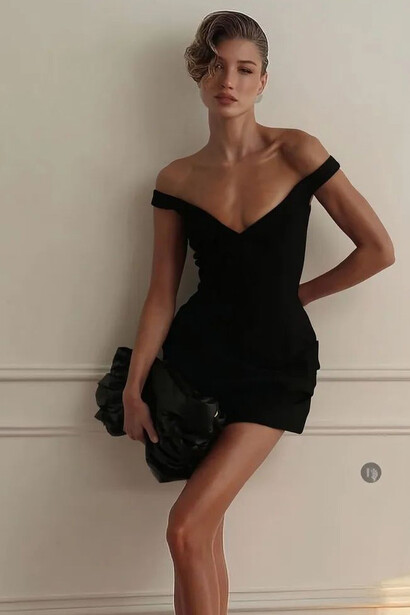
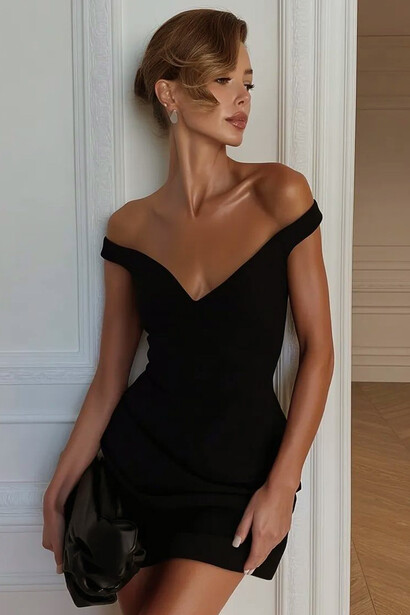
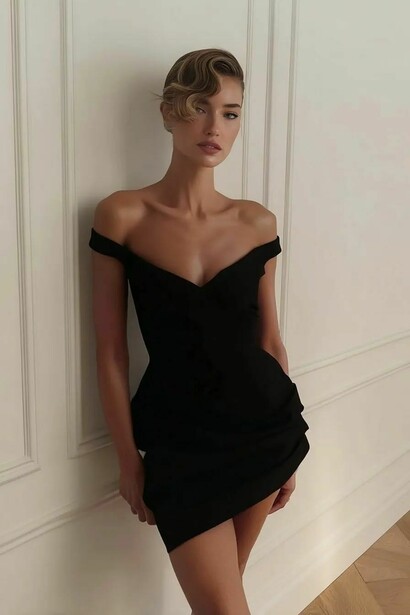
Today, the Little Black Dress exists in an almost infinite number of variations. It has been reimagined by luxury houses, independent designers, and fast-fashion brands alike. Yet despite its ubiquity, it has not lost its cultural weight. Instead, it has become more personal than ever.
In the contemporary fashion landscape, the LBD is no longer defined by a single silhouette. It can be structured or fluid, modest or daring, vintage-inspired or futuristic. Designers use it as a foundation for experimentation—playing with texture, transparency, and proportion.
More importantly, the LBD now reflects a broader shift in how femininity is understood. It is no longer tied to a singular ideal of elegance or restraint. Instead, it embraces multiplicity. A black dress can be powerful, romantic, and rebellious all at once.
What makes the Little Black Dress so enduring is its ability to evolve without losing its essence. At its core, it remains simple: a black dress that offers versatility, elegance, and ease. Yet within that simplicity lies endless possibility.
It reflects the shifting landscape of femininity itself. In the 1920s, it was about liberation from constraint. In the 1950s, it was about elegance and aspiration. In the 1980s, it became a tool of power. Today, it is about individuality and choice.
Perhaps this is why the LBD continues to resonate. It does not dictate who the wearer should be—it adapts to her. It allows space for transformation, for contradiction, for reinvention. In a world where fashion often moves at an overwhelming speed, the Little Black Dress remains a constant: quiet, confident, and endlessly modern.
More than a garment, it is a cultural language—one that continues to evolve with every woman who wears it.