English
 Español
 Français
 Deutsch
 Italiano
 Português
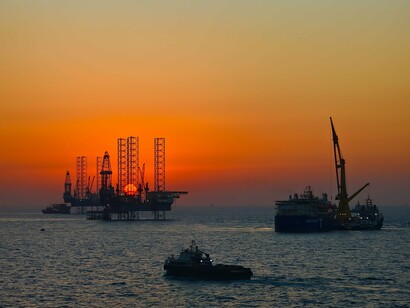
Global climate change is like a dark, swelling storm that’s gathering strength and destructive power as it moves into our lives. The world’s governments have not stopped it. Fossil fuel companies are ignoring it, conducting business as usual even though the pollution from their products is the principal preventable cause.
Market forces aren’t stopping it, either. In 2007, British economist Sir Nicholas Stern called fossil fuels the “biggest market failure in history” because the price consumers pay for them did not include their massive costs to public health and the environment. That’s still the case.
So, although the use of clean energy from sunlight and wind is growing, fossil fuels still account for 86 percent of the world’s energy supply, and their climate-altering pollution is still setting records. It’s not only a market failure. It’s arguably the biggest government failure in history, too.
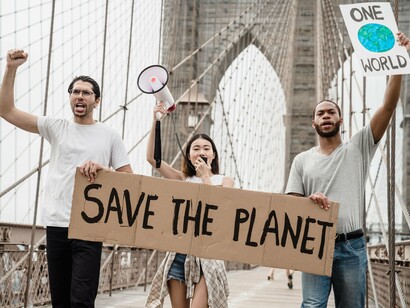
Now, many communities bearing climate costs are turning to courts, and climate law is an emerging field of jurisprudence. Most of the lawsuits seek to hold the industry liable for climate damages as well as the costs of armoring itself against the impacts of global warming. The lawsuits are drawing considerable opposition from the powerful oil and gas industry, as we’d expect. Countries that rely heavily on fossil fuel production also are pushing back, none more vigorously than the world’s biggest oil and gas producer, the United States, under Donald Trump.
The question is whether climate liability laws and legal precedents will evolve rapidly enough to prevent irreparable climate harm and to force big oil companies into joining the world’s transition to clean fuels. Here are some developments:
The most recent analysis, current through April of last year, found that 173 lawsuits were underway regarding climate change, nearly half of them in the United States. About 40 were still active in the U.S. Most sought to make fossil-fuel companies responsible for paying the costs of climate-related damages or adaptation efforts. None have gone to court yet.
In the U.S., litigants are asking judges to apply traditional nuisance, negligence, and similar laws to climate-altering pollution. However, there is no comprehensive national law that holds fossil-fuel producers liable for climate damages.
The U.S. states of Vermont and New York have passed “climate superfund” laws that allow litigants to recover costs related to healthcare and climate resilience. The Trump administration is actively challenging these laws.
The U.S. Supreme Court is expected to decide whether federal law prohibits states from “seeking relief for injuries” caused by interstate and international greenhouse gas pollution.
A court in the state of Washington is considering a claim that the oil industry is responsible for the death of a young mother from heat-related causes when temperatures reached 108 degrees Fahrenheit (over 42 degrees Celsius). The heat dome that caused this temperature was said to contribute to 1,200 deaths. Scientists said it would not have been possible without climate change.
Last year, the International Court of Justice concluded that existing treaties and laws create a legal obligation for countries to prevent significant harm from global warming. However, the ruling was only advisory, not binding. It might influence courts to hold governments responsible for reducing fossil fuel pollution, but it can’t force them to do so.
Also last year, the Inter-American Court of Human Rights acknowledged that governments have extensive obligations to prevent climate-related damages. But this, too, was an advisory rather than a binding opinion.
In 2024, the International Tribunal for the Law of the Sea decided that greenhouse gases – the family of pollutants that trap the sun’s heat near the Earth’s surface – qualified as pollution under the Law of the Sea Convention. In other words, maritime activities were required to exercise due diligence to prevent the pollution.
A ChatGPT search summarized that international law is evolving toward a clearer governmental duty to mitigate foreseeable climate harm; greater recognition that states must regulate major private emitters; more use of adaptation science to apportion responsibility for pollution; and the recognition that climate change is a human-rights issue.
In the U.S., however, the oil industry is lobbying the U.S. Congress to shield it from liability for climate-related costs. At least five U.S. states have already passed shield laws. The industry’s lobbying group, the American Petroleum Institute, has made opposition to “extreme climate liability policy” one of this year’s priorities. Trump is helping. Soon after beginning his second term as president last year, he ordered government attorneys to act against state climate laws and programs.
At the same time, the National Academies of Sciences, Engineering, and Medicine, one of the U.S. government’s premier research institutions, has concluded that science’s ability to determine global warming’s contribution to specific disasters is robust enough to serve as credible evidence in court.
The institution contributed a chapter to a manual for judges that provides an overview of climate science. Trump has ordered an investigation of how the chapter was funded. He blamed “Radical Left Democrats who, it turns out, published fraudulent, biased, and misleading manuals on climate change.” He claimed inaccurately that climate-change lawsuits “have created huge losses across our country.”
In reality, it is climate change, not lawsuits, that’s creating huge losses across the United States and the rest of the world. Losses totaled $224 billion worldwide last year, including $115 billion in the United States.
There’s no mystery about why big oil and gas companies want to deny responsibility for climate damages. The world’s existing fossil-fuel infrastructure is said to be worth around $40 trillion. In addition, the world’s underground reserves of fossil fuels are worth about $240 trillion. Scientists warned in 2012 that two-thirds of the reserves would have to be unused to keep global warming from becoming catastrophic.
On the other hand, the Potsdam Institute estimates that the cost of climate change would reach nearly $40 trillion annually by mid-century, counting only the greenhouse gases released by 2024 and the damages from rain and heat. The institute didn’t calculate damages from sea-level rise, wildfires, and other climate-related events.
The liability battle over global warming’s damages involves the “polluter pays” principle, the sensible idea that polluters should pay for the damages they cause. The Organization for Economic Co-operation and Development (OECD), whose members are the 38 most advanced countries, adopted it 54 years ago. It is regarded as “one of the foundation principles of environmental policy to guide sustainable development worldwide.”
People will argue about whether the polluters are the companies that produce, promote, and distribute fossil fuels; the governments that keep subsidizing the fuels and hiding their true costs; or the consumers who use them. All are culpable.
But the industry deliberately covered up its knowledge that its products were causing irreversible changes to the planet. It used misinformation and maligned independent scientists whose work substantiated the industry’s role. It uses its money, influence, and armies of lobbyists to elect friendly political leaders, who pass friendly laws. It intimidates critics with malicious lawsuits. It refuses to participate in the world’s necessary transition to clean energy, even though it is a huge economic opportunity. Governments not only enable this behavior; they also subsidize it.
Someone must pay. Rather than the people suffering from climate change, it should be the corporations and investors who are causing and getting rich from it.