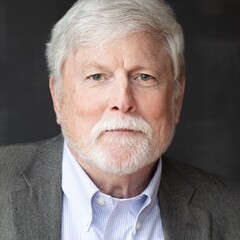
William Becker, 79, is an American living in the heartland of the United States. He is a journalist, author, and former senior official at the U.S. Department of Energy, where he specialized in renewable energy technologies. Today, he is widely regarded as an expert in and architect of national and international policies on global warming, clean energy, environmental stewardship, climate change adaptation, disaster recovery, and democracy.
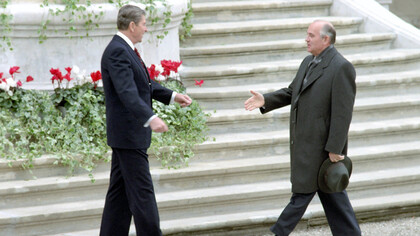
Becker is the founder and executive director of the Presidential Climate Action Project (PCAP), which has developed recommendations since 2007 for U.S. presidents, presidential candidates, and members of Congress on how to confront global climate change and lead America’s transition to clean energy. He has consulted with international leaders on these topics as a member of Mikhail Gorbachev’s International Climate Change Task Force.
Becker began his career as a 19-year-old combat correspondent for the U.S. Army during the Vietnam War, where he earned the Bronze Star Medal. He wrote for the Associated Press after leaving the military and later published his own weekly newspaper in rural Wisconsin.
His newspaper was headquartered in a frequently flooded village in Wisconsin, Soldiers Grove. The federal government offered to build a levee around the community, but Becker proposed instead that the village move to higher ground. Although the government declined to help (it believed in building dams and levees to control floods rather than avoid them), the village undertook an eight-year project to move to higher ground. In the process, it built America’s first passive-solar-heated business district. It was also one of America’s first voluntary relocation projects related to climate change.
In 1994, Becker was a senior official at the U.S. Department of Energy (DOE). After a historic flood in the Mississippi River Valley, other villages in the United States asked Becker to help them plan similar relocations. Becker created DOE’s Center of Excellence for Sustainable Development, which organized teams of experts to help communities recover from weather disasters using sustainable development principles. Among other post-disaster situations, Becker organized or participated in teams that helped one of New Orleans’ poorest neighborhoods plan its recovery after Hurricane Katrina and helped design new homes for the victims of the 2004 Christmas Tsunami in Thailand. Becker has authored several workbooks and manuals on how other communities can engage in sustainable disaster recovery.
During his eclectic career, Becker has also served as associate director of the Wisconsin Energy Extension Service, research director for the Wisconsin State Senate, editorial writer for an urban daily newspaper, executive assistant to the Attorney General of Wisconsin, Counselor to the Administrator of the U.S. Small Business Administration, Special Assistant to the Assistant Secretary for Energy Efficiency and Renewable Energy at DOE, and director of agency’s 14-state Midwest Region.
After leaving the government in 2007, Becker organized several conferences on sustainable development, where he met and began working with national and international thought leaders to develop public policies on climate change. He created PCAP, which has produced proposals, many still relevant today. They include 200 policies developed at the request of then-President Barack Obama with input from more than 100 leaders in U.S. industries, subnational governments, and non-government organizations. The policies are published in a wide-ranging report titled “Powering Forward.”
In his latest book, The Creeks Will Rise: People Coexisting with Floods, Becker gives a blow-by-blow account of the Soldiers Grove relocation as a model of what other flood-prone communities can do to adapt to climate change. His premise is that solutions can often be found not by trying to control nature, but by cooperating with it. The second half of the book proposes that nations dedicate the rest of the 21st century to changing civilization’s relationship with the natural world from dominance to collaboration, in repairing damaged ecosystems, and to reverse course on the activities that are moving the planet into unsafe operating spaces.
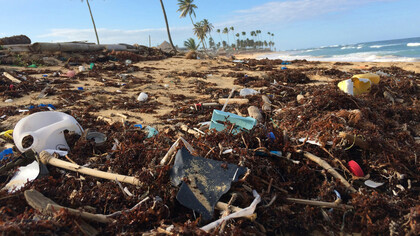
Becker points out that the Anthropocene, a proposed new epoch based on the idea that humankind has become the most influential force on Earth, is premised on the damage that civilization has done, ranging from greenhouse gas and plastic pollution to threatening the health of oceans. The world’s top geologists have rejected the proposal because they considered the evidence too new to constitute an epochal change. Becker suggests that instead, nations collaborate to create a new epoch called the Biocene, based on positive changes in humanity’s behaviors rather than its mistakes.
Becker is also the author of The Indefensible Society, which advocates diverting military spending to ecosystem restoration, climate action, and the clean energy transition. In The 100-Day Action Plan to Save the Planet, Becker offered a national policy framework to stabilize the climate. He is a co-editor and contributor to Democracy Unchained, a collection of essays by 38 distinguished authors on rebuilding America’s democracy, and a contributor to the sequel, Democracy in a Hotter Time, on the connection between democracy and global climate change.
In addition to his monthly articles in Meer, Becker writes weekly opinion columns for The Hill, one of the United States’ most widely read political websites focused on the U.S. presidency and Congress.
He is an advisor to the Environmental and Energy Study Group in Washington, D.C., and Natural Capitalism Solutions, a Colorado-based organization whose international work is dedicated to creating economies in service to life. He is a senior fellow at the Climate Democracy Initiative.
In 2024, he was named to Who’s Who in America, awarded “to individuals who possess professional integrity, demonstrate outstanding achievement in their respective fields and have made innumerable contributions to society as a whole.”






























 English
 Español
 Français
 Deutsch
 Italiano
 Português