English
 Español
 Français
 Deutsch
 Italiano
 Português
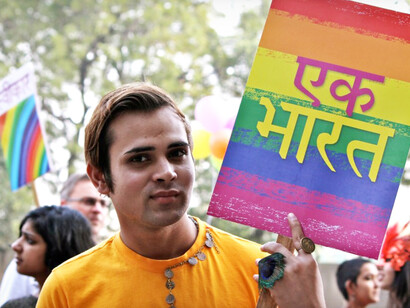
In 2019, the Indian Parliament passed the Transgender Persons (Protection of Rights) Act, a piece of legislation that was, on paper, a historic acknowledgement of a community that had been legally invisible for decades. Yet, what should have been a moment of celebration became a flashpoint of protest, with transgender activists, legal scholars, and civil society organisations condemning the very law that purported to protect them. The contradiction at the heart of this bill encapsulates one of modern India's most pressing civil liberties challenges: the difficulty of legislating identity, dignity, and self-determination in a context shaped by caste hierarchy, colonial legal residues, and bureaucratic gatekeeping.
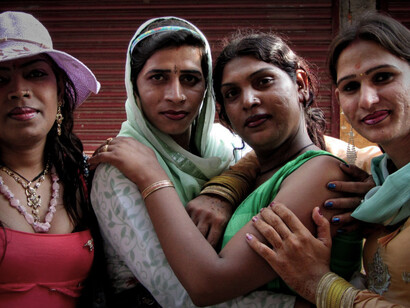
India is home to approximately 4.88 lakh (488,000) transgender persons as recorded in the 2011 Census, though activists argue the actual number is far higher, with estimates ranging from 2 to 6 million, given the social stigma that discourages self-identification (Census of India, 2011; UNDP India, 2010). This population has historically occupied a liminal social space: simultaneously revered in certain ritual contexts, particularly within the Hijra tradition, and systemically excluded from education, employment, healthcare, and civil life. The Transgender Persons Act was supposed to bridge this gap. Instead, it has become a site of contention that illuminates the deep tensions between state paternalism and individual autonomy.
Historical and legal backdrop
India's relationship with gender non-conformity long predates its encounter with the modern state. The Hijra community, encompassing individuals assigned male at birth who identify as women, intersex individuals, and others who exist outside the gender binary, has been documented in Indian subcontinent history for over two millennia, with references appearing in the Kama Sutra, the Ramayana, and Mughal court records (Nanda, 1999). Hijras occupied specific social roles, performing at births and weddings in exchange for blessings and gifts, a practice known as badhai. Their social position was complex: stigmatised in some registers, sacred in others.
Colonial law fundamentally disrupted this ambiguous social accommodation. The Criminal Tribes Act of 1871, one of the most damaging pieces of colonial legislation, classified Hijras as a 'eunuch' community predisposed to 'unnatural offences' and required their registration with police authorities. Though this Act was repealed in 1952 after independence, its residual logic persisted in local police acts across several states, which continued to target Hijra communities through the 20th century (Narrain, 2004). Section 377 of the Indian Penal Code, criminalising 'carnal intercourse against the order of nature', remained on the books until partially struck down by the Supreme Court in Navtej Singh Johar v. Union of India (2018), casting a long shadow over gender-nonconforming individuals who feared prosecution for their very existence.
The modern legal trajectory began in earnest with the National Legal Services Authority (NALSA) v. Union of India judgement in 2014, which stands as a watershed in Indian transgender jurisprudence. A two-judge bench comprising Justices K.S. Radhakrishnan and A.K. Sikri unanimously held that transgender persons are entitled to legal recognition as a 'third gender', that the right to self-identified gender is fundamental under Articles 14, 19, and 21 of the Constitution, and that the state must take affirmative measures to uplift the community. The NALSA judgement drew significantly on international human rights principles, including the Yogyakarta Principles of 2006, which articulate binding obligations on states regarding sexual orientation and gender identity (Supreme Court of India, 2014).
The NALSA verdict raised enormous expectations. It seemed to promise self-determination: the right to declare one's own gender without medical gatekeeping or third-party certification. What followed, however, was a prolonged legislative process that systematically walked back this promise.
The Transgender Persons (Protection of Rights) Act, 2019: key provisions
The Transgender Persons (Protection of Rights) Act, 2019 (hereinafter 'the Act') received presidential assent on 5 December 2019. It defines a 'transgender person' as one whose gender 'does not match the gender assigned at birth' and includes trans-men, trans-women, persons with intersex variations, genderqueers, and persons with socio-cultural identities such as Kinnar and Hijra. On paper, this is an inclusive definition. In practice, the Act has been criticised on multiple structural grounds.
The most controversial provision is Section 5, which requires any transgender person seeking legal recognition of their gender identity to apply for a 'certificate of identity' from the district magistrate. The certificate is issued based on an application accompanied by an affidavit, a relatively accessible requirement. However, the Act's original draft proposed medical examination boards to certify gender identity, drawing fierce criticism that forced a partial retreat. Even so, the certification process remains bureaucratically onerous and discretionary.
Section 7 of the Act further specifies that if a transgender person wishes to change their legal gender to 'male' or 'female' (as opposed to 'transgender'), they must have undergone 'surgery' and obtained a certificate from the Chief Medical Officer. This provision directly contradicts the spirit of NALSA, which explicitly held that self-identification does not require medical intervention, and mirrors the discredited medical pathologisation model that the World Health Organisation (WHO) abandoned when it reclassified gender incongruence as a non-disorder condition in its ICD-11 (2019).
The Act also criminalises 'begging' under Section 19, a provision read alongside the fact that a large proportion of the trans community, historically excluded from formal employment, relies on traditional practices like Badhai or informal street-based livelihoods. The National Human Rights Commission (NHRC) has documented that over 92% of transgender persons in India face employment discrimination, and 96% are denied jobs in mainstream sectors (NHRC, 2018). Criminalising begging without providing alternative economic pathways amounts to penalising poverty created by state exclusion.
Provisions on violence and exploitation
Chapter V of the Act deals with offences against transgender persons, prescribing punishments for forced or bonded labour, denial of residence, physical and sexual abuse, and abandonment. The punishments range from six months to two years of imprisonment, widely criticised as grossly inadequate. For context, rape under the Indian Penal Code carries a minimum sentence of seven years and a maximum of life imprisonment. Sexual assault against a transgender person under the 2019 Act would attract a maximum of only two years.
The Act does not recognise marital rape of transgender persons as an offence, does not adequately address the violence perpetrated within Gurughar (teacher-student) systems within the Hijra community, and fails to provide specific protections for transgender children, a glaring gap given that a 2018 study by SAATHII found that 51.5% of transgender individuals experienced sexual violence before the age of 18 (SAATHII, 2018). The absence of these protections has led scholars to argue that the Act provides a simulacrum of protection while functionally replicating historical patterns of exclusion.
The 2024 Supreme Court challenge and recent developments
The most significant recent legal development is the ongoing challenge to the act before a Constitution Bench of the Supreme Court. A cluster of petitions, consolidated and listed under the caption Meghna Jadhav v. Union of India and related matters, argues that the Act is unconstitutional on grounds of violating Articles 14 (equality before law), 19(1)(a) (freedom of expression, including expression of identity), and 21 (right to life with dignity), as interpreted through the NALSA framework.
A key argument before the Court is that the requirement of surgical certification to change legal gender to male or female violates bodily autonomy, a right the Supreme Court has recognised as a fundamental dimension of Article 21 ever since Puttaswamy v. Union of India (2017), which held that the right to privacy is a fundamental right. The argument runs that requiring irreversible surgery as a condition for legal gender recognition compels individuals to modify their bodies to access a legal status, an act of state-mandated bodily coercion.
The Ministry of Social Justice and Empowerment, in its affidavit before the court, has defended the certification process as a 'safeguard against misuse'. This framing, common in state responses to gender identity legislation globally, reflects the assumption that gender identity is a category susceptible to fraud, a position unsupported by comparative evidence from countries like Argentina, where a self-declaration model introduced in 2012 has not produced any documented misuse (ILGA World, 2023).
In 2024, the National Commission for Women (NCW) filed an intervention in the matter, complicating the picture by raising concerns about the impact of self-identification models on women's spaces, an argument paralleling the 'gender-critical' position in British legal discourse following the UK Supreme Court's ruling in For Women Scotland v. Scottish Ministers (2025). This intervention has been sharply contested by transgender advocacy groups as a misrepresentation of risk and as a tactical alignment between the state and conservative civil society actors.
Welfare provisions and their implementation gaps
The Act does establish a National Council for Transgender Persons under Section 16, comprising government officials, elected representatives, and transgender community representatives. The Council is tasked with advising the central government on policies, monitoring the implementation of legislation, and addressing grievances. However, the Council met only twice in its first three years of existence, and its recommendations have no binding force, a structural design that critics argue renders it largely ceremonial (Anand, 2022).
The Garima Greh scheme, launched by the Ministry in 2021, provides shelter homes for transgender persons facing family rejection. As of March 2024, only 25 such homes have been established across India, against an estimated need for several hundred (Ministry of Social Justice and Empowerment, 2024). Educational institutions remain widely inaccessible: the Act mandates non-discrimination in education, but the Transgender Persons (Protection of Rights) Rules, 2020, do not prescribe specific penalties for educational institutions that violate this mandate.
Healthcare access, a dimension explicitly connected to the Act's protective framework, remains critically deficient. A 2022 survey by Humsafar Trust found that 60% of transgender respondents in Mumbai had faced denial of healthcare services. Hormone replacement therapy (HRT) and gender-affirming care are not covered under the Ayushman Bharat public health scheme, the government's flagship universal health coverage initiative, leaving transgender persons to fund expensive procedures privately or go without.
Comparative perspectives
India's legal approach to transgender recognition sits awkwardly among global models. At the progressive end, Argentina's Gender Identity Law (2012) allows any person above 18 to request a change of gender marker in civil records without medical diagnosis, surgery, or judicial intervention. Denmark (2014), Ireland (2015), Norway (2016), Belgium (2018), and New Zealand (2023) have all implemented self-declaration models with minimal preconditions. Malta's Gender Identity, Gender Expression and Sex Characteristics Act (2015) prohibits surgical intervention on intersex infants, going further than most. India's surgical certification requirement, by contrast, aligns with the now-deprecated model used by most European states before the early 2010s.
The contrast with Pakistan is also instructive. Pakistan passed the Transgender Persons (Protection of Rights) Act in 2018, which allows self-identification-based registration, a more progressive self-determination framework than India's, despite Pakistan's broader restrictions on LGBTQ+ rights. This anomaly reflects the complex and often non-linear relationship between gender identity law and broader sexual rights frameworks.
Community voices and the politics of representation
No analysis of the 2019 Act is complete without centring the community voices that shaped the political struggle. Activists like Laxmi Narayan Tripathi, Gee Imaan Semmalar, Grace Banu, and Sudha Kongari have been central to documenting the law's failures and advocating for its reform. Grace Banu, a transgender rights activist and engineer from Tamil Nadu, has emphasised the intersectional dimension: that caste discrimination compounds trans exclusion, noting that Dalit transgender women face compounded marginalisation that neither caste-based nor gender-based frameworks adequately capture (Banu, 2020).
The transgender community is not monolithic. Debates exist within the community regarding the legal recognition of Hijra identity; some activists argue that the 'third gender' category in NALSA and the Act risks fixing fluid identities into bureaucratic boxes, while others see legal recognition as an indispensable starting point for welfare access. These internal tensions complicate advocacy and highlight the difficulty of creating law for a heterogeneous community through a universalising state apparatus.
Conclusion
The Transgender Persons (Protection of Rights) Act, 2019, represents both an advance and a retreat. It acknowledges the existence and rights of a community long rendered invisible; it creates institutional mechanisms that, however weak, did not previously exist; and it makes explicit what the Constitution always implied, that transgender persons are equal citizens entitled to protection from discrimination. Yet, the Act systematically undercuts the very rights it purports to guarantee by imposing medicalised certification requirements that the Constitution and international law reject, by prescribing inadequate penalties for grave violence, and by creating welfare infrastructure far too thin to address the scale of structural exclusion.
The ongoing Supreme Court litigation offers a moment of constitutional reckoning. If the Court upholds the NALSA framework in full, India could move toward a self-identification model consistent with its own constitutional values and international human rights obligations. If it does not, the Act will remain a monument to the gap between legal aspiration and lived reality, a gap that transgender persons in India navigate every single day, at enormous personal cost.
References
Census of India. (2011). Primary census abstract for transgender. Office of the Registrar General and Census Commissioner, India.
NHRC (National Human Rights Commission). (2018). Report on the rights of transgender persons in India. New Delhi: NHRC.
SAATHII. (2018). Violence and discrimination against transgender persons in India: A community-based study. Chennai: SAATHII.
Supreme Court of India. (2014). National Legal Services Authority v. Union of India, Writ Petition (Civil) No. 400 of 2012.
Supreme Court of India. (2017). Justice K.S. Puttaswamy (Retd.) v. Union of India, Writ Petition (Civil) No. 494 of 2012.
Nanda, S. (1999). Neither man nor woman: The hijras of India (2nd ed.). Wadsworth Publishing.
ILGA World. (2023). Trans legal mapping report: Recognition before the law. ILGA World.
Ministry of Social Justice and Empowerment. (2024). Annual report 2023–24. Government of India.