English
 Español
 Français
 Deutsch
 Italiano
 Português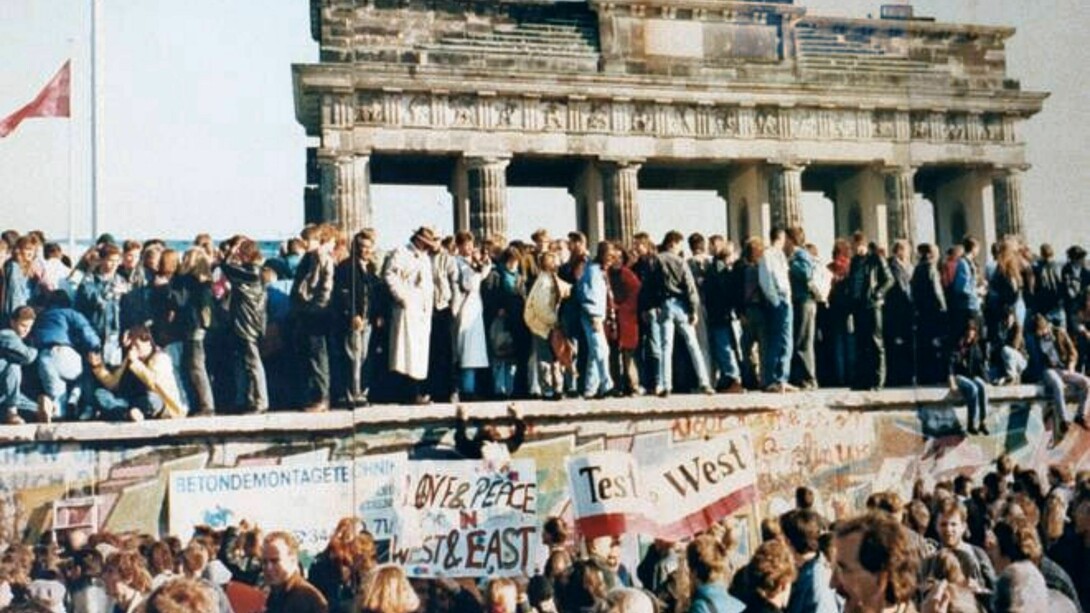
Geography still shapes geopolitics. Iran’s blockade of the Strait of Hormuz is one example; another is Venezuela’s proximity to the U.S. and distance from Russia and China, which helped enable Trump’s operation against Nicolás Maduro in January 2026 and forced Vladimir Putin and Xi Jinping to stand by as the U.S. captured Maduro and his wife. But geography’s influence has weakened: distance-collapsing technologies like Starlink and intercontinental missiles have globalized the reach of the superpowers and eroded older ideas, such as geodeterminism and the land- or sea-power divide. Today, “geopolitics” mainly denotes international politics in general and, in particular, the contest between the U.S. and China for world leadership, with Russia a distant third.
This article probes the geopolitical field to answer my overall question — what factors contributed to Trump’s rise in the United States? — and argues that an important source of Trump’s momentum was the geopolitical shift which halted the post–Cold War spread of liberal democracy in 2006, redirected it toward authoritarianism, and tied it to the anti-democratic interests of Russia and China.
1989 and the “end of history”
It is a curious feature of intellectual history that brilliant scholars like Alexandre Kojève and Francis Fukuyama attribute the notion of the end of history to Hegel and Marx, although the phrase appears in neither writer’s work. Of course, Hegel was deeply impressed by the French Revolution and, in 1806, saw Napoleon as a “world soul” riding through Jena; but it is Kojève, not Hegel, who explicitly speaks of “the end of history” in this context (the twin battles of Jena and Auerstedt).
The same goes for Fukuyama. He has Marx speak of the communist “end of history,” yet there is no evidence for this. Marx did not predict the end of history, but rather the end of the “prehistory of human society” (in the preface to A Contribution to the Critique of Political Economy, 1859). For him, the overcoming of the capitalist social system was not the conclusion, but the beginning of true human history. But in any case, what matters is that Fukuyama himself witnessed a supposed end of history in 1989 and described it as such:
What we may be witnessing is not just the end of the Cold War, or the passing of a particular period of postwar history, but the end of history as such: that is, the end point of mankind’s ideological evolution and the universalization of Western liberal democracy as the final form of human government. This is not to say that there will no longer be events to fill the pages of Foreign Affairs’s yearly summaries of international relations, for the victory of liberalism has occurred primarily in the realm of ideas or consciousness and is as yet incomplete in the real or material world. But there are powerful reasons for believing that it is the ideal that will govern the material world in the long run.1
The fall of the Berlin Wall on November 9, 1989, not only opened the barriers between West and East Berlin and between West and East Germany, but also — following the collapse of the Soviet Union in 1991 — the “Iron Curtain” (Churchill 1946) between Western and Eastern Europe, which had entrenched the European front line of the Cold War since World War II. Fukuyama’s impression that an era was coming to an end was therefore entirely justified.
The broader assumption that this heralded “the universalization of Western liberal democracy as the definitive form of human governance” was also not without merit — note the qualifier “in the long run” — but it sparked a heated debate and considerable opposition. For our purposes, namely the sobering realization that the triumph of liberal democracy was merely an interlude, this controversy is beside the point. Before turning to that argument, however, it is worth recalling the democratic resurgence that became unmistakable with the literal and symbolic overcoming of the “anti-fascist protective wall” (the official designation for the Berlin Wall in East Germany).
The communist regimes in Poland, Hungary, East Germany, Czechoslovakia, Bulgaria, and Romania collapsed in 1989. German reunification under Western auspices took place in 1990. At the end of 1991, Russia became the successor state to the USSR. It retained its permanent seat on the United Nations Security Council as well as the bulk of the Soviet military and nuclear arsenal. The collapse of the Soviet Union liberated Belarus, Estonia, Latvia, Lithuania, Moldova, Georgia, Armenia, Azerbaijan, Kazakhstan, Uzbekistan, Turkmenistan, Kyrgyzstan, Tajikistan, and Ukraine. The 14 countries became sovereign states with international borders, although the three Baltic countries (Estonia, Latvia, and Lithuania, which had been annexed by the USSR in 1940) regarded themselves not as new states but as rightfully restored republics.
After 1991, the United States remained the sole global superpower. It had won the struggle against the communist state project that began with the Russian Revolution of 1917 through the internal collapse of its adversary. The bipolar world order had come to an end without fanfare, peacefully paving the way for a unipolar global order with the United States at its helm. Almost all Central and Eastern European states began to seek ties with the United States, Western Europe, the European Union, and NATO. It is understandable that Fukuyama saw the dawn of a golden age of liberal democracy in this geopolitical shift, which was as gentle as it was radical.
Democracy — up at first, then down
Freedom House, an American non-governmental organization founded in New York in 1941 to advocate for U.S. participation in World War II and the fight against fascism, is dedicated to promoting and defending freedom and democracy worldwide. Since 1973, the NGO has published its annual flagship report, Freedom in the World. The current edition — Freedom in the World 2026 — analyzes developments in 195 countries and 13 territories in 2025 (each edition assesses the preceding calendar year).2
A second key source tracks freedom on the internet specifically: Freedom on the Net. A pilot edition was published in 2009; the 15th report in the series, Freedom on the Net 2025, assessed 72 countries. In addition, the reports Freedom of the Press (1980–2017) and Nations in Transit (1996–2024) were published, the latter focusing on democratic developments in the post-communist states of Central and Eastern Europe as well as Eurasia. Both series have since been discontinued. Ad hoc special reports, analyses, and brief reports on current threats to democracy and freedom round out the NGO’s range of information.
Looking back, Freedom House has described the developments that came to a head in 1989 as a “dramatic wave of democratization.”3 To quantify this surge, the organization compared 1988 — the last full year before the upheavals of 1989 — with 2005, the peak of global democratic expansion. The result: In 1988, 36 percent of countries were classified as Free and 37 percent as Not Free. In 2005, however, 46 percent of all countries surveyed were Free, and only 23 percent were Not Free. The proportion of free countries had thus risen by 10 percentage points within seventeen years, while the proportion of unfree countries had fallen by 14 percentage points. This shift affected not only Eastern Europe but also parts of the Americas, sub-Saharan Africa, and Asia.
In 2006, ten years before Trump’s first election victory, this global upward trend came to an end. Freedom in the World 2007 diagnosed a “developing freedom stagnation,” and Freedom in the World 2008 noted: “The year 2007 was marked by a notable setback for global freedom.”4 Since then, Freedom House’s annual reports have documented the simultaneous advance of authoritarianism and the uninterrupted decline of democracy — a trend Freedom in the World 2026 confirms has now continued for twenty consecutive years. The 2016 election year fitted this pattern: Freedom in the World 2017 recorded a further fall in global freedom scores. Of the 195 countries surveyed, 45 percent were Free (down 2 percentage points from 2006), 30 percent Partly Free (unchanged), and 25 percent Not Free (up 2 percentage points):
A total of 67 countries suffered net declines in political rights and civil liberties in 2016, compared with 36 that registered gains. This marked the 11th consecutive year in which declines outnumbered improvements.5
Populist, nationalist, xenophobic, and anti-democratic forces gained political influence, particularly in countries of the former Eastern Bloc. This development was particularly evident in Poland and Hungary. Freedom House warned that “illiberal democracy” — a concept Viktor Orbán had explicitly championed since 2014 — was spreading through sympathetic politicians in Slovakia, the Czech Republic, and Serbia, threatening to take hold across Central Europe and the Balkans.
Eurasia and Europe stood in stark contrast to one another. In Eurasia, which includes Russia, none of the twelve countries were classified as “Free,” while in Europe none of the 42 countries were considered “Not Free.” However, the authoritarian trend did not bode well for Europe either, as “nearly a quarter of all net declines in 2016” occurred there. Freedom House noted that “the continent can no longer be taken for granted as a bastion of democratic stability.”6 Trump’s election victory then consolidated this negative trend, as the United States itself set out on a path of anti-democratic change.
Freedom of the press — a global euphemism
The cover image of Freedom of the Press 2017 shows a pack of seven wolves labeled with the names Turkey, Venezuela, Russia, Serbia, Bolivia, Poland, and the Philippines. Each wolf is ridden by that country’s respective strongman. The pack of wolves surrounds a group of journalists holding a “Free Press” banner aloft. Trump stands pensively on the sidelines of this menacing scene.7
On February 17, 2017, Trump first referred to leading news media outlets as the “enemy of the American people.” Freedom of the Press 2017 quoted his explanation of why he must constantly fight against the “lies” of journalists: “I have a running war with the media. They are among the most dishonest human beings on earth.”8 Emphasizing that the protection of press freedom in the United States is “a cornerstone of global democracy,” Freedom House flagged Trump’s attacks on the media as a cause for serious concern and highlighted this in Freedom of the Press 2017:
Never in the 38 years that Freedom House has been monitoring global press freedom has the United States figured as much in the public debate about the topic as in 2016 and the first months of 2017. Press freedom globally has declined to its lowest levels in 13 years, thanks both to new threats to journalists and media outlets in major democracies, and to further crackdowns on independent media in authoritarian countries like Russia and China.9
While Freedom House noted that “the United States remains one of the most press-friendly countries in the world,” it cited Trump’s vilification of the press, his repeated disparagement of journalists, and his denouncing of factually accurate reporting as “fake news” as grounds to warn that the country could lose its status as a “model and aspirational standard” for other nations.
The global findings of the 2016–17 report on press freedom were, incidentally, bleak: Of the 199 countries and territories evaluated, more than two-thirds were not classified as Free: 61 were considered Free, 72 as Partly Free, and 66 as Not Free. At the same time, only 13 percent of the world’s population enjoyed a free press; 42 percent lived in countries with a Partly Free press, and 45 percent in countries with a Not Free press. The long-term trend was also negative: in 2006, 38 percent of the countries and territories surveyed were still classified as Free; by 2016, that figure had fallen to just 31 percent. Over the same period, the proportion of Partly Free press rose from 30 to 36 percent, while the proportion of Not Free press rose from 32 to 33 percent.
Among the 66 Not Free countries and territories, North Korea and Turkmenistan received the lowest scores, each with 98 points, followed by Uzbekistan (95), Crimea and Eritrea (94 each), Cuba and Equatorial Guinea (91 each), and Azerbaijan, Iran, and Syria (90 each). The situation in Turkey was particularly dire: According to the Committee to Protect Journalists, at least 81 journalists were imprisoned there in December 2016 — the highest number worldwide. Today, after nearly a decade of experience with Trump’s political behavior, the danger that Freedom House foresaw in 2017 for America’s role as a democratic model has become much clearer; it extends not so much to the isolated realm of press freedom as to the entire fabric of liberal democracy.
Yet Trump has taken no steps to systematically muzzle the free press as an institution.10 This has to do not only with the First Amendment, an independent judiciary, and the diversity of the American media landscape, but also with the dynamics of the attention economy: The fierce, often brutal rhetorical free-for-alls that Trump relentlessly wages with journalists generate maximum exposure for both sides. Trump wins because he maintains his place at the center of the news agenda, while the media benefit from the pull of the spectacle to which the public — whether outraged or enthralled — inevitably succumbs.
What Trump accuses others of can be read as projection. Nearly all the negative traits and behaviors he persistently attributes to others are reflected in his own actions, often in even more extreme form, especially with regard to false and misleading statements amply documented by fact-checkers. Constant repetition does not make these projections true. But it can anchor them in supporters’ minds as part of a defining political narrative — and from there, shape political direction and action.
Rollback of the rollback
The current geopolitical setback for democracy and freedom can be understood as a backlash against the West’s drive for democracy expansion, which reached its neoconservative peak under George W. Bush and Dick Cheney. The fact that the West first contained, then pushed back against, and finally overcame the Soviet model with the collapse of the USSR provides the primary motive for today’s authoritarian rollback of liberal democracy: a battle to assert authoritarian governance.
In Russia’s case, this is sharpened by a desire for revenge for the drastic loss of power and status after 1991, whereas China’s reckoning draws on a longer historical grievance, the “Century of Humiliation” inflicted by Western powers and Japan. The global advance of authoritarianism over the past two decades is thus a rollback of the earlier democratic triumph.
For twenty years, Freedom House has been documenting the worldwide retreat of democratic forces. Fukuyama’s confidence in the long-term victory of liberal democracy has evaporated, and the outcome of the current geopolitical struggle is uncertain. Anyone who nevertheless wishes to pursue the goal of a resilient democracy here, now, and always must not be deceived by the actions of those in power in Russia and China, nor by Trump’s efforts to erode the institutional safeguards of U.S. democracy. This raises the question: What strategies are Russia, China, and the U.S. pursuing under the leadership of their respective strongmen?
A rollback, Russian style
Russia’s war against Ukraine — which began with the occupation and annexation of Crimea and the intervention in the Donbas in 2014 and escalated into a full-scale invasion on February 24, 2022 — demonstrates Putin’s willingness to use military force against a democracy. Less obvious, but equally politically significant, are the covert influence operations carried out by authoritarian states to weaken liberal democracies. Three American experts on democracy highlighted this threat as early as 2016:
The leading authoritarian regimes have invested heavily in building vast and sophisticated soft-power arsenals that now operate in every corner of the world. … At the same time, the most influential authoritarians — China, Russia, and Iran — have become more internationalist. Authoritarianism has gone global.11
The term sharp power, referring to active authoritarian influence operations, was coined in 2017.12 Unlike soft power, it does not seek to persuade through the appeal of its own system, but rather to infiltrate open information spaces, manipulate them, and undermine trust in their institutions. U.S. intelligence agencies determined ahead of the 2016 presidential election that Moscow was also aggressively pursuing its anti-democratic intentions behind the scenes. In a joint assessment in January 2017, the CIA, FBI, and NSA concluded that Putin had personally ordered an influence campaign aimed at weakening trust in U.S. democratic processes. The campaign combined intelligence and cyber operations with state-funded media, third-party intermediaries, and paid social media trolls.13
Unlike the former Soviet Union, Putin’s Russia has no universalist ideology to offer that it could export as an alternative social model. Rather, its strength lies in exploiting existing conflicts and resentments in other societies for its own purposes. In doing so, Moscow supports actors from a wide variety of political camps. It is not the political orientation that matters, but the disruptive effect. Ideological consistency plays no role as long as the intervention exacerbates existing conflicts and weakens the West.
The international news networks Russia Today and Sputnik have become key instruments of this strategy. Russia Today was founded in 2005 and renamed RT in 2009; Sputnik, launched in 2014, followed a similar strategic pattern and shares RT’s methods, discussed below. By the mid-2010s, RT had built up a large international reach through television, websites, apps, and YouTube. According to its own figures, the network was available in more than 100 countries. RT had a particularly strong presence in Europe (the region with its largest measured audience), the U.S., and the Middle East; however, with RT en Español, it also had a growing presence in Latin America. Its digital platforms were available in English, Arabic, German, French, Spanish, and Russian. In 2016, the YouTube channels belonging to RT collectively exceeded four billion views; RT described itself there as a leading international news network.
With the slogan “Question More,” RT presented itself as an alternative to the allegedly homogenized Western media, thereby echoing a populist critique of the media that was proliferated in the U.S. by Tea Party Republicans such as Sarah Palin and later by Trump. RT spread Trump’s false claims,14 including his assertion that millions of people had voted illegally in the 2016 election, and marketed itself in app stores as a source of withheld truths: “RT News — find out what the mainstream media is keeping silent about.” Another slogan led straight into Putin’s postmodern witch’s cauldron: “We want to show you how any story can be another story altogether.”
RT’s goal was not to convey a cohesive Russian worldview to its audience, but to sow doubt. Protest movements were portrayed as CIA operations, Ukraine as a state ruled by fascists, and American politics as the product of hidden conspiracies. Contradictory explanations were part of the method: If every story can be told in a completely different way, the very notion of a verifiable reality ultimately loses ground.
For example: The downing of Malaysia Airlines Flight MH17 in July 2014 was used by RT in various reports to suggest Ukrainian responsibility. In contrast, a Dutch criminal court ruled in 2022 that the plane was struck by a Buk missile fired from a field in an area controlled by pro-Russian separatists; three men were sentenced to life in prison. The purpose of these alternative narratives was not to make a specific version credible, but to circulate enough versions to make certainty seem impossible.
Russia’s large-scale invasion of Ukraine prompted the European Union in March 2022 to suspend RT and Sputnik’s broadcasting operations within the EU. But Russia’s media influence network did not disappear as a result; it shifted its activities to operations that were more difficult to monitor. In 2024, the U.S. Department of Justice indicted two RT employees for funneling nearly $10 million to an American content company that published almost 2,000 political videos and garnered more than 16 million views on YouTube alone.
The Russian rollback thus consists less in exporting an attractive authoritarian model than in weakening its democratic alternative. Putin does not seek to convince the world that Russia is better governed. It is enough for him to sow doubt as to whether facts can even be established, institutions are trustworthy, and democratic processes are credible. The Russian strongman aims to undermine the foundation of a shared reality.
A rollback with Chinese characteristics
The autocratic government of the People’s Republic of China (PRC) offers existing and emerging authoritarian regimes a seemingly successful model and a tried-and-true set of tools of hard, soft, and sharp power that can be used to stabilize repressive rule. Among China’s lessons are how to create a large middle class and win it over to the nation, control and assimilate ethnic minorities, suppress political opposition, roll back democratic initiatives, and tame the internet.
Until the mid-2010s, China’s immediate geopolitical and military power projection focused primarily on East and Southeast Asia, particularly the South China Sea, while it otherwise positioned itself as a peacefully emerging developing nation. The wars in Ukraine and the Middle East have significantly increased Russia’s dependence on China and, consequently, Beijing’s influence over Moscow; at the same time, they are tying up American attention and resources, which gives China additional strategic leeway. Although the People’s Republic of China has not completely abandoned its pragmatic restraint, it has been acting as a self-assured great power — economically, diplomatically, culturally, and increasingly militarily as well — at least since the launch of the Belt and Road Initiative in 2013.
China’s alternative model of governance blends genuine developmental achievements with techniques and instruments of repression. These include reducing extreme poverty among large segments of the population, expanding renewable energy massively, rising to become a leading industrial, scientific, and technological nation, alongside extensive suppression of organized political opposition, the repelling of undesirable foreign influences, and the centralization and personalization of power at the top of the state.
President Xi and the Communist Party of China (CPC) are vigilant opponents of political liberalization at home and skillful exporters of authoritarian governing practices. The political stability of the Chinese model rests not least on preventing the freedoms of a liberal democracy, and the country’s political elite is well aware of this. It has closely studied the rise and fall of authoritarian regimes around the world, from the decades-long rule of Mexico’s Institutional Revolutionary Party (PRI) to the 1991 collapse of Soviet Communist Party rule, and has learned from this history to act with caution, adaptability, and yet determination. For the country’s strongman, the “Chinese Dream” is a vision of national greatness and historical rebirth.15
China’s portfolio of international soft-power activities is extensive. Among its most important state-run overseas media outlets are China Daily, the Xinhua News Agency, China Radio International, and the China Global Television Network (CGTN). The institutional roots of CGTN date back to Beijing Television (1958), the predecessor of China Central Television (CCTV). At the end of 2016, CCTV consolidated its international foreign-language television offerings under the newly created China Global Television Network (CGTN).
Added to this was a rapidly growing network of Confucius Institutes: By the end of 2016, there were 511 institutes and 1,073 Confucius Classrooms in 140 countries and regions. The similarity to institutions such as the German Goethe-Institut and international media outlets like BBC World News, CNN, and Deutsche Welle is no coincidence: The Chinese institutions are deliberately modeled after successful Western examples, but differ fundamentally from them in their much closer ties to the Party and the state.
China’s state-run media are subject to strict political and editorial control by the CCP; journalism critical of China is not part of their mandate. The Confucius Institutes were organized less uniformly as institutions, but they, too, were subject to political constraints and expected to avoid controversial topics. In different ways, both served to portray China abroad in the best light. Xi explained what he meant by this during a Politburo meeting in late December 2013:
To build a beautiful image of our country, we should display the Chinese civilization of a long history and unity of diversified ethnic groups with varying cultures; an Oriental power with honest and capable political administrations, developed economy, thriving culture, stable society, unified people and splendid landscapes; a responsible great power that is committed to peaceful development, common growth, international fairness and justice, and contributions to mankind; and a socialist power opening its door wider to the outside world, full of hope, vigor and vitality.16
CGTN is one of China’s most important propaganda tools, headquartered in an outstanding cantilevered skyscraper in Beijing designed by the internationally renowned architects Rem Koolhaas and Ole Scheeren — and promptly nicknamed “big underpants” by the public. The building itself became an unwitting symbol of a broader shift: within two years of its completion, Xi was calling for an end to “bizarre architecture,”17 part of a wider turn away from Western-inspired forms and toward a more assertive, self-referential vision of Chinese national identity — the same nationalist confidence driving CGTN's global expansion in the first place.
CGTN has regional production centers in Washington, Nairobi, and London; according to its own statements, it is available in over 160 countries and regions and operates television channels in English, Spanish, French, Arabic, and Russian, as well as an English-language documentary channel. It also offers content and translations in 43 languages via its digital platform. CGTN’s global news service is characterized by high production standards, refined professionalism, and ubiquitous availability on the internet (cgtn.com).
Political censorship is evident not only in what is reported but especially in what is not reported. An example of this occurred in 2013, when Chinese university professors reported that the CCP had banned classroom discussions of seven topics: “press freedom, universal values, civil society, civil rights, judicial independence, historical mistakes of the Chinese Communist Party, and the authoritarian-capitalistic class.”18 The latter taboo referred to the families of high-ranking Chinese government officials and their amassed fortunes.
A prominent feature — and flagship tool — in the PRC’s authoritarian arsenal is the “Great Firewall,” which controls access to the global internet on the Chinese mainland. Embedded in a comprehensive system of repressive laws and state-of-the-art surveillance technologies, it isolates the Chinese information space from large parts of the global internet more effectively than the Great Wall of China ever could with earth, stones, and bricks. Domestic digital information traffic is being monitored by a vast network of government agencies, automated filtering technology, and censors employed by platform operators.
Hundreds of thousands of internet domains are blocked, at least intermittently; the most important Western internet platforms are permanently or largely barred, including Google, YouTube, WhatsApp, and Wikipedia, as well as many international news outlets. This also applies to numerous human rights and democracy organizations such as Freedom House, Human Rights Watch, Amnesty International, and Reporters Without Borders. A large-scale study identified more than 740,000 domains that were blocked by the national firewall at least once during the period 2023–2025, whereas a regional firewall in Henan province blocked 4.2 million domains, that is, about six times the national total.
Freedom on the Net 2016 documented the global decline in internet freedom “for the sixth consecutive year.”19 At the time, the report documented obstacles to internet access, content restrictions, and violations of user rights, and concluded that China was, for the second time, “the worst violator of internet freedom.” Nine years later, the picture was, if anything, grimmer: Freedom on the Net 2025 found internet freedom was declining for the fifteenth consecutive year and ranked China again, along with Myanmar, as the country with the worst conditions for internet freedom worldwide.
Quo vadis, America?
A striking mural illustrated the danger that a Trump election victory would pose to American democracy in May 2016 in Vilnius, a Baltic capital situated on the geopolitical fault line between liberal democracy and Russian authoritarianism. The street art mural showed Trump and Putin in the midst of a passionate kiss on the mouth, with Trump’s right hand wrapped around Putin’s neck, pulling the Russian strongman’s head tightly against his. The Washington Post ran the headline: “The Putin-Trump kiss being shared around the world.”20
More powerful than a thousand words, it riffed on a famous 1979 photo that showed Soviet leader Leonid Brezhnev and East German President Erich Honecker locked in a “socialist fraternal kiss” that had already become the source of a world-famous mural painted by the Russian artist Dmitri Vrubel in 1990 on the remnants of the fallen Berlin Wall and titled (in Russian) “My God, help me to survive this deadly love.” The murals in Berlin and Vilnius are — in my view — apt artistic commentaries on the geopolitical dangers of the “deadly love”21 of strongmen; neither the Soviet Union nor East Germany still exist.
The Vilnius mural was created after Trump and Putin had publicly exchanged compliments in December 2015. Their “bromance” stirred up historical memories and collective fears in the Baltic states. The Molotov–Ribbentrop Pact of 1939 had not been forgotten there; its secret protocol had paved the way for the Soviet occupation and annexation of Estonia, Latvia, and Lithuania in 1940.
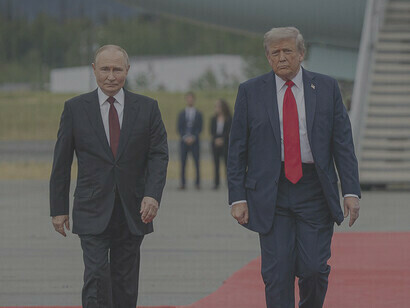
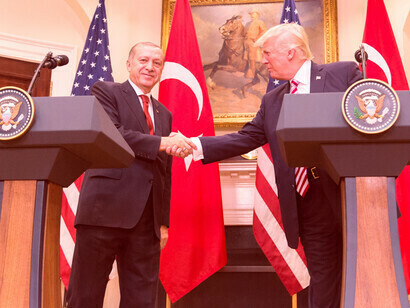
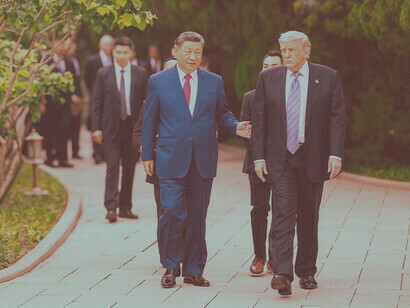
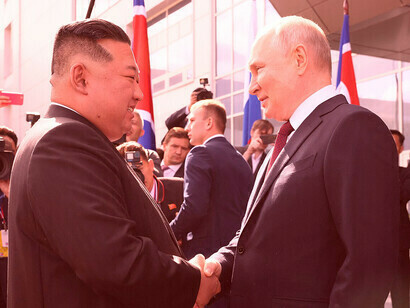
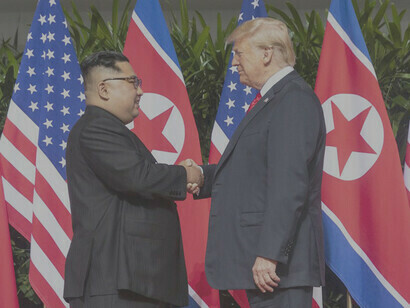
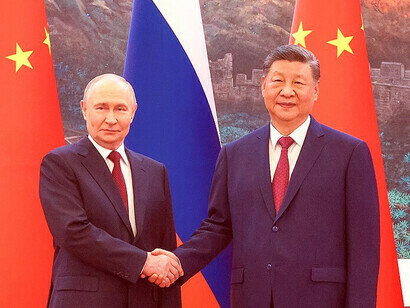
Over the past ten years, the American strongman has repeatedly voiced his admiration for Putin, Xi, Kim, Erdoğan, and other kindred heads of state. Putin’s unrestricted personal control over Russia is Trump’s paradigm of presidential power; he aspires to the autocrat’s freedom from institutional constraints. Irreverent street art has clearly captured that this kind of admiration and anti-democratic longing does not benefit the people of a country ruled by a strongman.
Notes
1 Francis Fukuyama, “The End of History?” The National Interest, No. 16, Summer 1989, p. 4; idem, “Reply to my critics.” The National Interest, No. 18, Winter 1989–90, pp. 21–28; idem, The End of History and the Last Man. New York, Toronto: The Free Press, 1992.
2 See “Freedom in the World Research Methodology.” Freedom House evaluates political rights (PR, max. 40 points) as well as civil liberties (CL, max. 60 points) and classifies countries as Free, Partly Free, or Not Free. As of 2020, the 1–7 ratings that were previously reported are no longer published; the underlying calculation remains unchanged.
3 Freedom House, “Freedom in the World 2019: Democracy in Retreat.”
4 Arch Puddington, “Freedom stagnation amid pushback against democracy.” Freedom in the World 2007, p. 3; idem, “Freedom in retreat: Is the tide turning?” Freedom in the World 2008, p. 3.
5 Arch Puddington and Tyler Roylance, “Populists and Autocrats: The Dual Threat to Global Democracy.” Freedom in the World 2017, p. 1.
6 Ibid., p. 17.
7 See “Press Freedom’s Dark Horizon.” Freedom of the Press 2017, April 2017.
8 The White House, “Remarks by President Trump and Vice President Pence at CIA Headquarters.” Langley, Virginia, 21 January 2017.
9 Michael J. Abramowitz, “Hobbling a Champion of Global Press Freedom.” Freedom of the Press 2017, April 2017, p. 1.
10 In the latest Freedom in the World report, the U.S. is still classified as Free with a score of 81 out of 100 (down from 84 the previous year). However, Freedom House marked 2025 as the year of a “dramatic” U.S. policy change from advancing to withholding support for civil society and independent media through executive order; see Yana Gorokhovskaia, Cathryn Grothe, and Amy Slipowitz, “The Growing Shadow of Autocracy.” Freedom in the World 2026, March 2026, p. 20. Trump’s ban of CNN, MS NOW and Politico from the White House in September 2026 clearly escalated his battle with the press.
11 Christopher Walker, Marc Plattner und Larry Diamond, “Authoritarianism Goes Global: Undemocratic states are kicking their influence-peddling machines into high gear.” The American Interest, 28 March 2016; see also Diamond, Plattner und Walker (eds.), Authoritarianism Goes Global: The Challenge to Democracy. Baltimore: Johns Hopkins University Press, 2016.
12 See Christopher Walker and Jessica Ludwig, “From ‘Soft Power’ to ‘Sharp Power’: Rising Authoritarian Influence in the Democratic World,” in: Sharp Power: Rising Authoritarian Influence, International Forum for Democratic Studies, National Endowment for Democracy, Washington, D.C., December 2017, p. 8–25.
13 See Office of the Director of National Intelligence, “Background to ‘Assessing Russian Activities and Intentions in Recent US Elections’: The Analytic Process and Cyber Incident Attribution.” 6 January 2017.
14 See David Leonhardt and Stuart A. Thompson, “Trump’s Lies.” The New York Times, 14 December 2017. Before Trump, the New York Times would have considered it inappropriate to call a sitting president a liar.
15 See “Xinhua Insight: Xi leads nation in pursuing Chinese dream in new year.”. Xinhuanet, 6 February 2017.
16 Xi Jinping, The Governance of China, vol. 1, Beijing: Foreign Languages Press, 2014, p. 178–181. For an official online English translation, see Xi Jinping, “Enhance China’s Cultural Soft Power.”
17 Amy Frearson, “No more weird architecture’ says Chinese president.” Dezeen, 20 October 2014.
18 Anne Nelson, “CCTV’s International Expansion: China’s Grand Strategy for Media?” Center for International Media Assistance, 22 October 2013, p. 22.
19 Sanja Kelly, Mai Truong, Adrian Shahbaz and Madeline Earp, “Silencing the Messenger: Communication Apps under Pressure.” Freedom on the Net 2016, Freedom House, November 2016, p. 1.
20 Adam Taylor, “The Putin-Trump kiss being shared around the world.” The Washington Post, 13 May 2016.
21 See “My God, Help Me to Survive This Deadly Love.” Wikipedia.