English
 Español
 Français
 Deutsch
 Italiano
 Português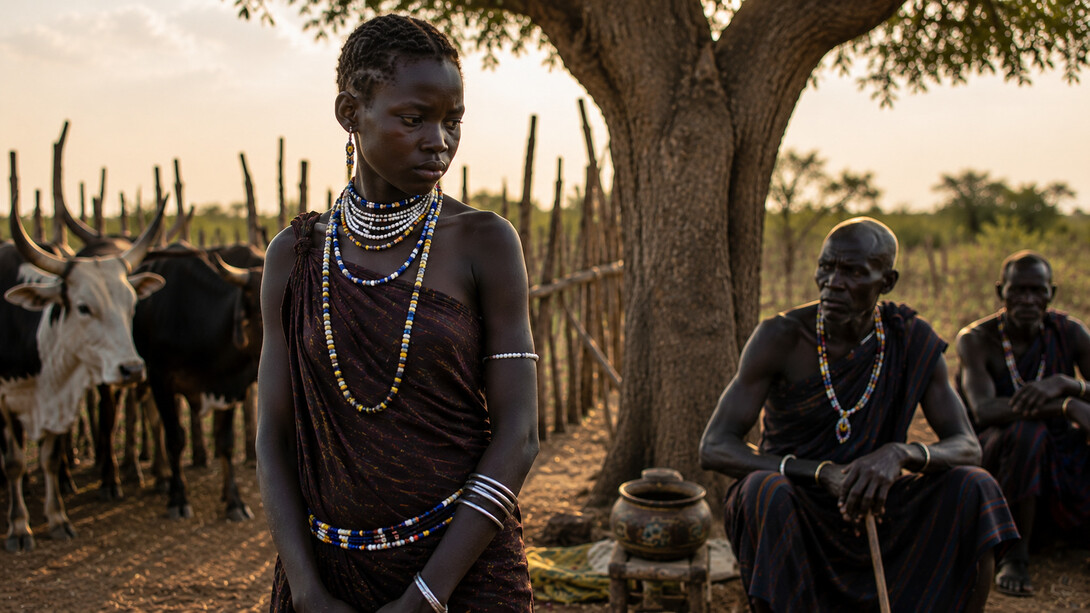
For years, global discourses have treated child marriage as a static, ancient cultural artefact, a stubborn remnant of the past that simply refuses to fade. But if we look closely at the fracturing landscapes of East Africa and Asia, a more complex, devastating reality emerges. Child marriage is not just an old custom; it is a dynamic, modern coping mechanism. It is an economic transaction, a political chess move, and a shield forged from desperation in the face of state fragility, climate collapse, and poverty. To truly understand its grip, we must look at where it began, how it has transformed, and what it costs the young girls who pay the price.
Historically, in many traditional societies, early marriage was framed around community survival and kinship continuity. In South Sudan, particularly within the Dinka and Nuer communities, marriage has long been the ultimate institution for building social bridges and securing wealth through cattle. Historically, there existed a practice where a young girl was married off to an older, wealthy, or highly respected man.
In the Dinka dialect, these young wives were known as ting adeet. Originally, this was not viewed by the community as a malicious act of exploitation. Instead, through a traditional patriarchal lens, the older man was viewed as a lifelong guardian or caretaker who possessed the resource stability to ensure the girl would never starve, while her family received the bridewealth necessary to sustain their lineage.
Similar dynamics existed among pastoralist groups across East Africa, such as the Maasai and Samburu in Kenya and the Karamojong in Uganda, where marrying young girls to elder men established cross-generational safety nets and clan alliances. A parallel historical concept existed across Asia, from the rural plains of Bangladesh and India to the tribal regions of Afghanistan, where early marriage was designed to protect the purity of the family line. Because a woman’s sexuality was viewed as the ultimate repository of family honour, marrying a girl off immediately at the onset of puberty ensured she was transferred to her husband's family before any perceived stain could affect her natal home.
Today, whatever protective philosophy once existed under the guise of ting adeet has been utterly hollowed out by decades of conflict, inflation, and climate shocks, transforming the practice into a brutal transactional tool.
In modern South Sudan, child and forced marriages are explicitly used as economic levers and political tools. In rural and cattle-camp cultures, a daughter is frequently viewed as a liquid asset. When a family loses its herd to raiding, flooding, or conflict, marrying a daughter off for a high dowry is the only way a family can rebuild its wealth or ensure its own survival. Furthermore, prominent families, military commanders, or politicians sometimes use young girls to cement political allegiances, marrying a daughter into another powerful clan to solidify wartime or political coalitions and elevating the family's social capital at the expense of the child’s autonomy.
In contrast, parts of Asia operate on an inverted financial model that yields the exact same tragic result through the burden of the dowry. In countries like India and Bangladesh, the bride’s family pays the groom, and because a younger, less-educated girl commands a much smaller dowry than an older, educated woman, impoverished parents are financially incentivized to marry their daughters off as early as possible to avoid catastrophic debt.
This is mirrored in crisis zones like the Rohingya refugee camps in Cox's Bazar, Bangladesh, where food scarcity and a lack of legal status have caused a massive spike in child marriages simply because parents marry off adolescent daughters to reduce the number of mouths to feed or to secure slightly larger family rations in displacement.
While the direction of money changes, with the groom paying a bride price in East Africa and the bride's family paying a dowry in Asia, the underlying structural machinery remains identical. In both regions, economic triggers dictate that girls are married early to manage family wealth, whether to bring assets in or prevent assets from leaving. This financial pressure is accelerated by systemic catalysts like climate shocks and conflict, such as the flooding of the Nile and cattle raiding in South Sudan, or monsoon flooding and river erosion in South Asia. Furthermore, both regions suffer from an institutional vacuum where customary law and local councils, like tribal elders or religious bodies, hold the true legitimacy in daily life and completely override formal statutory child protection acts.
The consequences of this practice are intergenerational, effectively locking young girls out of the future through a devastating cycle of trauma. The moment a wedding date is set, a girl’s education ends, and in South Sudan, a girl is statistically more likely to die in childbirth than to complete primary school, permanently erasing her economic agency.
The physical toll of this educational displacement is catastrophic because adolescent bodies are not fully developed for childbirth, leading to staggeringly high rates of maternal mortality and obstetric fistula, a debilitating condition caused by prolonged, obstructed labor that often leaves young girls incontinent and subsequently ostracised by their communities. This physical vulnerability is compounded by a total lack of bargaining power, as a young girl entering the home of a much older man faces a severe power asymmetry that opens the door to high rates of domestic abuse, marital rape, and severe psychological trauma.
Erasing a practice so deeply woven into the socioeconomic fabric of these regions requires moving past empty legal decrees, as statutory laws setting the marriage age to 18 mean very little if they are not enforced on the ground. Moving forward, the primary target for reform must be community-led dialogues with traditional custodians, meaning that activists must work directly with local community chiefs, elders, and religious leaders who hold true cultural authority to decouple the concept of community respect and honour from the bodies of young girls.
Simultaneously, we must provide economic alternatives to dowry and bride price to change the financial math for impoverished parents, utilising conditional cash transfers, micro-loans, or vocational training for women so that families have an alternative survival route that does not involve selling a daughter.
The international community and local governments must invest heavily in girls' education, which remains the single most effective vaccine against early marriage. Safe, accessible schools with proper sanitation facilities act as a physical and social shield, and when a community begins to see that an educated woman can bring back sustainable salary income rather than a one-time payment of cattle or a reduced dowry burden, the structural value shift begins.
By reframing our narrative, we can show the world that a girl in South Sudan or a girl in Asia is not a transaction, an alliance, or a modern-day ting adeet but a human being with a right to her own dignity and future.