English
 Español
 Français
 Deutsch
 Italiano
 Português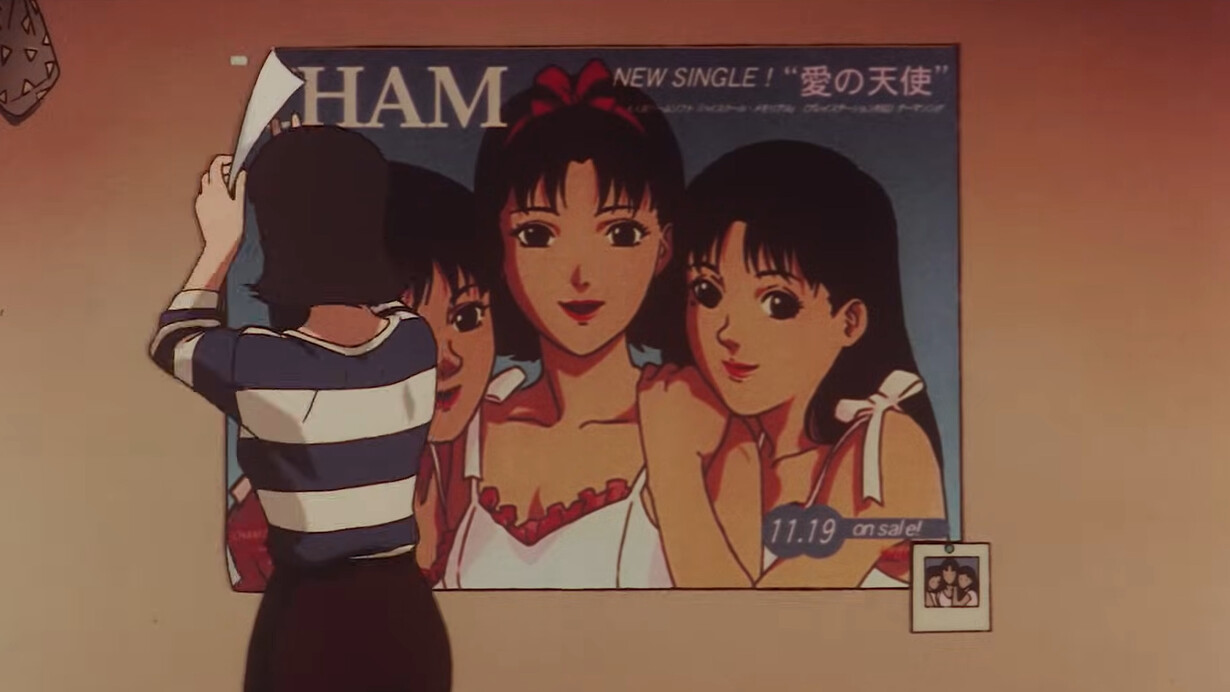
There are few directors whose work has become instantly recognizable after a mere handful of projects. Even fewer achieve that distinction working solely in animation. In fact, I’d posit there are only two such cases: Hayao Miyazaki, the visionary creator behind Studio Ghibli, and Satoshi Kon.
In just four completed features, Satoshi Kon established one of the most unimpeachably distinct filmographies in contemporary cinema, animated or otherwise. His movies collapse the boundaries between dreams and reality, memory and performance, cinema and life itself.
Kon approached animation not as a medium for fantasy or spectacle, but as a cinematic toolset capable of pushing filmic language further than live action ever could. Utilizing editing as psychological architecture, cutting between decades in an instant. Characters exist simultaneously inside their memories, their fantasies, and in the roles they perform for others.
Across these films Kon repeatedly returned to the same core fascination: the instability of identity in a world built around images. His characters are idols, actors, drifters, detectives—people caught between differing versions of the self. And like his protagonists, Kon’s cinema always seems to exist in two places at once.
Perfect Blue (1997)
Kon’s debut feature and first sole director credit, Perfect Blue, immediately looks and feels different from anything else in its field because of his attention to cinematic techniques. Even in his first film, he approached animation less like illustration and more like photographed cinema, sketching frames with distinct camera lenses in mind.
Unlike Miyazaki, who famously prioritizes storyboards with the screenplay following afterward, Kon modeled his storyboards off emotional beats within the script. Utilizing framing and editing to manipulate psychological tension so that it emerges directly from the narrative’s emotional structure. The camera may not be there physically, but you can still feel its presence behind every discomforting gaze.
An early display of his unique and unconventional editing style, cutting between spaces, timelines, and realities with surgical precision, sowing seeds of confusion that seem simple on paper but quickly spiral into an impossible-to-follow nightmare. Scenes repeat with slight variations, staged performances bleed into real life, which only turns into performance again. The boundaries collapse until both protagonist and viewer struggle to determine where reality ends and fantasy begins.
What emerges is a disjointed, genuinely nightmarish experience with a compounding sense of dread. The horror of Perfect Blue doesn’t rely on monsters or supernatural spectacle—it amplifies quickly through repetition, montage, and spatial disorientation.
Influences can be found scattered across the work of filmmakers like Darren Aronofsky, Edgar Wright, and Nicolas Winding Refn. Yet none are quite replicating what Kon achieves here. It combines the cinematic language typically associated with live action—match cuts and subjective camera—with the limitless visual possibilities of animation.
Millennium Actress (2001)
If Perfect Blue represents the darkest expression of Kon’s fascination with blurred realities, Millennium Actress reveals a comparatively brighter side. Kon himself described their connection succinctly: “In the previous work, I mixed fiction and reality to draw negative aspects such as fear and confusion. This time, I decided to enjoy it positively."
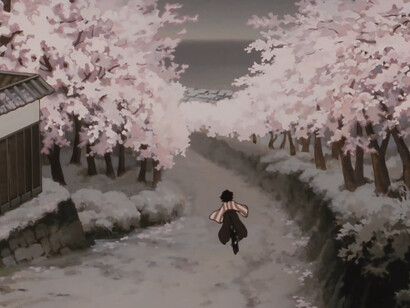
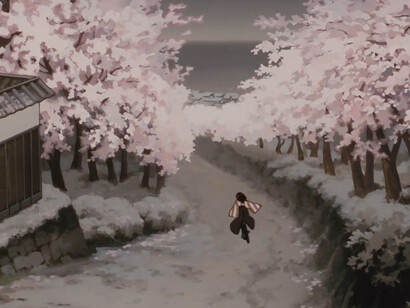
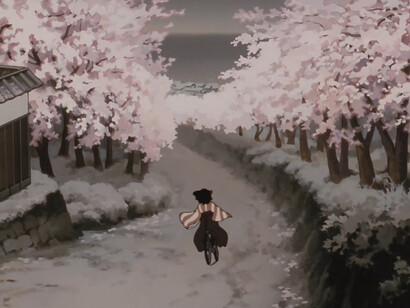
The film follows documentary filmmakers interviewing the legendary and reclusive actress Chiyoko Fujiwara. Beginning as a straightforward screen retrospective before quickly morphing into something far more—for lack of a better word—Kon-esque. As Chiyoko recounts her life, her interviewers physically embody the worlds both of her memories and films, the question then becomes: which is which?
Historical drama blends into science fiction, samurai epics dissolve into wartime melodrama, and the boundary between the roles she performed and the life she lived vanishes completely. Utilizing his signature editing style, Kon compresses Chiyoko’s entire life into a sweeping cinematic montage while tracing the evolution of Japanese cinema itself. The story leaps across decades, genres, and historical periods without warning.
A chase beginning in feudal Japan continues all the way to space-age science fiction so that, in a way, Chiyoko exists in every era at once. The film’s formal ambition is staggering, yet it never loses sight of its emotional center: a lifelong search for a lost love that becomes indistinguishable from the roles Chiyoko performs.
It was also Kon’s last film to use traditional cel animation, giving Millennium Actress a tactile, nostalgic warmth that contrasts beautifully with its constantly shifting timelines. And, once again, specific shots are modeled after specific lens types to achieve that effect of being “shot in camera,” reinforcing Kon’s commitment to achieving real cinematic weight in a boundless medium.
No other director, talented as they may be, could have made this specific film. With Millennium Actress, Kon proved his debut was no accident and firmly established him as one of the most inventive auteurs in all of cinema.
Tokyo Godfathers (2003)
Compared to the dizzying narrative labyrinths of Kon’s other films, Tokyo Godfathers feels almost restrained. Which isn’t saying much when the movie still involves holy infants and Christmas miracles.
The story follows three homeless companions—an aging gambler, runaway teenager, and former drag performer—who discover an abandoned baby on Christmas Eve and set out to reunite the child with its parents. The premise echoes classic melodrama, inspired loosely by the Nativity scene as well as other Western story traditions, but transplanted into the chaotic sprawl of modern Tokyo.
Both formally and tonally, the film is tamer than anything else in Kon’s filmography. The editing is more straightforward, the narrative almost linear, and the surreal elements less overtly destabilizing.
Yet even when muted, the director’s sensibilities remain unmistakable. Coincidences pile up with almost divine precision. Characters repeatedly stumble into revelations that expose hidden histories and unexpected connections. Even the city itself begins to feel like an active participant in the story, guiding its lost misfits toward fleeting moments of redemption.
In contrast to the psychological breakdowns of Perfect Blue or the dreamlike time shifts of Millennium Actress, Tokyo Godfathers focuses on something simpler but no less important: human kindness.
It is perhaps the most openly compassionate film Kon ever made. By centering society’s outcasts—people typically ignored by the city around them—he reveals a community built on shared survival, light-hearted humor, and reluctant affection.
The result is a heartwarming and life-affirming entry in his oeuvre that proves he can still dazzle on a smaller scale. Even without the elaborate dream structures of his other work, the film carries the same careful staging, rhythmic editing, and empathy that define Kon’s style.
Paprika (2006)
If Tokyo Godfathers was Kon at his most grounded, Paprika pushes his cinematic philosophy to its absolute limit. A towering achievement of animation and storytelling. In many ways, Kon’s magnum opus feels like the culmination of every thematic and stylistic idea he had been exploring across his previous films.
Where Perfect Blue fractured reality and Millennium Actress struggled to fill the cracks, Paprika removes the boundary entirely. The story centers on a device that allows therapists to enter their patients’ dreams, only for that technology to spiral out of control as dreams begin invading the waking world.
Kon suggests that cinema itself may be the closest thing humanity has to manufactured dreams. Films allow us to step into someone else’s imagination, experience impossible worlds, and temporarily lose track of our reality. The power to create entire worlds is intoxicating—but also dangerous.
The film’s weary detective protagonist functions almost as a self-insert: a man deeply knowledgeable about cinema yet strangely reluctant to engage with it. His arc reflects the anxiety many artists feel toward their own medium—the understanding that images have the power to reshape the way people perceive reality.
The film’s most famous sequence is a surreal dream parade marching endlessly through the city. The procession of dolls, appliances, corporate mascots, and cultural symbols becomes a chaotic reflection of modern Japan’s anxieties: consumer obsession, voyeurism, rising suicide rates, and the darker corners of a collective imagination.
There’s a tragic sense of finality running throughout Paprika. Kon was already battling illness during its production, and the film often feels like a summation of everything he believed about animation, cinema, and life as we know it, or at least how we imagine it.
In the closing moments, the detective enters a movie theater with posters around the lobby from Kon’s earlier films, blurring the line between the fictional cinema inside Paprika and the real filmography the audience has been watching. He purchases a ticket for a film titled "Dreaming Kids," widely interpreted as a placeholder for Kon’s unfinished final project, Dreaming Machine.
It’s a hauntingly bittersweet ending, a creator lamenting a project that will never exist—yet in a way, we’re already watching it. Satoshi Kon leaves us with one final reminder that cinema is like a dream we can always return to.