English
 Español
 Français
 Deutsch
 Italiano
 Português
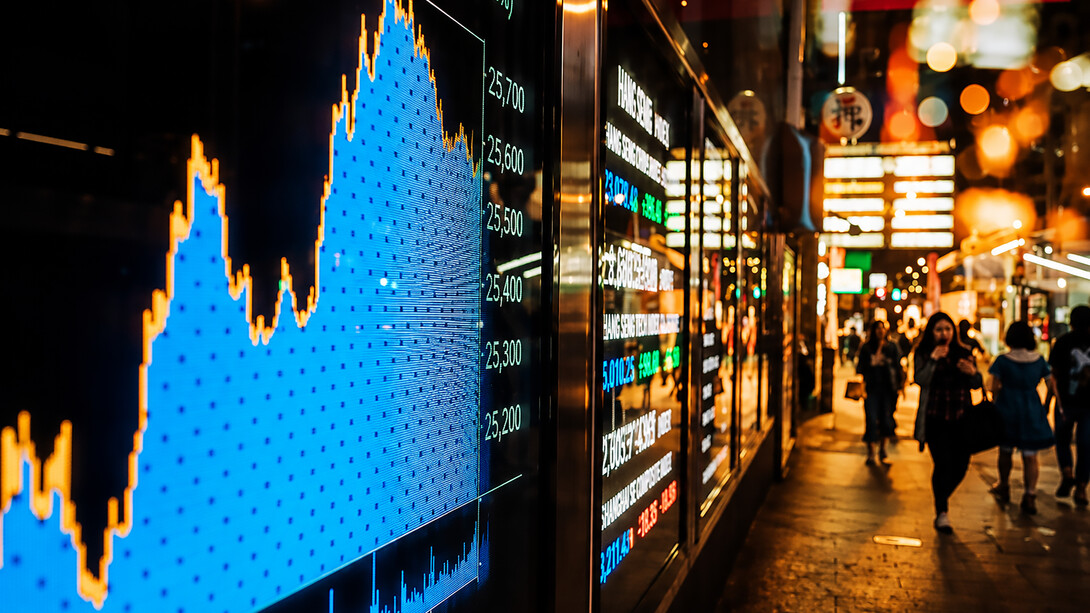
For most of the last few decades, the direction of the global economy felt pretty clear: more trade, more integration, more interdependence. Companies spread supply chains across continents, production moved to wherever it was cheapest, and consumers got used to the idea that almost everything they bought was part of a global system. That version of globalisation isn’t exactly gone, but it’s no longer the dominant trend. Quietly, and in some cases very deliberately, the world is moving in the opposite direction.
Economic nationalism—the idea that countries should prioritise domestic industry, production, and supply chains over global efficiency—is making a comeback. It doesn’t always look dramatic. It’s not usually framed as "anti-globalisation". Instead, it shows up in policy decisions: subsidies for local manufacturing, restrictions on foreign investment in sensitive sectors, tariffs on strategic goods, and massive state-backed industrial programmes designed to bring production back home. The result is a slow but noticeable shift in how the global economy is structured.
A big turning point was the combination of recent shocks: the pandemic, the energy crisis in Europe, and rising geopolitical tension between major powers. When global supply chains broke down in 2020 and 2021, countries suddenly realised how dependent they had become on distant production networks. Everything from semiconductors to medical equipment became harder to source. That experience changed how governments think about economic security. Efficiency stopped being the only goal; resilience became just as important.
Now, instead of optimising purely for cost, many governments are actively reshaping supply chains. The United States, for example, has pushed major industrial policy through legislation that supports domestic semiconductor production and clean energy manufacturing. Europe has followed with its own efforts to reduce reliance on external suppliers for energy and critical technologies. Even traditionally free-trade-orientated economies have started to rethink how exposed they are to global disruptions.
This shift is not just political—it’s also economic. When countries try to bring production back home, costs usually go up. Labour is more expensive in developed economies, regulations are stricter, and building entire industrial ecosystems takes time. That means the price of goods can increase, at least in the short to medium term. But governments are increasingly willing to accept that trade-off if it reduces dependency on unstable global supply chains.
At the same time, global trade is not collapsing. Instead, it is fragmenting. Rather than one highly interconnected system, we are starting to see the formation of regional or political blocs. Countries trade more heavily within trusted alliances and less with strategic competitors. Supply chains are being redesigned not just around efficiency, but around political alignment and risk management. In practice, this means the world economy is becoming more segmented.
This fragmentation has subtle but important consequences. For businesses, it increases complexity. Instead of building one global supply chain, companies may need multiple parallel systems depending on region. For consumers, it can affect prices and availability of goods, even if the changes are not immediately obvious. And for smaller economies, it creates pressure to align with larger blocs in order to maintain access to markets and investment.
One of the less discussed effects is how this shift changes innovation and competition. Globalisation created a system where firms competed across borders, pushing efficiency and cost reduction. Economic nationalism, by contrast, often prioritises domestic champions—companies that are protected or supported because they are strategically important. This can accelerate development in certain sectors, especially high-tech or energy, but it can also reduce competitive pressure in others.
There is also a generational angle to this shift. Many younger people grew up during a period where globalisation was taken for granted. Cheap electronics, global brands, international travel, and seamless digital services all felt normal. The idea that the world economy might become more fragmented again feels like a reversal of expectations. But for policymakers, the logic is increasingly about stability rather than openness.
Energy is one of the clearest examples of this new thinking. After recent disruptions in global energy markets, many countries began prioritising domestic energy production and diversification away from single suppliers. Renewable energy investment is partly driven by climate goals but also by a desire for energy independence. The same logic applies to semiconductors, defence manufacturing, and even food supply chains in some regions.
What makes this shift particularly interesting is that it is not a complete rejection of globalisation. It is more like a recalibration. Countries still trade, companies still operate internationally, and capital still flows across borders. But the assumptions underneath those systems have changed. Trust is lower, risk awareness is higher, and governments are more willing to intervene directly in markets than they were before.
The long-term question is what this means for global growth. In theory, globalisation increased efficiency by allowing production to happen where it was cheapest. Economic nationalism may reduce some of that efficiency in exchange for resilience and control. Whether that trade-off is worth it will depend on how often global disruptions continue to occur and how successfully countries can rebuild more localised or diversified systems.
What is already clear is that the world is no longer moving in a straight line toward deeper integration. Instead, it is shifting toward a more complex structure where economics and geopolitics are increasingly linked. The result is a global economy that is less unified, more cautious, and more regionally defined than at any point in the last few decades.
The quiet return of economic nationalism doesn’t mean globalisation is over. But it does mean the rules are changing. And for the first time in a long while, the direction of the global economy is no longer just about becoming more connected—it is also about deciding when not to be.