English
 Español
 Français
 Deutsch
 Italiano
 Português
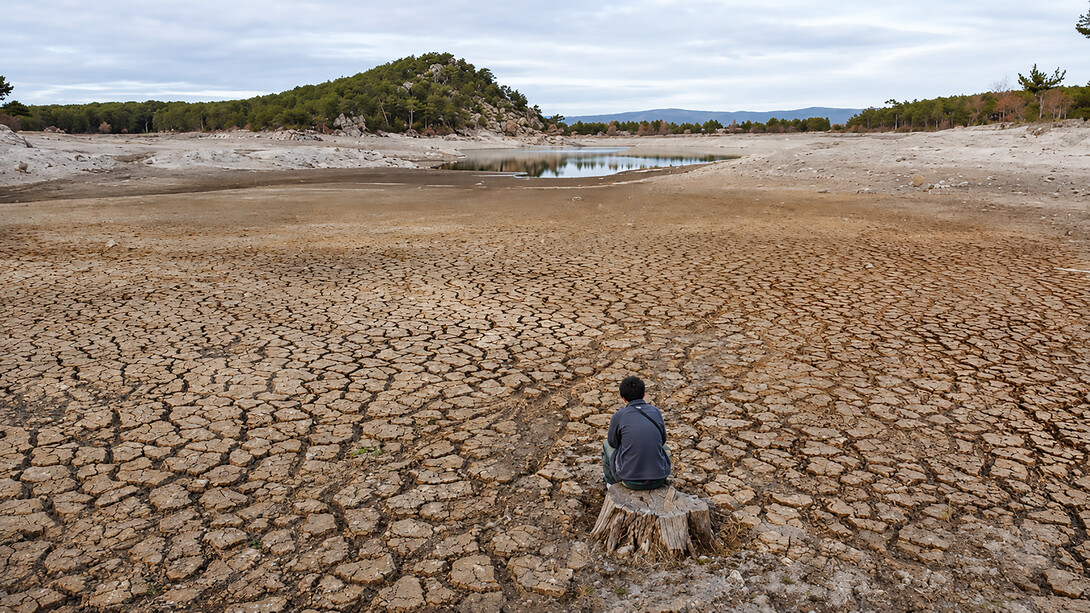
The chance of holding global warming to below 1.5°C above pre-industrial levels with no or limited overshoot is gone.1 More delay implies more deadly floods, heat waves, wildfires, and economic damages.
How are we behaving?
We are widening the gap between what we should be doing and what we are doing. By 2030, under current policies and assuming we reach the 1.5°C goal by 2100, the gap is estimated at 16% of GHG emissions. In 2035, it rises to 40%2. If current policies continue, there is a 66 percent chance that warming will be limited to 2.8°C by 2100 while continuing to increase thereafter.
Looking at the trend of greenhouse gas (GHG) emissions, it is not clear that we have even peaked. Emissions may still go up!
Source: IEA.
Why are we so behind in caring for our only planet?
One major problem is that we often use the wrong method to evaluate climate change. The discounted cash flow method, which is suitable for short-term investment decisions, is completely inappropriate and misleading for long-term phenomena3. The discounting method severely undervalues future generations, who will be most affected by climate change. Our own familiar financial methodology may blind us.
Today, a few large corporations have significant power over political decisions in the US, also through PACs and super PACs. They try to limit government control of their activities, particularly those concerning artificial intelligence and social media. This places a greater burden on governments to solve problems like climate change and unemployment created by artificial intelligence.
Wall Street has soured on climate change, perhaps due to Trump's influence. Sustainable and ESG-focused mutual funds faced a major reckoning, dropping roughly $82-84 billion in 2025 alone due to underperformance and legal pressures. This forced the closure of over a hundred green funds globally. This does not mean climate considerations have disappeared entirely, but they have matured into a defensive risk-management framework. A decrease in climate financing has not been observed, with the level of $2.01 trillion being reached in 2024, but the growth is slow, between 1% and 2% annually, and much lower than needed4.
"The new dimensions of inequality that define the 21st century—climate, gender inequalities, unequal access to human capital, asymmetries in the global financial system, and territorial divides—are reshaping democracies."5 Wealth and income have concentrated heavily at the top of the distribution, driven by soaring financial markets, concentrated stock ownership, lighter taxation on top incomes, and the growing importance of inheritance. There are limited resources to address multiple problems. The poorest half of the global population accounts for only 3% of carbon emissions associated with private capital ownership, while the top 10% account for 77% of emissions5.
The cost of biodiversity loss has not been taken into consideration. Economic systems and corporate accounting rarely reflect the value of nature and ecosystem services. Studies and reports (including from the UN and the European Central Bank) estimate that the global economic toll of biodiversity loss runs into trillions of dollars annually, affecting agriculture, healthcare, and long-term economic stability.
We find ourselves with increasing military expenditures: aggravated by leadership that desires war (Putin in Ukraine, Netanyahu in Gaza) or that doesn't know how to avoid them (Trump in Iran). The closure of the Strait of Hormuz has driven up oil and gas prices, helping to raise food prices and inflation in the US and EU. The midterm vote has demonstrated citizens' sensitivity to these issues.
Donald Trump's climate denial, much to the pleasure of Big Oil and Gas, which itself has conducted a thirty-year campaign of climate misinformation. has resulted in the elimination of many programs of mitigation and adaptation. It has hindered the US development of clean energy technologies such as batteries, EVs, and photovoltaics, putting China in the lead. The governments that have become more conservative have often imitated Trump. However, local renewable energy and energy efficiency, the pillars of climate improvement, can be smart management decisions, not to be confused with "left-wing" and "right-wing" political positions.
The rush to construct AI data centers is aggravating the electricity demand, causing transmission bottlenecks, voltage instability, and price spikes for everyday residential ratepayers. AI infrastructure requires extensive amounts of water for cooling systems and large swaths of land. Repurposing agricultural or natural areas disrupts local ecosystems, threatens groundwater and protected green spaces, and strains local watersheds during drought. This July in the US, opponents of the rapid buildout of data centers held 142 protests across 42 states. Organizers demand transparency, resource safeguards, community benefits, and developer accountability.
Finally, weather- and climate-related disasters are growing everywhere. For example, the chart below shows those in the US since 1980. They have been steadily increasing, raising the cost of insurance and housing.
Given this situation, what can we do to preserve our only planet?
More funding is needed. One priority is to get out of the present wars and thereby lower defense spending. The US military has spent over $47 billion so far to prosecute the war in Iran, more than 25% higher than the Defense Department's estimate in July. If peace can be achieved and new wars avoided, the need for military spending can be reduced. The U.S. defense budget for fiscal year 2026 is approximately $1.04 trillion, which accounts for roughly 13% of the total federal budget and about 3.4% of the U.S. GDP.
A study in Nature Climate Change found that the wealthiest 10% are responsible for two-thirds of global warming since 1990, and the richest 1% contributed 26 times more than the global average to once-a-century heatwaves. The super rich and rich should consider acknowledging their moral responsibility. This could take various forms, including support for climate action and poverty reduction.
Much of the GHG emissions come from what the rich own rather than what they buy. Oxfam found that moving billionaire investments to funds with stronger environmental and social standards could cut emissions intensity by up to four times. The wealthiest could change asset allocation without changing how they live. As another part of their moral responsibility, they might stop funding political obstruction of climate and anti-poverty policy.
Ordinary citizens pay 70 to 75% of all taxes in many countries; the super-rich and corporations pay the minority share. Ordinary citizens have to wake up and build their political power. The distribution of taxes in Europe is shown below.
Revenue from taxes in the EU
Source: Oxfam, Eurostat. EU Data on Taxation Trends.
Taxes on common Europeans—consumption and labor taxes—bring in 77.9 percent of the total revenue. In democratic countries, a majority of ordinary citizens should be able to vote on a change in taxation. Gradual progressive taxation should be combined with incentives for job-creating investments. These combined programs will be more acceptable.
By the way, total effective tax rates for the 400 wealthiest Americans have declined sharply in recent years, and they now pay a smaller percentage of their true income in taxes, 24%, than the average American, 30%, according to new economic research from UC Berkeley.
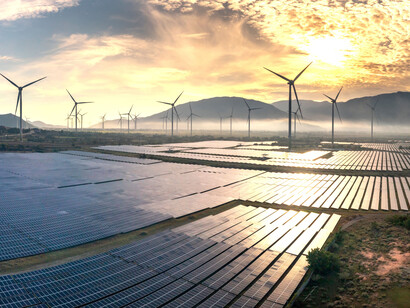
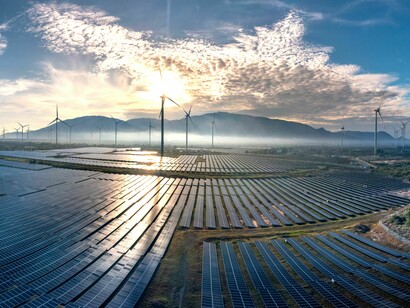
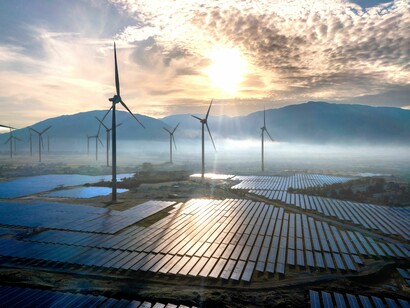
The clean energy investments are slow—and must be accelerated—but they are working. New renewables beat new fossil plants on cost. IRENA reports that over 90% of the renewable capacity added in 2025 produced electricity more cheaply than the cheapest new fossil alternatives. Its levelized cost figures were $44/MWh for solar PV and $33/MWh for onshore wind. Meanwhile, a gas turbine shortage nearly doubled the capital cost of new US combined-cycle plants, and generation costs approached $100/MWh in gas-dependent markets such as Italy, Germany, and Japan.
Improvements in energy efficiency save energy and induce significant non-energy benefits, such as lower maintenance costs, improved process reliability, better product quality, reduced environmental impact, and enhanced corporate image. Global efficiency progress rose 1.8% in 2025, up from about 1% in 2024, and efficiency investment reached almost $800 billion, but it must accelerate to meet climate requirements.
To the extent possible, the new Congress should try to pass legislation accelerating the climate agenda. A two-thirds majority of both the Senate and the House of Representatives is required to overcome a presidential veto. Bipartisan collaboration will be rewarded.
AI development and the building of AI centers need to be brought under public control. We cannot leave such profound changes only in the hands of a few large corporations. Key elements include human-in-the-loop oversight. risk-based and targeted regulation; standards and auditing; enterprise and data governance; and international norms. We should also understand the implications for labor and consider appropriate public and private policy.
Last but not least, we are happier and healthier in green, natural settings. Regular exposure to parks, forests, or gardens lowers stress hormones, reduces symptoms of anxiety and depression, and improves focus and working memory. Being surrounded by vegetation is linked to lower blood pressure, improved immune function, and better sleep. Research suggests that spending at least two hours per week in nature is a reliable threshold for boosting overall health and happiness. The priority should be on creating new green space with greater access for low-income citizens.
With the midterm Democratic victory, we might love our neighbors and even our political opponents.
As concerned citizens, we should use every tool we have to combat climate warming and poverty. Our actions must count, and our voices must be heard—this is our responsibility.
References
1 United Nations Environment Program (2026), Executive Summary, Emissions Gap Report 2026: The point of return—urgent emissions cuts needed to come back from overshoot of 1.5°C. Olhoff, A. (chief ed.), Lamb, W., Kuramochi, T., Rogelj, J., Pelz, S., Khanna, T., Boehm, S., den Elzen, M., Jeffery, L., Minx, J., Muûls, M., Pachauri, S., Pathak, M., Riahi, K., and Sudharmma Vishwanathan, S. (eds). Nairobi.
2 United Nations Environment Program (2026), Executive Summary, Table ES2, Emissions Gap Report 2026: The point of return—urgent emissions cuts needed to come back from overshoot of 1.5°C. Olhoff, A. (chief ed.), Lamb, W., Kuramochi, T., Rogelj, J., Pelz, S., Khanna, T., Boehm, S., den Elzen, M., Jeffery, L., Minx, J., Muûls, M., Pachauri, S., Pathak, M., Riahi, K., and Sudharmma Vishwanathan, S. (eds.). Nairobi.
3 Harvy, F. (2026), The climate crisis will destroy our economies—we learned this 20 years ago. When will we act? The Guardian, 28 October.
4 Climate Policy Initiative (2026), Global Landscape of Climate Finance Data Dashboard, Last updated: 23 June 2026.
5 Chancel, L., Gomez-Carrera, R., Moshrif, R., Piketty, T., et al., World Inequity Report 2026, Forward, World Inequity Lab.