English
 Español
 Français
 Deutsch
 Italiano
 Português
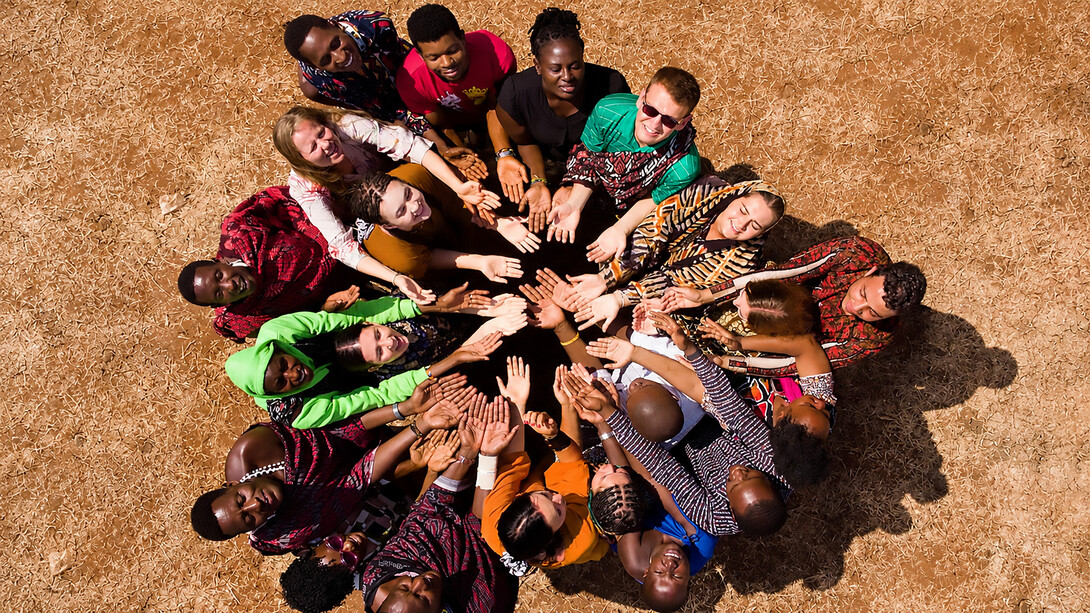
Although there is extensive scientific literature on culture, there is no generally accepted definition of it. Consequently, not only is a common definition of culture unavailable, but the importance of culture in policymaking is also not clearly explored. In this context, the underlying philosophical basis of policymaking makes it unclear how culture fits into that philosophical basis—specifically, what is meant when we say "culture". As a result, it is possible that our definitions of culture simply reflect what we think it should be rather than providing an accurate picture of how it really is.
To address this, one way to think about the "what is culture?" question would be as follows: we may describe a group of people who appear to share similar beliefs, ways of behaving, and showing their beliefs and use that description as a way to define culture. Based on this view, this definition of culture includes the language used by a given population, the religion that they practise, and customs. Therefore, policies should adhere to the same moral and ethical standards of conduct by which a society can be considered sustainable and should do so within the context of that society's cultural and religious norms. Thus, understanding cultures is important in understanding how and why particular policies are shaped the way they are in different countries.
Building on this understanding, culture is fundamentally the basis for everything within a civilisation; it is the single sustainable component of all. Elements of successful cultures do, and will, differ from group to group; however, the fact remains that an effective culture must always provide value. The culture of a team consists of the values, beliefs, attitudes, and behaviours that are held by members of that team. How we communicate a strong culture is directly reflected in the country’s core values and whether or not those core values are being significantly communicated in a positive manner.
When culture is developed and communicated, it can be described in two distinct ways: as either a product or service (in the case of providing a service) or as either a person or a member of a team (in the case of being an individual). To properly understand the impact of culture in our society, we must understand how the culture breaks down into its various components and how culture correlates to the physical manifestation of government and its usage. While looking at the relationship between political culture and human culture within any society is valuable, the most interesting facet of culture is that aspect of it that can change or be influenced the most.
In light of this, in some countries, especially since the 1970s, efforts have been taken to support the cultures of indigenous peoples and marginalised communities and to ensure a balance between commercial and non-commercial activities in public spaces. In doing this, many governments have established several institutions within the framework of their cultural policies. Certain cities and countries have behaved in such a way that local cultures can reinforce or disprove the culture that a company, for instance, is trying to create. The purpose is often referred to as how culture is important; a good understanding of a country's political culture can help shape the way her government is run and influence her leaders’ decisions in developing policies. By following the most important elements in a country’s political culture, one can see the kind of politics that has been implemented as a reflection of political culture.
However, the question remains a puzzle since we know that cultures can differ hugely and, thus, multiculturalism will influence policy in some areas, such as immigration, education, health or social policies, etc. Another significant factor for affecting decision-making policy is public relations. There are many vast areas of cultural interaction, which are independent of government initiatives. Not all cultural relations are a form of culture policy; however, they play a major role in many instances. For instance, there are very few important studies looking at the impact of culture on policy development for social and economic wellbeing; however, the findings of those studies demonstrate that culture contributes significantly to social wellbeing.
From this perspective, members of a society must have the ability to extract the means that will drive them to all types of development. And cultural development is one of the greatest generators of change and progress in society as a whole; therefore, culture can significantly impact the development and success of all societies. The use of culture in evaluating and solving different issues and problems will allow people to view the nature of the issue or problem from a different lens, enabling them to develop a greater understanding of that issue or problem, therefore enabling people to be able to successfully overcome that issue or problem.
Given these considerations, policies around the world differ greatly. This difference is primarily caused by policy developers’ consideration of cultural uniqueness when creating policies. In general, they want to enhance the access and well-being of their populations and support the establishment of culture-based institutions, such as schools, museums, libraries, and cultural centres. There are many more than one source of publications available that show culture can contribute to understanding part of a policy's development. In other words, there are numerous potential source documents where case studies can be derived to highlight the impact that the culture of a country has on the establishment of a policy.
One noteworthy case study example is China's 1980 One Child Policy, whereby most families were limited to having one child, and this policy was strictly enforced with fines and sometimes enforced abortions. Although the One Child Policy was implemented until it was repealed in January 2016, a two-child policy replaced it, and in May it became a three-child policy. Policies such as the One Child Policy cannot be instituted in other countries due to cultural and religious differences. Therefore, it is critical that policymakers include aspects of culture when developing or implementing policies at present or in the future, as culture is an important factor in both policy development and decision-making.
At the global level, international cultural practices are changing due to the growing importance of the world economy, the growing ambition and need for international cooperation, and the growing global competition. In creating long-term values in today's disruptive era, many policymakers should focus on appropriately calibrating their risk tolerance to cultivate more innovative cultures. They should also be aware of the challenges involved in building a coherent, borderless culture, especially when desired cultural attributes clash with local norms, such as speaking in a culture where hierarchy and politeness prevail, a challenge that can be worsened by language barriers.
For example, in Bali, the long-term economic impact of tourism could prove as important as the cultural exchange that influences local culture. At the Council for Culture, the ministries have noted that the economic value of culture and cultural exports has been overemphasised in recent years. Therefore, culture is the priority and at the centre of policymaking; cultural factors influence economic behaviour, political participation, social solidarity and value formation and evolution, which are closely linked to how and why public policies are developed in different ways in different countries.
In organisational settings, creating a culturally competent organisation entails reframing people's perspectives on other cultures and their interactions with those cultures as well as the ways in which they interact with those cultures through shared work. In addition to fostering cultural diversity through the encouragement of power-sharing between culturally diverse individuals as well as through culturally diverse groups, creating a culturally competent organisation will lead to positive outcomes from culturally diverse interactions.
By recognising cultures and integrating their value systems into an organisation's structure, organisations will better serve their different populations. By using five key methods, organisations can provide themselves with the tools needed to effectively challenge their assumptions regarding the importance of culture as well as how those value systems can be incorporated within a culturally diverse population across various contexts. These are valuing diversity, conducting cultural self-assessments, understanding the dynamics of cultural difference, institutionalising cultural knowledge and adapting to cultural diversity.
Accordingly, diversity as a priority is crucial, but so too is fostering a culture wherein individuals from diverse backgrounds feel welcomed and included. Step one for politicians would be to identify and describe the aspects of culture that will help facilitate their culture strategy and help engage their citizens in that process. For example, if an organisation is being formed, Human Resource (HR) managers must have an understanding of the general concept of culture and the unique aspects of each organisation's culture. The HR manager’s knowledge of these cultural archetypes may then enable the board to ask questions regarding how the manager defines and manages the types of culture that will contribute to the success of the organisation.
Finally, the components of cultures are interconnected, and it is useful to understand them, as they relate to evidence of government use and the influence of various cultural variables on policy. For instance, for organisations to have a clear understanding of their culture and to determine the direction of cultural change, it is crucial to act quickly and without analysis. One important way to do this is to treat cultural decisions as an important public matter, not to leave them to be taken by chance in a back room and to involve members of the community in the deliberation, selection, and implementation of their community's cultural values. In conclusion, meaning-making is the core of all cultural mechanisms influencing policy development. This includes ideas, values, concepts, beliefs, attitudes, opinions, and norms, to which meaning is attached and which shape policies through meaning-making.