English
 Español
 Français
 Deutsch
 Italiano
 Português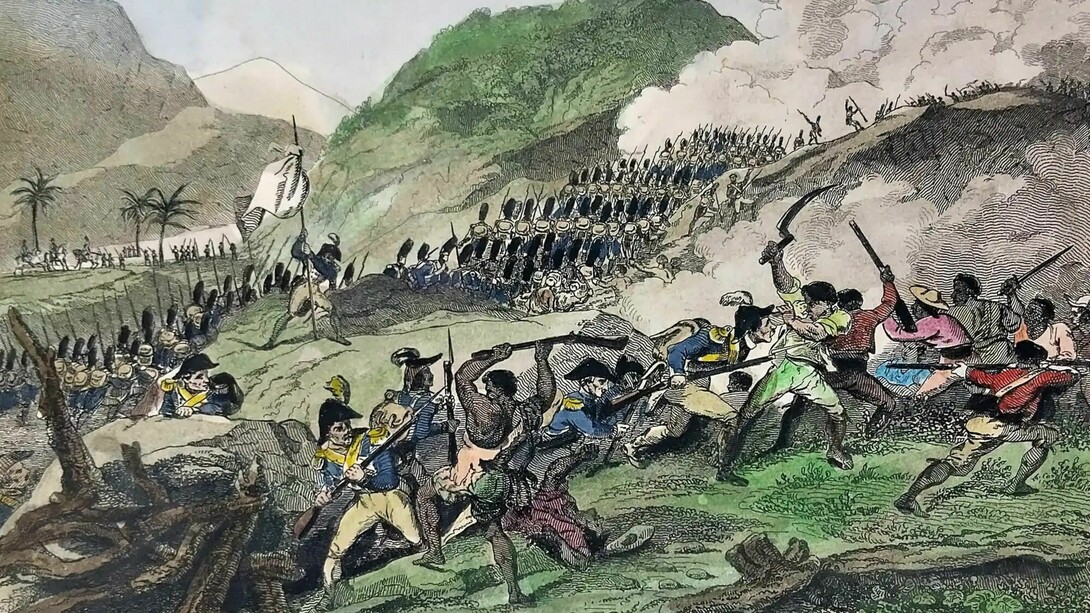
What are the attributes of a hero? Most often, heroes have been described as those who are steadfast, resolute, firm, and unwavering in reaching their goal(s). A hero has the strength and ability to stay firm and focused on achieving success despite obstacles faced. A hero is also one who can uplift spirits and inspire others to work together to achieve their goal.
Perhaps as we explore Haitian heroes and their disrespect for the colonial powers, the question should be what factors or criteria of white supremacy ideology deny the credit and admiration that should be and is given by the Haitian people to those who freed the enslaved and created Haiti as an independent republic.
The aspect of “hero” criteria came into focus in 2018, when Haitians in Brooklyn wanted and were successful in naming a street for Jacques Dessalines. The opposition was almost unbelievable, from lawmakers, concerned that the street naming would honor an “advocate of racial murder”.
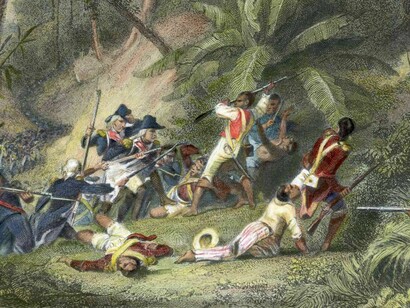
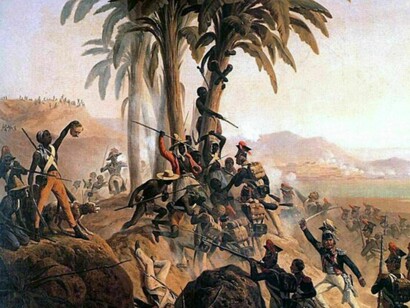
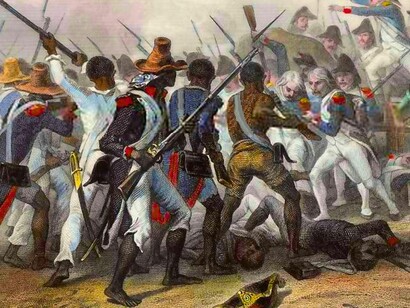
Haitians, however, regard Dessalines as a great revolutionary hero, leading the first successful slave rebellion that freed his people from brutal enslavement, and establishing the first Black republic in the Western Hemisphere. After the capture of Haitian Revolutionary leader Toussaint L’Ouverture, Dessalines took control of the Haitian army, defeating the French and securing the independence of Haiti.
Haitians revere Dessalines for his revolutionary spirit, leadership, strength, courage, and self-determination. He is even regarded by some as not only a Haitian hero, but a hero of the modern world. To commemorate the 100th anniversary of the Haitian Revolution, in 1904, the national anthem, “La Dessalines,” was named in honor of Dessalines.
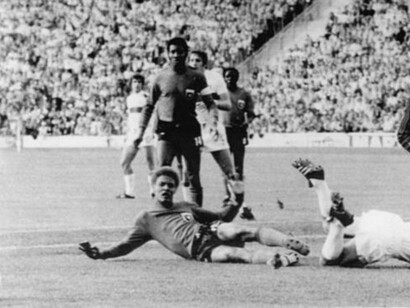
Again, the Haitian hero has produced controversy. The FIFA World Cup governing body banned the teams’ jerseys because they violated rules banning political slogans or imagery. What exactly was depicted on the jersey that was so offensive?
On the right hip of the jersey was an image depicting the Battle of Vertieres, the final battle of the Haitian War of Independence of 1803. The image of independence heroes raising the Haitian flag included the leader Jean-Jacques Dessalines, the central figure in the image. For over 200 years, from colonial times until the present, Dessalines has been regarded as a savage barbarian rather than the heroic freedom fighter that he was and remains in the hearts and minds of the Haitian people.
Here are two other heroes in the minds of the Haitian people that must be recognized as well: Francois Makandal, referred to as the “Black Messiah,” and Dutty Boukman.
Francois Makandal defied all the mythology of black intellectual inferiority. Makandal, fluent in Arabic, who learned to speak, read, and write French, was noted for his intelligence, his rhetorical ability, and his skill in organizing. He was a plantation medicine man and is best known for his extensive knowledge of plants and their use as a revolutionary tool, and as a Haitian Vodou priest or hougan. Makandal escaped from the plantation and became one of the most fearless leaders of the Maroons.
Makandal planned to make thousands of portions of poison using native plants and distribute them to a network of plantations. After slave masters became ill, the Maroon armies would attack plantations. Makandal proclaimed that slavery would end for the black people of St.Domingue and that they would rule themselves. In 1758, Makandal was tortured and burned at the stake in the center of the square in Port-au-Prince.
Makandal was considered a hero by the Haitian people a symbol, of the revolt against slavery and a model for the next generation of rebels. His actions are viewed as a precursor to the Haitian Revolution. He is honored as a Haitian hero by having been immortalized on a 20-gourde Haitian coin.
Dutty Boukman, a Haitian hero, again refuted the mythology of black intellectual inferiority. He gained respect as a man of knowledge and became known as “Book man.” Boukman, a Muslim, taught the enslaved how to read and about spirituality from the Holy Quran. He became a hougan, a voudou priest. He and Cecile Fatiman secretly performed ceremonies to gain strength and pay respect to ancestors.
In August 1791, some 33years after the death of Makandal, another Haitian leader and hero emerged. On this night under a tree in Bois Caimen, Dutty Boukman and Cecile Fatiman held a spiritual ceremony that served as a catalyst for the 1791 slave revolt that is the beginning of the Haitian Revolution and the largest slave revolt in the history of the world.
From Makandal to Boukman, to Toussaint L’Ouverture to Dessalines, each of these men demonstrated courage, valor, resilience, and determination that inspired an enslaved people to rise and claim their humanity. They possessed all the qualities of a true hero.
The refusal to allow the Haitian World Cup team to wear images of their hero Dessalines is further proof that white supremacist ideology will not acknowledge a black man as a hero who has shattered the myth of white superiority or supremacy. This incident, however, has brought focus again to one of the greatest victories against inhumanity and oppression in world history, the Haitian Revolution. May Dessalines always be honored by the Haitian people as their very special hero, the one who ultimately brought them freedom.