English
 Español
 Français
 Deutsch
 Italiano
 Português
The modernity we know today is very much associated with the West, specifically the large urban centres of Europe and North America. However, this concept is historically linked to a place that is rarely imagined, outside the Eurocentric perspective.
Long before Europe was considered a superpower, an ancient civilisation had already developed technologies and possessed techniques that would one day revolutionise history. China, our protagonist, is an ancient civilisation with a history dating back approximately 5,000 years. Its long cultural continuity and capacity for innovation are what make it so unique and important today.
Cradle of global innovation
A major centre of culture, philosophy, and literature, China has also been a great laboratory for innovations and ideas that have shaped generations. China plays a central role in our understanding of what modernity is, and recognising this is not clinging to the past but positioning the country where it has always been: at the centre of global innovation.
Chinese civilisation was sustained by a social structure that highly valued intellect, experimentation, and the pursuit of knowledge. The belief that knowledge was the path to social advancement and responsibility also constituted institutional power. The practical application of knowledge was likewise a widespread custom among artisans, technicians, farmers, doctors, and other professionals who tested and refined their research.
It is on this basis and in this context that China became the pioneering civilisation behind four major innovations that shaped the world: paper, printing, gunpowder, and the compass. These inventions would directly influence navigation, warfare, geography, and communication as we know them today.
The invention of paper originated in China around 105 BC and later spread to other locations, such as Turkestan, Syria, and Egypt. It fundamentally transformed the circulation of knowledge worldwide. Cheaper and more versatile, this invention redefined how societies store and transmit information. It expands access to writing and knowledge and democratises record-keeping and administrative processes.
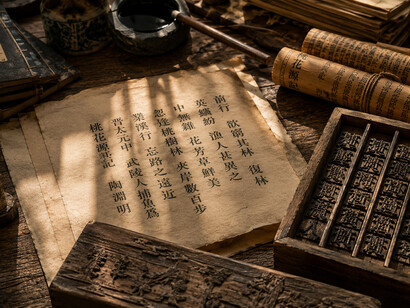
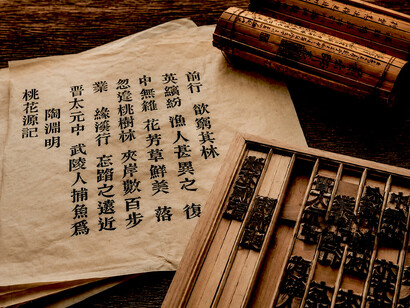
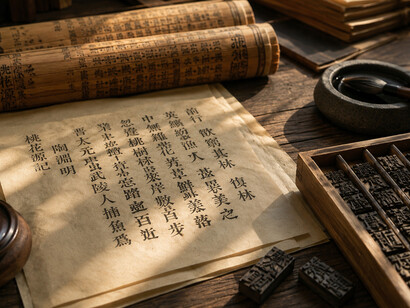
Thanks to the invention of paper, printing could also be created. The press has structurally impacted the world and served to expand knowledge beyond borders. It not only accelerated content reproduction but also standardised information across different social groups. Through it, knowledge spread, became consolidated, and gained an international scale. China pioneered the development of printing, both with woodblocks and movable type. The first known use of printed paper money in China dates back to the 10th century AD.
In terms of military importance, gunpowder revolutionised and redefined the dynamics of war. It was invented in China around 1000 AD through chemical experiments aimed at spiritual inquiry. After discovering its true potential, gunpowder began to be used in China as a material for fireworks and signalling. It was only when it reached Europe that it acquired a military purpose and a direct influence on the balance of power between nations.
The compass is another great invention that changed the way we navigate the oceans. Historians claim that the Chinese magnetic compass was created around 1100 AD and then passed on to Arab merchants who brought it to the West. Initially used for practices such as geomancy and territorial orientation, its potential soon expanded to navigation. Thanks to it, cultures and products could move across regions, and trade routes and maritime explorations flourished, making the world more connected.
Beyond these major innovations, China was also the birthplace of other important products that are very well recognised today, such as silk, porcelain, tea, noodles, chemistry as a field of knowledge, grain storage techniques, and the seismograph. This demonstrates how the consistent pattern of creativity and applied knowledge allowed China to excel and play a central role in technological innovation long before the European continent.
The Silk Road as a cultural vector
Chinese inventions, ideas, and customs spread throughout the ancient world deliberately and systematically. Europe and Africa did not simply copy their neighbours or reinvent technological innovations; instead, they received them via the Silk Road—a famous route through which people, goods, and knowledge were exchanged among the three major continents.
The Silk Road was created by the Chinese in the 11th century BC, during the Han Dynasty, and became the main trade route linking the East to the West. Initially, it was used to transport silk, spices, gold, silver, and other luxury goods from Chang'an (present-day Xi'an). Over time, the route also began to promote the exchange of cultures, religions, technologies, knowledge, and ideas.
Although the Silk Road reached its final stage around the 15th century due to the development of maritime exploration, it directly impacted the development of large cities, the formation of empires, and served as a key channel for the diffusion of cultures. It was through it that Chinese innovations spread and gained recognition worldwide.
The compass, gunpowder, printing, agricultural, and medical techniques then arrived in the West, and along with them, the notion of a global network linking different peoples. Chinese gastronomy, art, and fashion also spread to other civilisations along the route and remain to this day.
Through the constant movement of merchants, travellers, and scholars, cultures did not remain isolated but evolved through interaction and mutual influence. In this way, the Silk Road played a fundamental role in enabling China to shape the social and intellectual development of the ancient world, leaving a legacy that continues to resonate in modern societies.
The cultural and civilisational importance
China is not merely a historical curiosity; it is one of the oldest and most important civilisations in world history, with its philosophy, science, politics, and modern society being heavily influenced by it. The richness of Chinese culture was not limited to technological inventions; it was a civilisation with strong values rooted in philosophical traditions linked to family, ethics, and social order—known as Confucianism.
Through their knowledge and applied practice, social, cultural, and administrative systems were created, all supported by an efficient bureaucracy, paper records and printing, and advanced business practices for the time. This model had a strong influence on other Asian organisational systems, such as those in Japan, South Korea, and Vietnam, and was later admired by European Enlightenment thinkers.
As a global shaping force, Chinese identity can be seen everywhere today—from traditional medicine and herbal remedies to cuisine rich in history and flavour, martial arts, and governance models. As one of the world’s major powers, China is also the second-largest economy, a leader in technology, manufacturing, and infrastructure, and an increasingly influential political force.
Regarding these inventions that have greatly impacted modern life, it is also necessary to consider his absence and how modern societies would be structured differently. Without the invention of the compass, paper, and the printing press, books as we know them today would not exist, the great voyages of discovery and maritime exploration would have been far more complicated, and the dissemination of knowledge would have progressed at a much slower pace.
To imagine a world without China is also to consider that many concepts of ethics, education, social hierarchy, and harmony with nature would not exist, or, if they did, perhaps in a different form than they exist nowadays. The world today would be technologically slower, more culturally homogeneous, economically altered, and politically reshaped.
Reflection on invisibility
China has done much more than just create, innovate, and export. We have seen that it shaped consumption structures and new techniques even before Europe achieved modernity. Yet when we think about innovation, production, and reference systems, we don't associate them with China. Why does this invisibility occur?
Chinese invisibility is not actually an absence of its influence on the world, but rather its narrative erasure. Without a doubt, this Asian giant has left its mark on the world with its creations. The central issue lies precisely in the fact that the world does not associate this global impact with China.
We must shift the lens of analysis from production to the concept of narrative. Global trade has developed even more intensely over the centuries, driven by European maritime expansions and discoveries. Globalisation has not only affected the products traded but also the way in which world history is told. Those who control the narrative control history. Those who control history control memory.
Beyond commercialisation, Europe also recontextualised, renamed, and even symbolically appropriated many innovations created in the East. This is why modernity is dissociated from the East, as many Chinese teachings and legacies have been reshaped through European lenses. China's credibility becomes diffuse, often secondary, when we compare the origin of a product to that of a modern European country.
However, it is important to emphasise that this Chinese invisibility did not occur by chance. It is the result of the global dominance of Eurocentrism for centuries. The cultural, educational, and historical centrality of Europe has reinterpreted events and defined how history would actually be remembered. It's important to understand that this doesn't only occur in the East but also in countries in the Americas, for example.
In the case of China, Europe served as a global amplifier for Chinese inventions, becoming a very positive point. However, at the same time, it may have contributed to the idea of Chinese decentralisation in the historical narrative.
The quest for global recognition and influence persists even today, despite China's central role in the global economy and its status as a major leader in technology. China has never been invisible; we simply haven't learnt to see it. Over time, we've confused narrative with truth, and recognition with origin.