English
 Español
 Français
 Deutsch
 Italiano
 Português
How might a woman navigate a system in which the texture of her hair can completely undermine the quality of her resume? For a Black woman in the 1980s and 1990s, this reality meant one of two things: either conforming to Eurocentric beauty standards by altering her natural hair, or risk social marginalization and professional rejection. This overwhelming pressure contributed to the rise of hair straightening through chemical relaxers during this period, yet its roots stretched back far earlier in history.
From the era of slavery to corporate offices decades later, Black hair has been scrutinized, controlled, and devalued by the same system which centers White features. Natural hair was often framed as incompatible with professionalism, femininity, and respectability. Consequently, Black hair has historically functioned as far more than a matter of physical appearance. Hair was a physical marker of status within a system which favored proximity to Whiteness. As a result, many Black women were encouraged to alter their natural hair textures in order to be perceived as socially acceptable.
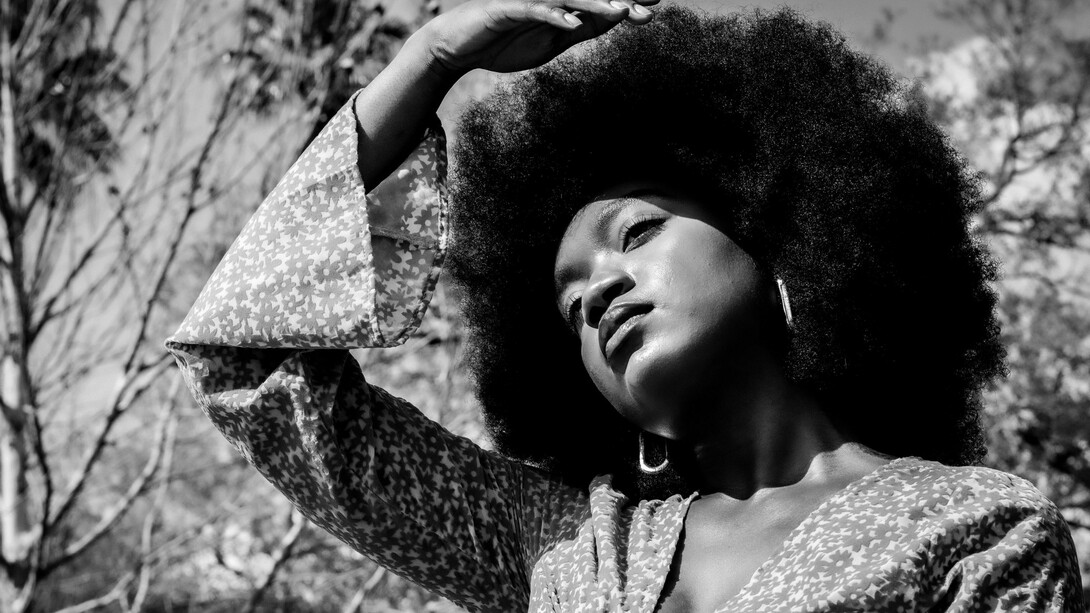
By the late 20th century, these pressures had evolved into racial and gendered expectations tied to ideas of womanhood, respectability, and belonging. Although the natural hair movements of the 1960s and 1970s encouraged Black women to embrace their curly textures, the following decades saw a resurgence of straightened styles. By the 1980s and 1990s, straight hair had become the standard for Black women, especially in professional environments. The emphasis of relaxed hair in the workplace allowed for the standard to be framed simply as a matter of “professionalism” rather than as the result of racialized beauty standards.
This framing allowed institutions to treat hair straightening as a practical decision, obscuring the historical forces that made the choice feel necessary. While the rise of hair straightening in the 1980s and 1990s is often simplified as a response to professional expectations, the practice was rooted in a long history of racialized beauty standards that devalued Black women’s hair, shaping ideas of femininity, professionalism, and self-worth while reinforcing pressures to conform.
Perceptions of Black women’s hair during the rise of relaxers were deeply connected to the racial hierarchies established during slavery. During enslavement, the hair texture of recently enslaved Africans was frequently described as “wool-like” and “unattractive” by Europeans. Most Black women, who were forced to work in fields all day, had no time for haircare. Both the lack of time and poor availability of hair products designed for Black hair textures contributed to the tangled and matted state that many enslaved Black women found their hair in.
The few Black women who had time to care for their hair, namely those working in the house, adapted wigs often worn by upper-class White men. Enslaved women who worked in the house were seen as “better off” than those who worked in the fields.Therefore, as the popularity of wigs skyrocketed within house-working enslaved women, straight wigs came to be associated with higher status. This association both continued past slavery and broadened to encompass lighter skin and commonly European facial features.
Post Civil War, the already established division between natural hair and straightened hair was magnified by the development of “good” vs “bad” hair rhetoric. By this time, “good” hair, which was categorized by a straight or lightly curly texture, had been established as a marker of high social standing. Conversely, thick and kinky hair, often labeled as “bad” hair, increasingly became stigmatized within Black communities. Eventually, as Black women began entering professional environments, straightened hair had become both a societally imposed standard and a personal internalized preference. The desire for straight hair, substantially driven by the promise of social and professional advancement, contributed to the rapid rise in the use of relaxers throughout the 1980s and 1990s.
Although the natural hair movement of the 1960s and 1970s aimed to directly challenge the standards which celebrated straight hair, its gradual commodification ultimately diluted the movement into a trend that reinforced the very standards it originally resisted. The Afro emerged as a radical rejection of beauty ideals during the “Black is Beautiful” movement, carrying political significance precisely because hair had historically been a site of control.
For example, enslaved Africans’ hair was often shaved to assert dominance and erase cultural identity. The movement aimed to reclaim the Afro as a symbol of resistance and a visible rejection of exclusionary beauty ideals. These ideals, which had long determined the standards of professionalism, femininity, and attractiveness, were criticized for their exclusion of Black features. As its popularity rose, however, the Afro began to be labeled as a trend rather than a political symbol which sought to uproot the standards of beauty.
As the Afro became increasingly commercialized, many activists recognized that the political meaning behind the style was being diluted. A vital figure of the movement, Angela Davis describes being reduced to her Afro, with fans often recognizing her hair while overlooking the intent behind it. The beauty industry directly contributed to the flattening of the natural hair movement through the commodification of the Afro. Many companies, such as Ultra Sheen and Perma-Strate, marketed chemical relaxers as a way to “improve” the Afro. Advertisements told women to permanently straighten their hair first and then use rods to achieve a “neater” version of the Afro.
The use of chemical straighteners, however, completely undermined the radical intent of the natural hair movement and reshaped it to fit within the very standards it originally criticized. Moreover, the commodification of the Afro ensured that it would become a temporary trend rather than a legitimate threat to Eurocentric standards of beauty. Banks’ interviews suggest that many Black women themselves recognized the weakening of the movement through commercialization. One interviewee, Nia, explains that the original political energy “got contaminated and a lot of it got sold up” as the Afro became absorbed into corporate America.
Nia’s statement highlights how American corporations absorbed the natural hair movement, rebranding political resistance as an aesthetic. As the “Black is Beautiful” movement gradually disappeared, it was replaced by the rise of straightened hair. The eventual decline of the movement highlights how deeply ingrained Eurocentric standards remained despite active resistance.
While the language and justification of standards imposed on Black women shifted over time, workplace expectations preserved earlier systems of racial control by redefining them as requirements of professionalism. In professional settings throughout the 1980s and 1990s, straightened hair was increasingly treated as the default marker of appropriate appearance. Although this expectation was often presented simply as a standard of workplace professionalism, it disproportionately regulated Black women’s natural hair textures.
Furthermore, the existence of a “standard” implies a hierarchy in which anything outside of that standard is inferior or less appropriate. Inherently, the framing of straightened hair as “professional” positioned natural Black hair as unprofessional by contrast. While these workplace expectations did not explicitly label natural hair as “wool-like” or “unattractive” as it had been labeled during slavery, the systematic exclusion and restriction of Black hair stems from the same racialized hierarchies.
These restrictions are apparent in cases such as Rogers v. American Airlines, which permitted employers to ban braided hairstyles commonly worn by Black women. At the same time, natural hair became associated with stereotypes that framed Black women as “unprofessional”, “unkempt”, and “aggressive”. As a result, hair straightening functioned not simply as an aesthetic choice, but as a response to pressures embedded within professional environments. In this sense, workplace professionalism was an extension of earlier racial hierarchies that continued to regulate Black women’s bodies.
The prevalence of straightened hair extended beyond the workplace and into magazine advertisements, undermining the claim that straightened hair was only a matter of professionalism. The ubiquity of relaxed hair in magazines such as Ebony demonstrates the internalization of Eurocentric standards of beauty within the Black community. These publications, which were made by and for Black people, still emphasized the racialized ideals of presentability that were used in professional environments. These publications consistently framed beauty as something that could be bought, meaning that even Black-centered media often reproduced the same beauty hierarchies found in corporate settings.
While magazines almost exclusively featured Black women with straightened or loosely curled hair, the advertisements highlighted the desirability of such hair textures. Through advertisements that called natural hair “brittle”, “dry”, and “ungroomed”, natural Black textures were framed as inadequate and in need of correction. These descriptors were selected to imply a deviation from the assumed standard of health and beauty. Words such as “brittle” and “dry” insinuate fragility and even neglect. Additionally, “ungroomed” implies a lack of maintenance or discipline, framing natural hair as something that has not been properly managed or cared for.
When applied to hair textures, terms like “ungroomed” reinforce assumptions about a person’s professionalism and social acceptability. Conversely, straight hair was characterized as “smooth”, “manageable”, and even just “good”. These terms suggest order and appropriate presentation, contrasting clearly with the adjectives for natural hair.
In addition to degrading the appearance of natural hair, these advertisements actively benefited from the insecurity caused by such rhetoric. The adverts framed natural hair as a problem and simultaneously provided a “solution”. In doing so, relaxer companies transformed racialized beauty standards into a profitable industry which depended on Black women repeatedly altering their hair textures. By continuously portraying natural hair as undesirable, companies encouraged repeated consumption while financially benefitting from the insecurities they helped create. The financial burden was so intense that in 1996, Black women collectively spent 3 times more money on haircare than White women, despite only making up 12-13% of the population. This spending enabled relaxer companies to flourish while continuing to stigmatize natural Black hair.
The extent to which companies profited from racialized beauty standards is particularly evident in advertisements that directly linked straightened hair to economic opportunity. For example, an advertisement by a relaxer company called Raveen states, “Was it the resume or Raveen?” By questioning whether employment was obtained through qualifications or the use of a relaxer product, the advertisement implied that straight hair could be as important as, or more important than, even merit. Rather than questioning why Black women’s natural hair might limit professional opportunities, the advertisement treated these discriminatory standards as unavoidable realities that Black women were expected to navigate through personal modification.
The issue, therefore, became Black women’s appearance rather than the biases embedded within professional spaces. Furthermore, the question posed by the advertisement creates doubt surrounding the sufficiency of merit alone and exploits the desire for economic mobility. In this way, relaxer companies commercialized the pressure Black women faced to conform in order to succeed professionally.
As these messages became increasingly normalized through advertisements and media representation, their effects extended beyond product consumption and began shaping Black women’s self-perception and relationship with their features. Advertisements that call natural hair “brittle” and “ungroomed” do not only function as temporary stimulants to push the purchase of a product; they create long-lasting feelings of inadequacy. These feelings are reflected in the “Lily Complex”, a psychological phenomenon identified by Charise Jones and Dr. Kumea Shorter-Gooden.
The complex is defined by the desire felt by some Black women to alter their natural features in order to assimilate into societal standards of beauty. Rather than perceiving hair straightening as simply a stylistic preference, many women come to view hair alteration as necessary for acceptance and approval. The Lily Complex reflects the broader effects of a social culture dominated by hair straightening: internalized racism and the association of beauty, professionalism, and social acceptance with proximity to Whiteness.
Significantly, these standards were often internalized at an early age, long before career advancement or economic mobility were relevant. The influence of Eurocentric beauty standards is particularly apparent in childhood experiences, where these ideals were first introduced and reinforced. Barbie dolls, with their long, straight hair, reflected the same ideals that dominated advertisements and media representations. These dolls reinforced a narrow perception of beauty which centered on Eurocentric features. As a result, many Black girls became aware from very young ages that their natural hair textures were seen as less desirable.
Eve, an interviewed graduate student, recalls her thoughts about her classmate with long hair at just four years old, stating, “So you realize that’s pretty, that’s not me, so therefore I’m not [pretty]. And you get the messages from your family and everywhere. And from dolls.” Other interviewees recall placing shirts on their heads in an attempt to replicate the long, straight hair of the dolls they played with. Insecurities surrounding natural hair frequently developed early in life and continued into adulthood.
Further reinforcing the necessity of straightened hair was the ritualization of chemical relaxing. Often, straightening hair was seen as a “rite of passage” for young girls entering womanhood, with chemical treatments beginning as early as six years old. Through this process, young girls learned to view their natural hair as flawed before they could believe otherwise. Consequently, the process of receiving a relaxer often symbolized maturity and passage into womanhood, contributing to the idea that natural hair is less polished or appropriate for adults. By framing the relaxing process as a ritual for girls of a certain age, natural hair is seen as something to be left behind.
At the same time, the ritualization of chemical straightening familiarized many young Black girls with physical pain as an expected component of beauty. The early introduction of relaxers, therefore, demonstrates how dominant standards were internalized and reproduced across generations.
The normalization of hair relaxing also required many Black women and girls to accept significant health risks. The physical consequences of hair straightening demonstrate the sacrifices and extreme repercussions Black women were willing to endure in order to adhere to Eurocentric standards of beauty. Hair relaxing often caused scalp burns, hair breakage, and permanent hair loss. Physical risks associated with hair straightening were evident even before the rise of relaxers. Some women used painful homemade mixtures containing lye, potatoes, and eggs in attempts to achieve “good hair”. In many cases, the pursuit of straight hair required Black women to compromise their safety.
The normalization of chemical straightening, however, established these risks as standard rather than alarming. The willingness of many Black women to endure these physical consequences demonstrates the intensity of the social pressures surrounding appearance. Pain became embedded within ordinary routines and was treated as an acceptable sacrifice for social acceptance. The normalization of these risks reflects how deeply Eurocentric beauty standards shaped not only external expectations but also Black women’s relationships with their bodies.
Importantly, the beauty industry frequently minimized or ignored these risks while continuing to profit from relaxer sales. Advertisements emphasized professionalism and beauty while rarely acknowledging potential physical consequences of repeated chemical exposure. TBC No Lye Relaxer Kit, for example, emphasizes its ability to make hair look “soft and smooth” while downplaying the harmful effects of the product. The largest and boldest text in the advertisement focuses on the promise of beauty and manageability, whereas warnings about scalp irritation and hair breakage appear only in small print at the bottom of the page. The contrast in font size and placement suggests an attempt to obscure the damaging effects of the relaxer, revealing how profit and beauty standards were prioritized over Black women’s physical well-being.
While it is important to recognize how the perpetuation of Eurocentric beauty standards strongly influenced the rise of relaxers in the 1980s and 1990s, it is equally important to acknowledge the complexities of Black women’s experiences and avoid reducing hair straightening solely to internalized racism or self-hatred. The tendency to label women who straighten their hair as sufferers of low self-esteem eliminates agency and intent from the decisions of Black women. The assumption perpetuates the stereotype that Black women are driven by emotion rather than tactful planning. Moreover, the presumption is simply not correct.
Studies have found no statistically significant difference in self-esteem between women who choose to straighten their hair and those who choose to remain natural. Hair, for many Black women, functioned as a dynamic form of self-expression. Therefore, temporarily straightening hair was not always a permanent rejection of Black identity or dissatisfaction with natural hair. Instead, hair straightening represented one of the many ways Black women chose to present themselves. While acknowledging these complexities is crucial, the influence of Eurocentric beauty standards in shaping the popularity of hair relaxing in the 1980s and 1990s is not diminished. Instead, this recognition highlights the nuanced ways in which Black women navigated and responded to the beauty standards embedded within American society.
Beyond its operation as a form of self-expression, hair straightening must also be understood within the context of femininity and respectability in social and professional spaces. Black women have historically been excluded from dominant ideals of femininity through stereotypes that frame them as either aggressive or hypersexualized. Furthermore, short, natural hair itself was labeled as masculine. Hair straightening, for Black women, could have acted as a way to control how they are perceived and reclaim the femininity society has taken from them. In professional environments, hair straightening could prevent qualifications and education from being overlooked, acting as a strategy to navigate a Eurocentric system rather than an attempt to imitate Whiteness.
Audre Lorde recalls that her mother “tried to beat me whiter every day” to ensure survival. When Lorde decided to trim and wear her natural hair, for example, her mother beat her and cried for a week. Lorde’s account illustrates how increasing proximity to Whiteness was not always fueled by a desire to be seen as beautiful, but instead by a desire to feel safe and respected in a racially hierarchical society. Even when hair straightening functioned as a survival strategy, however, the stigmatization of natural Black features continued to shape the choices available to Black women.
Ultimately, Black hair cannot be separated from politics. In American society, Black women’s hair has consistently been read through the lenses of femininity, professionalism, and respectability. Therefore, the way in which a Black woman wears her hair is rarely interpreted as neutral. Instead, the choice is often filtered through stereotypes that assign meaning to Black women’s appearance. As a result, hair has never existed outside of social interpretation, but instead has functioned as a visible site where racial and gendered expectations are imposed and reproduced.
These pressures are both historically rooted and incredibly relevant today. Many Black women continue to alter their hair in order to be seen as presentable and qualified. Orlena Nwokah Blanchard, president and CEO of the Joy Collective, describes “putting painfully toxic chemicals and endless hours into manipulating my hair to appear in a way I believed to be perceived as beautiful,” adding, “I straightened my hair believing that that’s what the professional world needed to see in order to validate my education, my degree, and my qualifications for anything I may be judged for.” Blanchard’s consistent hair straightening throughout her professional career illustrates how Black women’s personal choices continue to be shaped by systematic pressures.
Blanchard’s experience, crucially, is not isolated. Other modern examples illustrate that hair remains a site of systemic pressure for Black women and men. The CROWN Research Study found that Black women are 80% more likely to alter their natural hair to conform to workplace norms and 1.5 times more likely to be sent home because of their hair. These pressures are felt as an economic burden even today. Black women account for 85% of the $2.5 billion ethnic haircare market, reflecting the continuity of pressures which catapulted the rise of relaxers in the 1980s and 1990s. Cases such as Kerion Washington, who was denied employment at Six Flags due to his locks, and Andrew Johnson, who was forced to shave his hair during a high school wrestling match, further demonstrate the continued control over natural Black hair.
At the same time, the history and implications of hair straightening should not obscure Black women’s individuality or reduce their choices to predetermined narratives about conformity or resistance. Lorde emphasizes the importance of refusing familiar understandings of Black women’s identities. Rather than being confined to stereotypes or simplified narratives, Black women must be understood in their full complexity.
Furthermore, blind critiques of hair straightening can reproduce their own form of pressure. Judging Black women for “participating in the system” by straightening their hair risks encouraging the expectation that they must always resist Eurocentric standards perfectly in order to avoid being called “fake”. This judgment creates an additional burden in which Black women are not only forced to navigate discriminatory standards imposed on them, but are also expected to resist overtly through their appearance in order to avoid judgment. Consequently, the expectation to be “above the system” can unintentionally replicate the same uneven standards that Black women already face, reinforcing the idea that they are responsible for both resisting and correcting systems they did not create.
Additionally, expectations that Black women must personally defy these standards risk shifting attention away from the systems that made Black hair political in the first place. Black women are not responsible for symbolizing change through personal appearance, and understanding the history of Black hair is not achieved by assigning meaning to individual choices alone. Recognizing how these choices have been shaped by standards of presentability and beauty is important, but the use of this knowledge to confront the structures that controlled Black hair rather than individual Black women is crucial.
Bibliography:
Banks, Ingrid. Black Hair, 1990s Style.” In Hair Matters: Beauty, Power, and Black Women’s Consciousness, 139-46. NYU Press, 2000.
Banks, Ingrid. Splitting Hairs: Power, Choice, and Femeninity.” In Hair Matters: Beauty, Power, and Black Women’s Consciousness, 69-98. NYU Press, 2000.
Banks, Ingrid. Women and Girls Speaking Out: Five Hair-Raising Sessions. In Hair Matters: Beauty, Power, and Black Women’s Consciousness, 99-138. NYU Press, 2000.
Davis, Angela Y. Afro Images: Politics, Fashion, and Nostalgia. Critical Inquiry 21, no.1 (1994): 37
New Ultra Sheen Supreme. Advertisement. Ebony, January 1990, 123.
Johnson Publishing Company. Ebony. Feb 1990
Mayas, Ernest M. Chapter 5: As Soft as Straight Gets: African American Women and Mainstream Beauty Standards in Haircare Advertisements. Counterpoints 54 (1997): 85-108.
Noonan, Cindy. How House Slaves and Field Slaves Differed
Okazawa-Rey, Margo, Tracy Robinson, and Janie Victoria Ward. Black Women and the Politics of Skin Color and Hair. Women’s Studies Quarterly 14, no. ½ (1986): 13-14.
Patton, Tracey Owens. Hey Girl, Am I More than My Hair?: African American Women and Their Struggles with Beauty, Body Image, and Hair. NWSA Journal 18, no. 2 (2006): 24-51.
Randle, Brenda A. “I Am Not My Hair: African American Women and Their Struggles with Embracing Natural Hair!” Race, Gender & Class, and w(1-2), 114-121 https://www.jstor.org/stable/26505328
Taylor, Paul C. Malcolm’s Conk and Dato’s Colors; Or, Four Logical Petitions Concerning Race, Beauty, and Aesthetics. The Journal of Aesthetics and Art Criticism 57, no.1 (1999): 16-20.
Walker, Susannah. Black is Profitable: The Commodification of the Afro, 1960–1975. Enterprise & Society 1, no. 3 (2000): 536-64.
Woodard, Jennifer Bailey, and Teresa Mastin. Black Womanhood: ‘Essence’ and Its Treatment of Stereotypical Images of Black Women. Journal of Black Studies 36, no. 2 (2005): 264-81.