English
 Español
 Français
 Deutsch
 Italiano
 Português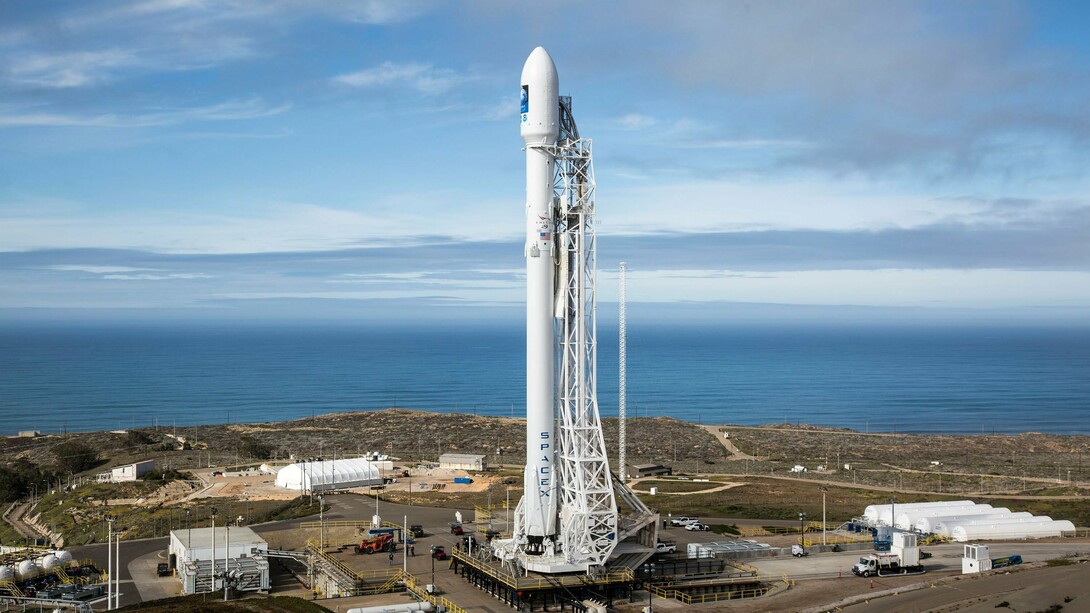
SpaceX is no longer just a private-market obsession or a debut-day headline. It is now an index constituent, which means millions of investors are holding the stock automatically, whether they intended to or not.
That is the real significance of the moment. Index funds will buy because they must. Retirement accounts will hold it because they are built to follow benchmarks. Pension systems, superannuation funds, and broad-market ETFs will absorb the stock not as an expression of conviction but as the mechanical consequence of index rules. For millions of investors, SpaceX has appeared in their portfolios without a single active decision being made. They own it because the market’s plumbing says they should.
That may sound like a technical detail. It is not. SpaceX’s move from private-market phenomenon to Nasdaq-100 constituent is a case study in how modern markets allocate capital: less by judgment than by rules and less by conviction than by methodology. The result is a financial system in which some of the largest ownership decisions happen quietly, automatically, and at scale.
For SpaceX, the implications are both immediate and long-term. The company is valued at about $2 trillion, and Reuters reports its Nasdaq-100 weight at 1.34%, with J.P. Morgan estimating the inclusion could draw about $4.3 billion in passive inflows. That is meaningful, but the harder question is not who buys the stock. It is what must happen for the valuation to be justified.
The index machine
The Nasdaq-100 is not a prediction engine. It does not ask whether a company is cheap or expensive, or whether its future is already fully priced in. It is a rules-based benchmark that tracks the largest non-financial companies on the Nasdaq exchange.
That distinction matters because funds that track the index do not make independent calls on valuation. They replicate the benchmark. If a company enters the index, they buy it in line with its weight. They are not deciding whether the business deserves the price; they are following the index methodology.
Passive investing has changed how capital moves through financial markets. A growing share of equity ownership is now determined not by analysts weighing valuations or portfolio managers debating investment theses, but by benchmark methodologies followed at enormous scale. Through retirement plans, pension systems, superannuation funds, and ETFs, billions of dollars now flow according to predefined rules rather than discretionary judgment. SpaceX’s inclusion therefore represents more than another listing milestone. It marks the moment the company becomes part of that increasingly automated system of capital allocation.
SpaceX’s addition also represents a structural change in ownership. It moves the company from a relatively concentrated investor base into the much broader universe of passive capital.
When demand becomes mandatory
That structural change creates a predictable near-term effect: a one-time buying wave.
When index funds rebalance, they have to buy the stock regardless of sentiment. That can create a temporary lift that reflects portfolio mechanics more than business fundamentals. In SpaceX’s case, the estimated $4.3 billion in passive inflows is meaningful, but it is still small relative to a company valued at roughly $2 trillion.
In practice, that means the initial impact is likely to show up more in liquidity, ownership, and trading dynamics than in any lasting change to intrinsic value. A company worth about $2 trillion is unlikely to be permanently re-rated by $4.3 billion of passive inflows alone. What the inclusion does provide is a broader shareholder base, deeper market liquidity, and greater institutional participation. Those are real advantages, but they should not be confused with the drivers of long-term returns.
The more important factor is public float. If only a limited amount of SpaceX shares are freely tradable, then even a modest index weighting can create outsized buying pressure around the inclusion window. Short-term dislocations are possible when demand arrives faster than supply.
And this is exactly where the market behavior became more interesting: Reuters reported that SpaceX shares fell 5.4% on the day of inclusion, even as brokerages began coverage with largely bullish views.
Not just a rocket company
SpaceX is often described as a rocket company, but that undersells what it has become. Launch still anchors the business, yet commercial missions, satellite deployments, NASA work, and defense contracts now give it broader reach, stronger revenue visibility, and greater strategic importance. The business has expanded into a much broader platform.
Starlink is the clearest example. It has turned satellite broadband into a subscription business with recurring revenue, global reach, and a long runway. With about 10.3 million subscribers globally, Starlink has become the company’s primary growth engine. It generates roughly $11.2 billion in annual revenue, accounting for about 60% of SpaceX’s total company revenue of $18.67 billion.
That changes how investors think about the business. SpaceX is no longer being valued only as a launch provider. It is increasingly being valued as a communications infrastructure company with a recurring revenue base and global scale.
Starship adds another layer. If SpaceX can prove reliable reuse at scale, the economics of access to orbit could change materially. That would not only improve margins; it could open entirely new categories of demand. In that sense, Starship is less a product than a potential cost-curve reset for the industry.
Taken together, these businesses make SpaceX look less like a contractor and more like a vertically integrated infrastructure platform spanning launch, broadband, defense, and logistics.
The burden of a $2 trillion valuation
That broad platform is exactly why the valuation deserves a closer look.
Markets rarely award trillion-dollar valuations for what a company has already achieved. They do so for what investors believe it can become. SpaceX’s valuation depends on several ambitious bets maturing at once: Starlink keeps scaling profitably, Starship becomes a repeatable launch system, government contracts stay durable, and capital spending eventually turns into stronger long-term returns.
That is a tall order, especially while the company is still spending heavily. SpaceX generated about $7.1 billion in cash from operations, but it also posted roughly $19.8 billion in negative free cash flow on a latest-12-month basis, reflecting the scale of its ongoing investment push.
Investors are not just underwriting the next chapter of SpaceX’s business. They are underwriting the growth of an entire commercial ecosystem around it.
The long game
History suggests index inclusion eventually becomes a footnote. Markets often react sharply when a company enters a major benchmark, but long-term performance still comes down to execution, earnings growth, and capital discipline.
SpaceX is likely no different. Once the passive buying is absorbed, investors will return to the business itself and the commercial space economy around it. That may be a strength, not a weakness: more competition from Rocket Lab, Blue Origin, and Project Kuiper could expand the market rather than shrink SpaceX’s opportunity.
Lower launch costs, more private capital, and rising government demand are making new space businesses viable. In that sense, the question is not whether SpaceX has competitors. It is whether the market it helped create grows fast enough to justify its valuation.
This brings us to the central point: index inclusion guarantees ownership for many investors, but not returns. The Nasdaq-100 can make millions of shareholders almost overnight. It cannot guarantee that those holdings will be rewarding over time. Once the mechanical buying is done, the company will be judged the same way every public company is judged: by earnings power, growth, capital discipline, and the durability of its competitive position.
For investors, the question is not whether SpaceX matters. It clearly does. The question is what must happen for a $2 trillion valuation to be sustained, and whether the company can convert its extraordinary ambitions into equally extraordinary economics.
That is why this story matters now. SpaceX’s inclusion in the Nasdaq-100 is a milestone in market structure, passive investing, and the commercialization of space. It is also the beginning of a more serious conversation about what the market is really paying for.