English
 Español
 Français
 Deutsch
 Italiano
 Português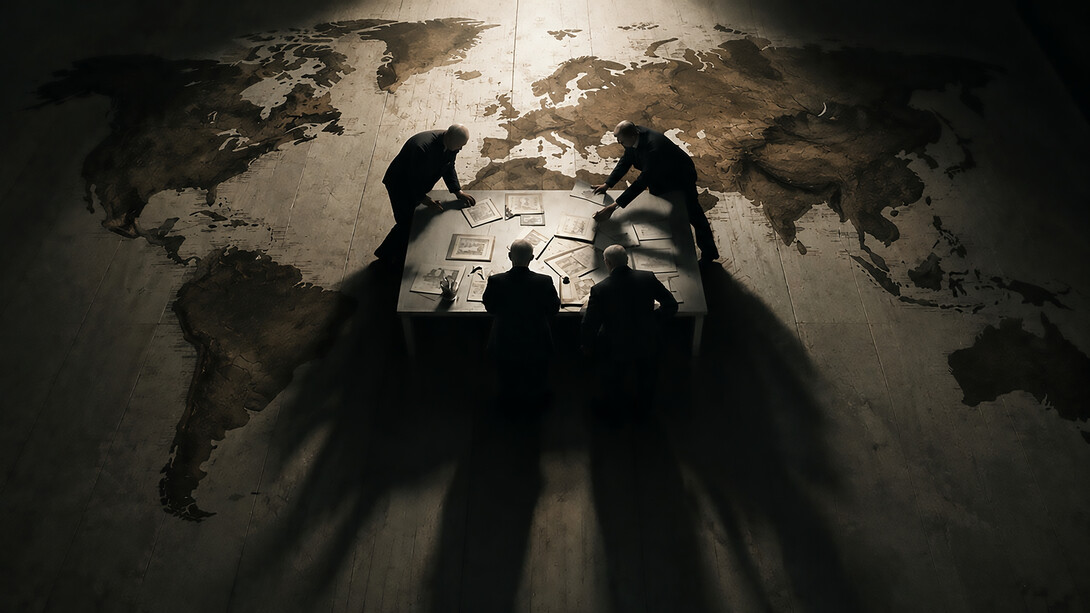
As the world evolves, the tectonic plates of global power are shifting with a perceptible, unsettling rumble. The post-Cold War era—characterized by U.S. hegemony, expanding globalization, and a rules-based international order—appears to be fracturing. In its place, we are witnessing the chaotic and contested birth of a new paradigm, a “new world order” not built on consensus but on rivalry, transactional politics, and resurgent nationalism. At the heart of this upheaval are two pivotal forces: the potential return of Donald Trump to the White House and a Europe grappling with existential threats. The question haunting corridors of power from Brussels to Islamabad is whether this volatile mix is leading us toward a new Cold War or something far more dangerous: a descent into a conflict like World War III.
The Atlantic schism: Trump and a fortress Europe
A second Trump presidency represents the most potent catalyst for the disintegration of the old order. Trump’s first term was defined by “America First”—a doctrine that questioned NATO’s value, levied tariffs on allies, and withdrew from multinational agreements. A return would likely accelerate this trend, with Trump himself suggesting he might encourage Russian aggression against NATO members who fail on defense spending. This is not mere political posturing; it is a direct assault on the collective security architecture that has prevented major war in Europe since 1945.
Europe’s response is one of profound trepidation and nascent resolve. The continent finds itself caught in a triple bind: a potentially unreliable American security guarantor, a revanchist Russia waging war on its doorstep in Ukraine, and an economically assertive China. The result is a hurried, if reluctant, push for “strategic autonomy.” This means bolstering European defense industries, considering a standalone EU nuclear deterrent (an idea once unthinkable), and preparing to act without Washington. Europe is not seeking war but is being forced to rearm for a world where American shields may be withdrawn. This pivot from dependency to self-reliance is a fundamental reordering of the transatlantic bond.
Peace forums in a post-peace era?
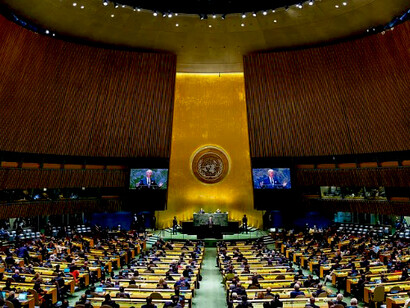
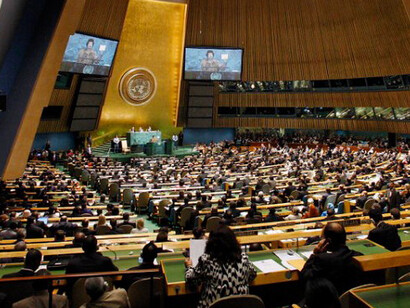
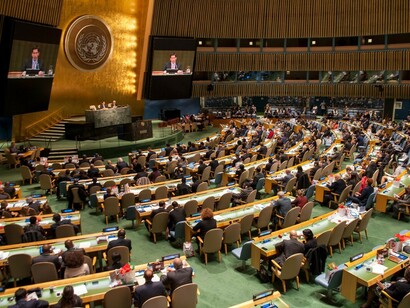
Amidst this hardening of geopolitical blocs, the role of international peace forums—the UN, the OSCE, and G20 summits—appears increasingly beleaguered. When permanent UN Security Council members are active belligerents, the body’s ability to enforce peace is neutered. These forums are becoming stages for grievance and confrontation rather than dialogue and resolution. However, their very persistence indicates a global desire to keep channels open, however strained. They may no longer prevent great power clashes, but they remain critical for managing crises, coordinating on transnational issues like climate change, and providing a voice for the Global South, which largely seeks to avoid being forced into a binary East-West conflict.
The Pakistani crucible: between a rock and several hard places
For a country like Pakistan, this new disorder presents acute challenges and narrow avenues for opportunity. Traditionally balancing between Washington and Beijing, Pakistan now faces a more complex chessboard.
The U.S. relationship: under a Trump administration, ties would become even more transactional. Expect intense pressure on counter-terrorism, Afghanistan, and particularly on Pakistan’s ties with China, with threats of sanctions or aid cuts. The era of semi-reliable patronage would end.
The China anchor: the China-Pakistan Economic Corridor (CPEC) makes Beijing Islamabad’s most crucial partner. In a new Cold War, Pakistan would face immense pressure to deepen this alliance, potentially alienating the West and drawing scrutiny from Indian-led initiatives like the Quad.
Regional instability: a world where great powers are at odds risks inflaming Pakistan’s own regional conflicts, particularly with India. A more isolationist U.S. might be less inclined to mediate, while global attention diverted to Europe or the Pacific could create a perilous vacuum in South Asia.
Economic vulnerability: as a nation perpetually in need of IMF support and foreign investment, Pakistan is vulnerable to the global economic shocks that would accompany a fragmented world—protectionism, broken supply chains, and currency volatility.
Pakistan’s future in this order will hinge on a delicate, almost impossible, act of multi-alignment. It will require leveraging its geographic and strategic value without unequivocally joining one camp. This means diversifying partnerships, engaging more deeply with the Middle East and Central Asia, and championing their interests fiercely in those strained peace forums. The margin for error will be vanishingly small.
The future: not World War III, but a world of perpetual crisis
Are we heading for World War III? A full-scale, global military conflagration remains unlikely due to the deterrent of nuclear weapons. However, we are almost certainly entering a period resembling a “Cold War 2.0”—but more multipolar, digital, and volatile. This will be a world of persistent, managed confrontation: cyberattacks, economic decoupling, proxy conflicts in regions like Africa and the Middle East, and an intense arms race.
The future will be defined not by outright world war, but by chronic insecurity. For ordinary citizens from Paris to Peshawar, this means living with the psychological burden of constant geopolitical tension, economic uncertainty, and the erosion of global public goods like climate cooperation and pandemic preparedness.
The new world order is not a designed system but an emergent reality of competing spheres of influence. Its defining characteristic is the absence of a single, agreed-upon set of rules. In this landscape, nations like Pakistan will not be mere spectators but active, if vulnerable, players in a high-stakes game where the greatest challenge will be navigating the treacherous space between the giants, all while trying to secure their own survival and prosperity in an age where the thread of global peace seems more frayed than ever. The task ahead is not to yearn for a vanished stability, but to build resilience and agility for the turbulent century ahead.