English
 Español
 Français
 Deutsch
 Italiano
 Português
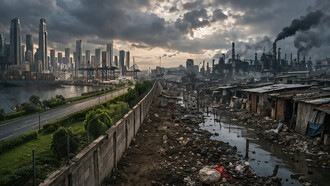
Governments around the globe rarely fail for lack of policy. They fail because policies are limited to paperwork, and the policymakers exercise in optics rather than in obligation. Having a closer look at the recent history across the countries and crises, one can observe ambitious frameworks, lengthy strategy documents, and international commitments that mask the persistent reality of a country: for ordinary people, especially the most vulnerable, policy promises rarely materialise into protection, dignity, or security.
In most of the instances, this gap is not accidental; rather, it is structural.
Policies in this era are often designed to signal competence to international lenders, donors, and political constituencies rather than to address lived realities of the citizens (or the targeted groups). Success is measured by adoption rather than from its impact; by alignment with global agendas, not accountability to citizens or customised solutions to the issue(s) based on economic, geographic or social contexts. The result is a growing disillusionment with governance itself, as people learn, repeatedly, that promises are easiest to make where consequences are hardest to trace.
Sri Lanka’s economic collapse in 2022 offers a stark example. Long before the crisis erupted, policymakers (in succeeding governments) had pledged social protection, poverty alleviation, and inclusive growth. National development plans echoed the language of sustainability and equity and sustainable development. Yet when the economy imploded, these commitments proved hollow. Fuel shortages crippled daily life, hospitals rationed care, and food insecurity surged almost overnight. Welfare mechanisms were neither scaled nor flexible enough to respond. The burden of adjustment fell squarely on citizens, while political elites negotiated survival behind closed doors. This situation was not an outcome of a lack of proper policies; rather, it was an outcome of the lack of proper implementation, lack of alignment with ground-level realities, and lack of coherence of the major policies (economic policy in this instance) of succeeding governments, where each government changes the policy based on their political goals rather than considering the actual economic realities of the country.
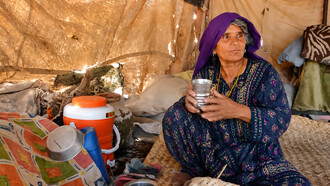
Climate governance tells a similar story. Many countries in the global south are praised for having robust climate adaptation policies, often drafted with international technical support that are aligned to international frameworks designed by the experts in the field. Among South Asian countries, Bangladesh is frequently identifies as a model for its disaster preparedness; and yet, at the margins, communities continue to lose their houses andidentified livelihoods. In most of the instances relocation schemes disrupt social networks, and compensation remains inadequate or inaccessible, and once again, it is the most marginalised group of people who are suffering from these policy failures. Adaptation, in practice (or in this context), often means that the poor (or the affected group) absorb the cost of a crisis they did not create. Policies may reduce headline mortality, but they normalise long-term vulnerability.
Even in advanced economies, policy failure is less about capacity and more about political choice. During the COVID-19 pandemic, emergency relief packages were introduced at unprecedented speed. Governments declared that “no one would be left behind.” Yet informal workers, migrants, and precariously employed individuals were routinely excluded. Eligibility rules favoured stable, documented employment; digital systems assumed access and literacy; delays turned urgency into hardship. These were not oversights. They reflected long-standing assumptions about who counts as a legitimate policy subject.
Above are a few examples that reveal how the gap between ‘policies’ and their ‘implementing realities’ causes damage to the day-to-day lives of the citizens (or a specific group) that are supposed to be guarded by that same policy. The sad reality is that policies often function as a shield for power (for the governments) rather than a tool for justice. Governments rely on policy language to deflect criticism, pointing to frameworks and plans when confronted with failure. Implementation gaps are blamed on bureaucracy, fiscal pressure, or external shocks, while political responsibility quietly disappears. Over time (in most of the instances), citizens stop expecting delivery and learn to survive around the state rather than through it.
This erosion of trust has consequences. When policy loses credibility, participation declines, protest intensifies, and democratic legitimacy weakens. People do not disengage because they are apathetic; they disengage because experience has taught them that engagement rarely changes outcomes, and in most of the instances, these kinds of situations lead to ‘clientelism’, especially in developing democracies. In this sense, policy failure is not just administrative; it is profoundly political.
The problem is compounded by how policy success is evaluated. Indicators prioritise outputs: programmes launched, funds allocated, targets nominally met, while ignoring outcomes that matter to people’s lives. Consultation processes, when they exist, are frequently tokenistic, designed to validate decisions already made. Communities are invited to participate, but not to decide. There are alternatives, but they require relinquishing control. Participatory budgeting initiatives in parts of Latin America have demonstrated that when communities shape spending priorities, public resources are used more equitably and effectively. Feminist policy approaches that cut across sectors and are not confined to symbolic gender strategies have shown measurable improvements in access and inclusion. These examples succeed precisely because they treat people not as beneficiaries, but as political actors.
Closing the gap between policy and people demands more than technical reforms. It requires confronting uncomfortable questions about power, inequality, and accountability. Who benefits when policies fail quietly? Who absorbs the cost of “adjustment”? And why are promises so easily recycled after each crisis?
Until governments and policymakers are judged by lived outcomes rather than written commitments, policy will remain a language of reassurance rather than responsibility. And people will continue to pay the price for promises that were never meant to be kept.