English
 Español
 Français
 Deutsch
 Italiano
 Português
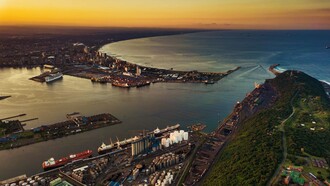
The African continent, with its 1.55 billion inhabitants spread across 54 sovereign states plus the Sahrawi Republic, which is seeking independence, covers an area of 30.3 million square kilometers and is considered by international financial institutions (the International Monetary Fund and the World Bank) to be the poorest on the planet.
Five countries have the worst indicators of income and human development: Burundi, South Sudan, the Central African Republic, Malawi, and Mozambique. This is the paradox of the continent richest in natural resources, which include gold, diamonds, oil, copper, and all kinds of strategic minerals such as rare earth elements, cobalt, and uranium, among many others. It has been the victim of the plundering of its human and natural resources for centuries, especially by European powers that enslaved, divided, and exploited it.
Today, wars are being waged in Sudan, Congo, the Sahel, Somalia, Mozambique, Nigeria, and Libya—mostly civil conflicts between ethnic groups in some cases, religious groups in others, or power struggles for control of territories and resources. It is estimated that the death toll from 2020 to date is approaching half a million people, whether due to combat, famine, mass killings, or acts of terrorism.
The so-called “Age of Discovery,” which began in the 15th century with the arrival of the first Portuguese on the African coast, tragically shaped the continent’s destiny. With the establishment of the first colonies on the islands of Madeira, Cape Verde, and the Atlantic coast, trade began in gold, ivory, and sugar—and eventually in the most profitable of all: the hunting and sale of human beings.
Portugal opened the maritime routes for the transport of slaves and laid the groundwork for the colonial empires that developed there. It is estimated that Portuguese ships transported nearly five million slaves to Brazil and other destinations. The trade quickly spread to England, which transported just over three million to the United States and the Caribbean; Spain follows in this grim statistic, having transported around 1.5 million slaves to South America, Cuba, and other places. France recorded 1.2 million taken to Haiti and other islands, as did Dutch traders. Most of the human trade took place on English ships, especially from the 17th century onward, when the British fleet controlled the oceans.
The consequences of slavery and the exploitation of African natural resources by the colonial powers left a deep mark. Cultures and languages were divided by colonialist powers greedy for their wealth, where human beings were treated as nothing more than a commercial commodity. Thus, during World War I and World War II, thousands upon thousands of Africans wore the uniforms of the colonial powers, and many went to their deaths on European soil without fully understanding why they were fighting.
Today, the hand of old and new neocolonial powers is not absent from the civil conflicts that are bleeding the continent dry. Arms sales, military training, and geopolitical interests are present in virtually all of them. In Sudan, the conflict has been raging for three years now as factions vie for power to control the economy and natural resources in a country rich in gold and oil.
A similar situation is unfolding in Congo, where rival factions have been fighting for four years to control the wealth in a country rich in gold, cobalt, other minerals, and tropical rainforest timber, exploited by European companies. The roots here run deeper due to prevailing neocolonial interests.
The Congo gained its independence from Belgium in 1960, when Patrice Lumumba, a nationalist leader, won the elections and was appointed prime minister, only to be arrested, tortured, and assassinated three months later in an operation coordinated by the Belgian government and the CIA because he posed a threat by attempting to take control of the country’s natural resources. Today, foreign interests, ethnic rivalries, and the struggle for power are all present.
The Sahel region, which spans 10 countries, includes three—Mali, Niger, and Burkina Faso—that have been in conflict since 2012 due to a multitude of factors, with the jihadist presence being one and uranium, lithium, and gold being another. Added to these conflicts are human displacements caused by violence as well as by drought, climate change, and famine. In Nigeria, Africa’s most populous and multi-ethnic country, U.S. forces bombed Islamic State (ISIS) bases in the northwest a few months ago that had established themselves in that region. Multi-ethnic struggles and terrorism have deepened the rifts between Christians and Muslims, leaving more than 50,000 dead over the past 15 years.
The real world is brutal when it comes to reporting the news. It is estimated that news about conflicts in Africa accounts for less than 5% of global media coverage, compared to nearly 80% devoted to the U.S. war with Iran, Russia’s war with Ukraine, and Israel’s war against the Palestinian people and Lebanon. Given this situation, it is highly unlikely that the reality in Africa will change in the short or medium term.
United Nations population growth projections estimate that by 2050, Africa’s population will rise from 1.55 billion today to 2.5 billion. If the climate crisis, food crisis, and armed conflicts persist or intensify, the only option left to them to eat and save their lives—just as the first humans who stood upright on that continent did more than two million years ago—is to walk. Where to? Toward Europe, which is the closest destination and largely responsible for the current situation.
The decolonization process of the 1960s was not accompanied by a Marshall Plan-style initiative that would have helped build solid structures, strengthen states, and develop institutions capable of ensuring the rational use of their resources. On the contrary, the exploitation of their resources continued in other forms, and today no one feels responsible, nor is there a plan to bring about a real change in the situation—which, as everyone knows, would be the main brake on immigration.
United Nations agencies conduct essentially palliative work; they respond to emergencies, but that is not enough—it only alleviates critical moments. Finally, an indicator that reflects the dramatic reality: infant mortality up to age five currently stands at 4 children per 1,000 live births in the European Union. In Africa, according to the World Health Organization, by 2025, 71.6 out of every thousand children died before the age of five, mostly within the first month of life, accounting for 58% of global infant mortality—that is, just over 2.8 million children.