English
 Español
 Français
 Deutsch
 Italiano
 Português
After the Russian Federation, Germany is the second most populous country in Europe, with around 83 million inhabitants. It is the continent's leading economic power and has the third-largest economy in the world after the United States and China. According to the International Monetary Fund, its nominal GDP reached more than five trillion dollars in 2025 (12 zeros), giving it a per capita income of $61,000.
The country stands out for its elevated level of investment in research and development, amounting to 3.1% of GDP — equivalent to nearly $150 billion. Income inequality, as measured by the Gini index, is 0.3, placing Germany among the European Union countries with the lowest inequality. Meanwhile, its defense spending reached 2.3% of GDP in 2025—that is, nearly $110 billion—still far from the 5% demanded by the US president.
Modern German history began with the establishment of the German Empire at the Palace of Versailles, following the humiliating occupation of Paris at the end of the Franco-Prussian War from 1870 to 1871. The country's various kingdoms were unified thanks to the geopolitical vision and exercise of Prussian power of its first chancellor, Otto von Bismarck. He understood that the consolidation of the empire and its role in Europe depended on military strength.
Following Germany's defeat in the Great War in 1918, after the United States entered the war, Kaiser Wilhelm II abdicated and a parliamentary government was established, leading to the creation of the Weimar Republic in 1918. The crisis caused by the Treaty of Versailles, primarily imposed by the French, facilitated the rise of Nazism, bringing an end to democracy and the imposition of Adolf Hitler’s dictatorship in 1933.
Germany was responsible for starting two world wars in the 20th century, losing both and leaving a trail of immense destruction in their wake. Nearly 7 million Germans, around half a million British and Americans, and approximately 25 million Soviets died in World War II. Added to the human and material devastation of German cities was the suffering of being an occupied country divided into two states.
West Germany’s rapid recovery was made possible by the United States' political will and the dollars that arrived with the Marshall Plan. This was complemented by the leadership of Konrad Adenauer, a politician who combined dignity and patience with hard work and effort to rebuild a country that had been devastated materially, psychologically, and morally. However, the Cold War, which began immediately afterwards, and the creation of NATO in 1949 did not include Germany, which was barred from having armed forces.
Support from the U.S. was also crucial in enabling Germany to rebuild its army and join NATO in 1955. France and other Western countries were reluctant to allow Germany to rearm due to its previous invasions of their territory and occupations of Paris. In response to Germany’s entry into NATO, the Warsaw Pact was established that same year.
Despite the mistrust of the French, Dutch, and Belgians, Germany was one of the six founding countries of the European Economic Community in 1958. This community preceded the current European Union (EU) and established Germany as a reliable ally for its European and American partners. The existence of the Berlin Wall, which separated West Germany from East Germany, was a wound that the Germans bore for 41 years, until reunification in 1990. The collapse of the Soviet Union the following year changed international order, creating a unipolar world that would be short-lived.
Now unified and established as an economic power, Germany has relentlessly sought recognition as such, claiming its right to a permanent seat on the United Nations Security Council — a demand echoed by other middle powers. Currently, its financial contribution to the United Nations budget is 5.7%, behind the United States at 22%, China at 20%, and Japan at 6.9%.
Germany has been elected six times by the General Assembly as a non-permanent member in the European quota of the Security Council. Therefore, the current German government, its foreign policy, and its diplomacy have been dealt a severe blow by losing the vote for the first time this year, with Portugal and Austria being elected instead. The reason for this defeat is widely attributed to the Berlin government's unconditional support for Israel, as well as its ambiguous stance on condemning what many consider to be genocide, given the more than 70,000 victims in Gaza.
The last two German chancellors, Olaf Scholz (who governed from 2021 to 2025) and the current chancellor, Friedrich Merz, have significantly altered the country's foreign policy towards Russia. Former chancellor Angela Merkel modernized the Ostpolitik initiated by Willy Brandt in the 1960s, deepening economic agreements and fostering greater interdependence with Russia, particularly in the energy sector, during her 16 years in government. However, the occupation of Crimea and the subsequent war unleashed by Moscow changed the landscape.
The United States and the EU imposed severe economic sanctions on Russia, while NATO backed Ukraine with financial aid and military equipment. The second administration of President Donald Trump drastically altered the landscape of collaboration and political understanding with the EU. Alongside implicitly supporting the Russian government, the administration implemented a punitive tariff policy against most countries and questioned the failure to meet the 2% NATO contribution target.
What initially seemed like mere posturing by the US government has solidified to such an extent that the military aid authorized by Washington for Kyiv must now be funded by the partners of the Atlantic Alliance. The rift has deepened further as Spain, Italy and France have refused to permit the use of European military bases for airstrikes against Iran. In response, President Trump announced a reduction in the number of military personnel deployed in Germany. The extent of the rift between the United States and Europe is unclear. Amid this confusing international scenario, the Berlin government has announced that it will abandon its pacifist policy, which it has maintained since the post-war era.
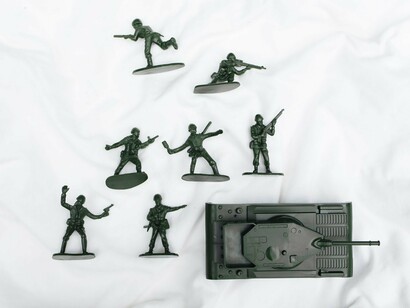
Last April, Defense Minister Boris Pistorius stated that Germany will modernize its armed forces with the aim of having the strongest conventional army in Europe. For his part, German General Christian Freuding recently declared in Berlin that 'Germany is preparing for a possible war with Russia in 2029,' adding that this date was based on a NATO intelligence analysis. Conversely, France and Germany cancelled the €100 billion joint project to build a fifth-generation fighter jet, a move intended to signal continued defense collaboration and reduce military dependence on the United States.
In short, Germany has made a historic shift in its defense policy that could have repercussions across Europe. This decision is backed by the industrial and economic capacity to carry it out in a country where the ruling coalition between the Christian Democrats and the Social Democrats is becoming increasingly fragile. According to recent polls, the far-right party Alternative for Germany (AfD) is in the lead with nearly 30% of the vote. Never has a single party in Germany been able to form a government; alliances have always been required. The current coalition has failed to address citizens’ demands and is rapidly losing significant support. Coincidentally, the next elections will be in 2029.
Just as the memory of the long years of Soviet occupation has not been erased from the countries that suffered through it, the consequences of Germany’s rearmament in the last century have not been forgotten in countries such as England. These consequences include the terrible occupation of Poland and the abuses committed in France and all over Western Europe, which fell victim to German expansionism.