English
 Español
 Français
 Deutsch
 Italiano
 Português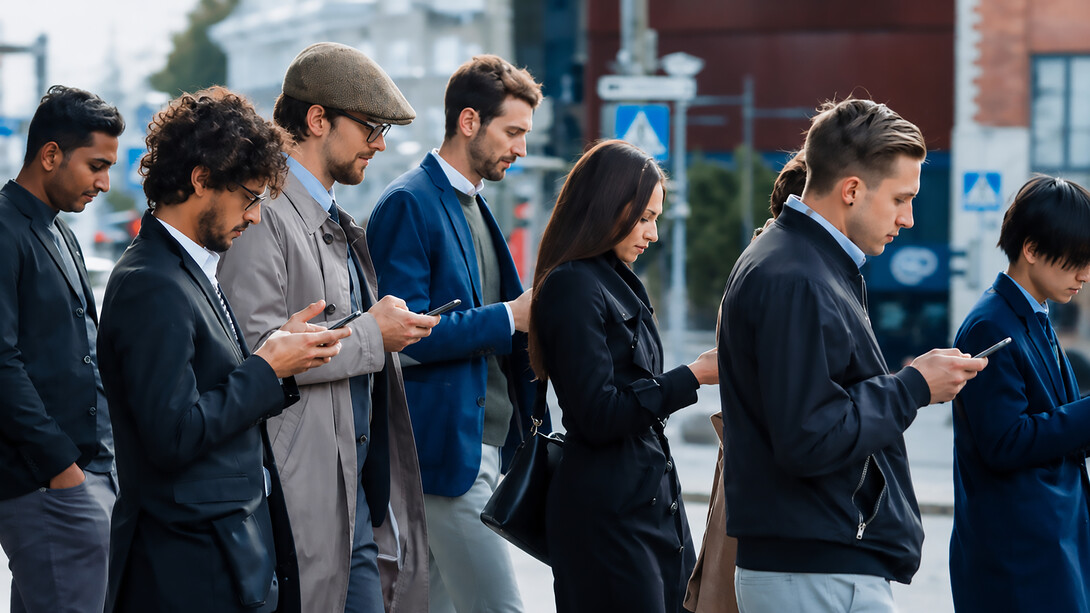
The world as we knew it is disappearing before our eyes. Not through war, revolution, or some singular event that historians will neatly place on a timeline. Rather, it is dissolving through countless small changes in how we communicate, form opinions, build identities, and experience reality itself.
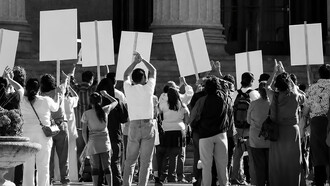
For most of human history, reality was largely local. People shared communities, institutions, traditions, and common experiences. While disagreements existed, there was often a broadly shared understanding of the world around them.
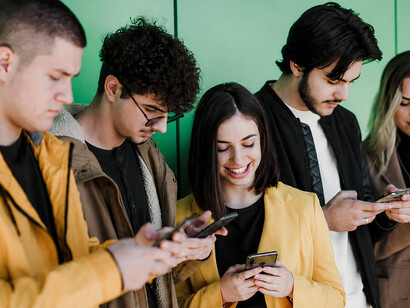
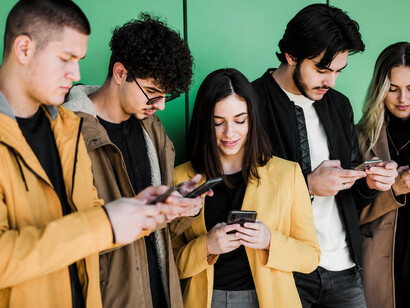
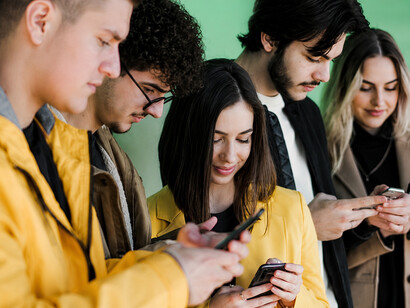
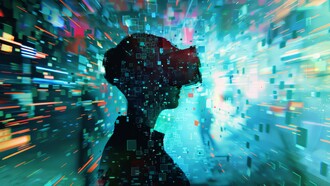
Today, we increasingly inhabit personalised realities shaped by algorithms, platforms, and digital ecosystems. Two people living on the same street can consume entirely different information, encounter different narratives, and develop radically different understandings of events. Reality itself is becoming fragmented.
The colonisation of attention
Human attention has become one of the most valuable resources in the modern economy. Every platform competes for it. Every notification, recommendation, and feed is designed to capture a little more of our time and emotional energy. The result is a state of near-permanent stimulation.
Moments of boredom, reflection, and silence become increasingly rare. We don’t allow ourselves that anymore. Yet these moments are so normal and so essential to who we are. They are where creativity emerges, where ideas mature, and where individuals develop the capacity to reflect critically on their lives. Without it, and swapped with quick dopamine hits throughout the days, it kills the natural ability for the mind to creatively find its own ways to express itself. This gives us meaning, to dream and to build from that. Stimulation is not the same thing as meaning.
When identity becomes performance
Perhaps nowhere is this transformation more visible than in the way we construct identity. For previous generations, identity emerged gradually through lived experience, relationships, community, and place. Today, identity is increasingly performed. We create profiles, curate personal narratives, and measure visibility through likes, followers, and engagement.
The self becomes something to present, optimise, and maintain. This is especially significant for younger generations growing up in a world where digital representations often precede direct experience. Success, beauty, status, and belonging are increasingly encountered through screens rather than through lived reality. The millennial generation was the last generation that knew the analogue world to its fullest.
Yet older generations are not immune. Even those who grew up in an analogue world increasingly recognise that news, opinions, and public identities are filtered through invisible systems. Much of what we see is not reality itself, but a curated version of reality. It is something that colours our perception; the difference now is because of how never-ending the perception becomes as we have a generation who live life endlessly inside of this curated and fabricated reality.
The danger is not that critical thinking suddenly disappears, though it does change its ability because we are constantly fed a polarised opinion of what we should believe. So, the conditions that support critical thinking become weaker. To have the tools, the perspectives, and the personal critical ability to question – is this the only truth? With a stream of endless information, constant stimulation which hits the triggers of your personal emotional senses of right and wrong, and increasingly sophisticated algorithms, it makes it harder to pause, reflect, and evaluate what is true. With this, we have not even seen the beginning of it. Neither have we seen its side effects.
The systems shaping our attention are becoming remarkably effective at understanding what makes us feel fear, outrage, desire, or validation. Such knowledge can influence purchasing decisions, shape public discourse, and affect collective behaviour on a scale previous generations could scarcely imagine.
The age of extraction
Alongside this transformation, another trend has emerged. Many of our systems increasingly reward extraction rather than contribution. Platforms seek engagement, while businesses seek growth and individuals seek visibility. Success is often measured by how much value can be captured rather than how much value can be created. This is an ongoing cycle, and with evolving tech, it is the reason why we see so much commercialisation from influencers to different kinds of gurus who capitalise on visibility rather than actual accomplishments or credibility.
In this environment, attention becomes a commodity. Trust becomes a resource. Human relationships become assets to leverage. This logic extends far beyond social media. It shapes how we work, consume, communicate, and understand success itself. Yet societies cannot thrive indefinitely on extraction alone. Healthy communities depend upon reciprocity. They depend upon people contributing to something larger than themselves. Right now, our perception of contributing is for self-gain and self-fulfilment rather than what has the better impact for the local community.
The return of the local
As our lives become increasingly virtual, local reality becomes increasingly valuable. Through the community association, through our local artists, and through the local neighbourhood initiative. These may appear insignificant compared to the vast digital systems surrounding us, yet they possess something increasingly rare: tangible reality. Local participation creates visible consequences. People see the results of their contributions. Trust becomes personal rather than abstract.
This is not nostalgia for the past. It is resilience against a changing reality which will start to tear apart the social fabric of what makes us connected. As global systems become more complex and digital environments become more immersive, local communities may become some of our most important anchors to reality. In the end, we may discover that what matters most is not how much attention we accumulate but how much value we contribute to the people and places around us.
Gratitude as resistance
In a culture built upon comparison, consumption, and perpetual dissatisfaction, gratitude becomes a surprisingly radical act. Gratitude redirects attention away from what is missing and toward what already exists. It reminds us that value cannot always be measured through metrics, engagement, visibility, or profit. The world is changing. The shared reality many of us once took for granted is becoming increasingly fragmented. Yet perhaps the answer is not to retreat from modern life, nor to reject technology entirely. Perhaps the answer is to become more present in reality itself. The future may belong not to those who master the algorithms but to those who remain capable of distinguishing attention from meaning, visibility from value, and stimulation from reality.