English
 Español
 Français
 Deutsch
 Italiano
 Português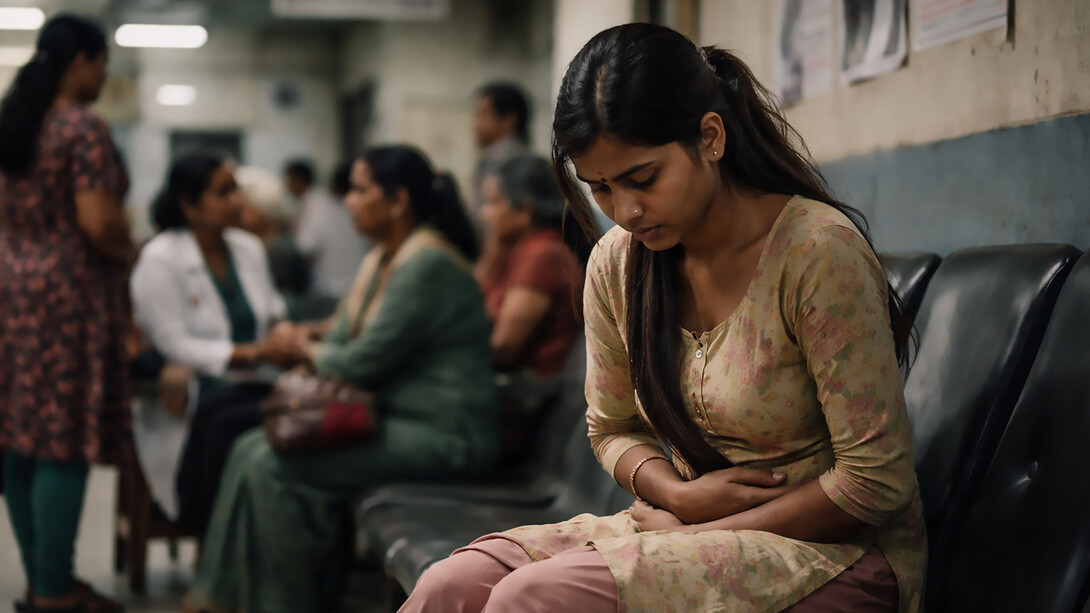
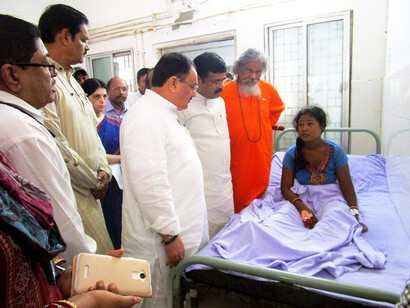
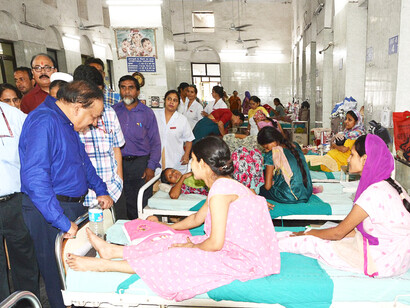
In a busy government hospital in urban India, a young woman sits quietly in the waiting room, holding on to her abdomen. She has been experiencing severe menstrual cramps for the last two years. This is a pain that wakes her up at night, often forcing her to miss work. When it's her turn to speak to the nurse, she whispers. Not because she is afraid, but because the bystanders in the common waiting room might experience unease at the mention of the word “period” or “mahina,” a colloquial way to say period.
This scene, while anecdotal, is still not unusual in 21st-century India, both in rural villages and urban metros. Deep-rooted health taboos continue to shape when, how, and whether women should seek medical care. For women, especially those who have menstrual struggles, chronic illness, or questions of sexual health, the path to a doctor is rarely a logistical one.
It often required emotional and cultural negotiation.
The current menstrual health paradox
India has seen massive strides in menstrual hygiene awareness over the past decade. Campaigns, government subsidies on sanitary products, and school-based education programs have expanded access meaningfully. And yet, the social architecture around menstruation remains deeply contradictory.
A girl can receive a free sanitary pad at school and can still be told, on the same afternoon, that she cannot enter the kitchen since she is on her period. These contradictions carry measurable consequences for the young girl as she grows up.
Research published1 in the International Journal of Environmental Research and Public Health found that endometriosis-related stigma is an emerging driver of diagnostic delay. And the main reason for this is the normalization of menstrual pain by families, partners, and clinicians, causing women to conceal their symptoms, further avoiding seeking early care. The mean diagnostic delay for endometriosis globally ranges from seven to eleven years from the first symptom onset. This is a gap that is substantially widened by the shame that is attached to discussing menstrual pain.
Another study2 across two Indian states found that delayed diagnosis compromised a woman’s quality of life significantly, specifically in areas of employment and mental health. A key barrier observed to seeking help was cultural stigma around menstruation. In parallel, a qualitative study3 of South Indian women identified diagnostic and investigative delays because of culturally embedded stigma for pain normalization, menstrual struggles, and fertility.
When a period tracking feature was launched at a major Indian women’s digital networking platform, where I formerly worked, we reached 200,000 adopters of that feature in the first year. The most revealing insight was not the sheer volume of adoption, but rather the nature of the questions. Thousands of queries described symptoms that had persisted, unaddressed, for so many years. This was not because care was unavailable, but it was because women had never been told that their symptoms were worth reporting. Menstrual stigma functioned as a silent clinical delay.
Sex, shame, and the price of silence
For women
If menstrual health is spoken about in whispers, sexual health is not spoken about at all. The consequences of this are visible in epidemiological data, which fall hardest on women.
Women face shame if they have any sexual activity outside of marriage. They routinely withhold this history from healthcare providers, compromising clinical assessments. The same silence extends to asking for contraception and routinely getting screened for HIV. Condom use among married women remains strikingly low, with national data4 showing fewer than 10% of urban women and approximately 3% of rural women.
And the reasons are not only a lack of privacy at purchase points but also the reluctance of their partners to engage in safe sex practices. A qualitative systematic review5 of Indian women's experiences of family planning found that the majority of women complied with their husbands' decisions on contraception, with some resorting to covert use and living in fear of being discovered. In another Karnataka-based study6, husbands' disapproval was identified as a barrier by more than a quarter of women, a figure that likely understates the problem.
The consequences of this stigma-cloaked practice reach well beyond unintended pregnancy. Research7 on HIV prevention in India has found that condoms are culturally coded as a contraceptive device rather than a protection against infection, with many women expressing the view that contraception made condom use redundant. This misconstruction leaves married women, overwhelmingly, the least powerful party in sexual decision-making, disproportionately exposed to HIV and STIs.
For people of other genders
While women experience the bulk of these concerns, men also face cultural pressure to project sexual confidence, which often breeds more harm than healthy sexual relationships. This often leads to discussions on possible dysfunction or infection being placed on a back bench.
For transgender and gender-diverse people, compounding barriers within the healthcare system create near-total exclusion from health services. A review8 in Frontiers in Reproductive Health highlights that stigma around sexual orientation and sex work in India frequently prevents patients from disclosing their sexual health concerns to clinicians. This sustains a burden of unaddressed STIs and associated cancers.
Chronic illness in the culture of silence
The social censure around chronic illness in India operates on a somewhat different register. It is less about moral judgment and rather driven by family obligation and financial fear, which is at the social cost of being seen as ill.
India is home to approximately 90 million adults living with diabetes, the second-highest national global total, according to a 2025 International Diabetes Federation report9. Yet, almost one in two adults in the Southeast Asia region remains undiagnosed. Earlier estimates suggested that approximately 44 million Indian people with diabetes were undetected due to limited healthcare reach and low outreach for help-seeking.
These statistics, when highlighted, would look similar for other chronic diseases in India.
A notable mention of experiencing catastrophic repercussions from internalized shame in India is the mental health of its people. India’s National Mental Health Survey 2015-16, the largest nationally representative study10 for mental morbidity, found a treatment gap for overall morbidity to be 84.5%. A Lancet Regional Health synthesis confirmed these numbers at 80.4% of a treatment gap for common mental health disorders, depression, and anxiety.
Shame, family pressure, profound distrust in the healthcare system, and fear of psychiatric labeling are top-listed contributors to this gap.
An analysis published in PubMed Central found that 80% of National Mental Health Survey respondents have never heard of schizophrenia or bipolar disorder. This points to a mental health literacy gap that precedes stigma, making seeking help inconceivable rather than just merely difficult.
There is also a clinical overlap between chronic physical illness and mental illness that is compounding this further. Poorly managed diabetes, heart disease, or any other chronic physical condition carries an elevated risk of depression, anxiety, and other organic mental health diseases. Social discomfort, to say it lightly, is affecting overall health in India significantly.
What digital health has revealed (and what it cannot fix)
I have personally worked in the women’s digital health space for over a decade. One of the most striking insights from building digital health communities across India is how profoundly the medium encourages disclosure.
Women and young people who would never articulate a health concern to a family member, along with evading the perceived judgment in a clinic waiting room, will type that same concern in a safe space within a digital community. Anonymity and distance lower the threshold for disclosure in ways that many of the present physical spaces cannot replicate.
As I spent hours talking to women on these platforms, a very prominent concern was made visible. There has long been an unmet demand for non-judgmental information on reproductive, sexual, and mental health. The volume and nature of the questions submitted across women’s health communities, spanning women across most socioeconomic strata, consistently demonstrate that the need for information was never absent.
The only thing missing was a channel that felt safe.
However, while digital health is helping fill the gaps, it is not a structural solution. An app can tell a woman that her menstrual pain warrants investigation. However, it cannot guarantee that the doctor she visits will take her pain seriously. Clinical literature reinforces this through how long it takes for a woman with endometriosis to get a diagnosis. And the fault here doesn’t just lie with societal censure of reaching out for help but also with clinical normalization, with providers dismissing abnormal symptoms as normal.
This same dynamic also applies across sexual health and mental health consultations. Patients who successfully overcome personal stigma often encounter it again on the other side in a consultation room.
In this context, digital health works as a bridge: reducing barriers to awareness, normalizing conversations, and routing people toward care. What happens when they arrive remains the healthcare system’s responsibility to change.
Bottom line
India’s healthcare roadmap highlights the right ambitions in many respects: investments in infrastructure, insurance coverage, and public health programming. But a healthcare system cannot reach its required potential if the people it is designed to serve are too ashamed, afraid, or uninformed.
Closing the gap requires parallel action on multiple fronts: clinician training in culture sensitivity and stigma-free communication; community health education that meets people where they are; and policy frameworks that treat mental, menstrual, and sexual health as legitimate public health priorities.
All this can start with a sustained, honest public conversation about bodies, illness, and care, which has been cloaked under decades of silence. Only then will the young woman in the waiting room, whispering about her pain, receive care that is clear, competent, and individualized for her valid concerns.