English
 Español
 Français
 Deutsch
 Italiano
 Português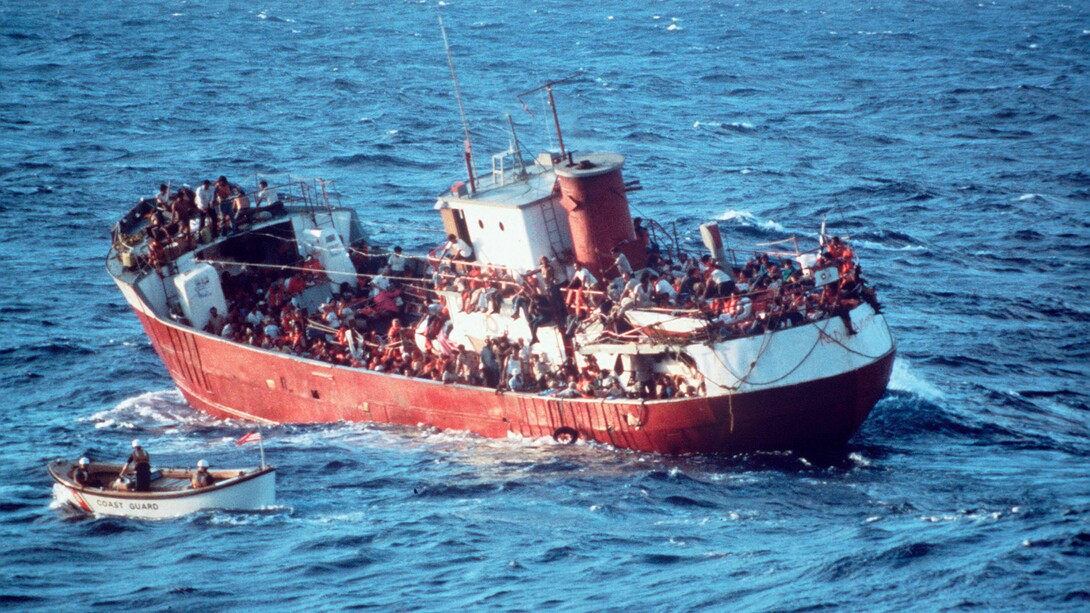
Fears of the decline of Western civilization have a long history. Oswald Spengler’s prediction from 1918 – the “culture” of the West would perish within an urban, highly technological “civilization” and the decline of this civilization would begin around the year 2000 with the decline of democracy and the rise of “Caesarism” under authoritarian rulers – seems to be coming true. Technological advancement, urbanization, and authoritarianism are on the rise. Democracy is under attack; its representatives must defend it, and the phalanx of its opponents sets the tone in the new social media.
For Spengler, the transformation of positively valued cultures into negatively valued civilizations and their gradual decline was a cyclical process. His theory of history posited that the creative power of human societies would periodically stagnate in a “winter state” and the demise of a dying civilization would always be followed by the emergence of a vibrant culture. A good hundred years ago, Spengler answered the question of who would succeed the prophesied decline of Western civilization by passing the cultural torch to Russia. According to Spengler, the culture of the East is now set to flourish – a gift to Putin, pro-Russian conspiracy theorists, and far-right bloggers.
There is no evidence that Putin has read Spengler. But that is not necessary, for Putin’s historical advisors – above all, Alexander Dugin – are well versed in German philosophical thought of the early 20th century and have incorporated its bleak cultural critique into their theory of Eurasianism. This theory holds that Russia is not a Western nation but an independent Eurasian culture, with its own history, its own values, and its own geopolitical mission.
When Putin speaks of the decline and decadence of the West, he emphasizes Russia’s special historical role, polemicizes against “ideological universalism,” calls for a “different history,” and claims equality with the West, including the United States, he is expressing ideas rooted in Eurasianism that correspond to Spengler’s prognosis. In the eyes of Greater Russia evangelists, its agents, disinformation brigades, and Western collaborators, the historically inevitable decline of the West is not brought about by Russian subversion but merely facilitated by it. And when Putin declares, “Global balance cannot be achieved without Russia, neither economically, nor strategically, nor culturally,” the question arises: How realistic is that? The answer depends on Trump and the United States.
Trump’s critique of liberalism, unchecked immigration, Christian retreat in, and Islamic penetration of, the U.S. and Western Europe aligns with Putin’s view of the West. The appearance of congruence is further reinforced by Trump’s admiration for Russia’s strongman. However, this impression is deceptive. Putin is doing everything he can to accelerate the West’s decline for Russia’s gain. Trump, on the other hand, wants not only to halt the West’s decline but also to reverse it through MAGA for the benefit of the United States. Thus, despite their largely similar rhetoric, Putin and Trump approach the same perceived decline with opposite intentions. It is important to bear this in mind.
The United States’ global strategic and geopolitical position is presently rather good.1 However, the likelihood that Trump and Trumpism will squander this current advantage is also pretty good. Trump is not a statesman but a strongman, and the “art of statecraft” practiced by strongmen rarely resolves difficult domestic and foreign policy conflicts – on the contrary. Yet delving further into that is not the purpose of this article. What matters here is to show that Trump and Trumpism exploit and abuse the precarious situation of poor white American males through racist rhetoric and verbal attacks against non-white immigrants.
The utopian vision of restoring the dominance of white voters supported Trump’s populist rise to power. That is the thesis I wish to advance here. Racist demagoguery was not the sole reason for Trump’s election victories, to be sure, but it was a successful vote-winning tactic in both campaigns.
The plight of white Americans
In 2016, whites without a college degree voted for Trump and against Hillary Clinton across the United States. The Democratic Party had been basking in the idea that, following Barack Obama, America’s first Black president, who could not seek re-election after two terms, it would elect a woman to the nation’s highest office and thus make history once again.
Trump, on the other hand, had been fighting the Democrats’ progressive plans for years. His loud whisper that Obama was a foreign-born intruder and possibly a Muslim articulated both the latent racism and the growing existential anxiety of many white people (Protestants as well as Catholics). They voted for Trump and brought an end to the informal regime of the cosmopolitan liberal elites and their base, the urban coalition of ethnic minorities and young adults who had voted for Obama twice. White voters gave Trump more votes than he lost to ethnic minorities in the swing states of Iowa, Michigan, Ohio, Pennsylvania, and Wisconsin.
White people know that they make up only a small portion of the world’s population; they cannot change that and accept it. But this does not apply to their declining share in America and Europe. Ever more Americans, English, French, Germans, Dutch, and other European nationals react not with resignation but with outrage at becoming a minority in their “own” country. Trump has cultivated this fear mixed with anger and assured his white voters: “Don’t worry, we’ll take our country back.”
Restoring white supremacy was and remains the central objective of Trumpism. Just as Merkel told the Germans Wir schaffen das, Trump told the Americans We can do it, but Trump’s “it” was the exact opposite of Merkel’s welcoming openness. He promised to close the country’s borders, deport immigrants, and return to the years from 1920 to 1970, when nearly nine out of ten Americans were white. Trump’s message was music to his voters’ ears. They bought into his rhetoric, hoping he would lead them back to their golden past.
For black Americans, the MAGA message was equally unmistakable. In the early morning hours of November 9, 2016, as it dawned on America that Trump had just been elected President of the United States, black CNN commentator Van Jones described Trump’s victory as a backlash that was really a “whitelash”:
We’ve talked about everything but race tonight. We’ve talked about income, we’ve talked about class, and we’ve talked about region. We haven’t talked about race. This was a whitelash against a changing country; it was a whitelash against a black president, in part, and that’s the part where the pain comes.2
Since the beginning of the 21st century, the ethnic composition of the American electorate has changed fundamentally. The share of non-Hispanic whites in the eligible voting population has steadily declined. While their share was still around 77–78 percent in 2000, it stood at 71 percent in 2012, 69 percent in 2016, and 67 percent in 2018. This decline continued among actual voters as well: non-Hispanic whites accounted for 73 percent of voters in 2020 and 71 percent in 2024.
During President Obama’s second term, the number of eligible voters grew by about 10.7 million between 2012 and 2016. About 7.5 million of this net increase came from Black, Hispanic, Asian, and other ethnic minorities; only about 3.2 million came from non-Hispanic whites. Thus, more than two-thirds of the growth in the eligible voter population during this period came from minorities.
As early as the mid-2010s, the U.S. Census Bureau projected that by around 2020, white children would no longer constitute a majority among those under 18. This trend has since materialized. According to analyses of the 2020 Census, non-Hispanic whites make up less than half of all children in the U.S.
Even among children under the age of five, their share was already well below 50 percent. Millennials – defined as those born roughly between 1981/82 and the mid-to-late 1990s – were by the mid-2010s significantly more diverse than earlier generations; about 44 percent of them belonged to an ethnic minority. Subsequent generations (Generation Z and Generation Alpha) exhibit even higher levels of diversity, further amplifying this long-term demographic shift.
Recent projections predict that non-Hispanic whites will lose their majority status in the total population around the year 2045. They are expected to account for less than 50 percent of the total population for the first time in the mid-2040s. In short: The United States is moving toward a society in which no single ethnic group will constitute an absolute majority.
To the observer trained in the social sciences, this demographic trend appears clear and irreversible – but not so to Trump and his supporters. For them, scientific claims are “so-called” and profoundly suspicious. Technical findings on climate change or demographic-statistical projections make no difference – it’s all fake news. Political voluntarism is their credo, and extreme self-defense their way out. They see themselves less as an endangered species and more as victims of “white genocide.”
The dire situation facing the white population of the U.S. was first documented in December 2015 by the social scientists Anne Case and Angus Deaton, who observed “a marked increase in the all-cause mortality of middle-aged white non-Hispanic men and women in the United States between 1999 and 2013.”3
This was an unexpected finding. All ethnic groups in the United States and comparable countries showed declining mortality rates for this age group. Among less-educated white Americans, however, a rising mortality rate was observed. Case and Deaton linked this reversal to drug and alcohol poisoning, chronic liver disease, suicide, mental health issues, and disability.
Their subsequent research showed that the plight of white Americans began in the southwestern United States around 2000, spread to the Appalachians, Florida, and the West Coast, and had engulfed the entire country by 2015, affecting both rural and urban areas. To explain these “deaths of despair” (defined as deaths by drugs, alcohol, and suicide), Case and Deaton pointed to “the collapse of the white, high school educated, working class after its heyday in the early 1970s, and the pathologies that accompany that decline.”
While overall mortality rates in countries such as France, Germany, Sweden, and Canada have been declining steadily since 1990, they initially stagnated in the U.S. and then rose strongly beginning in 2014. The increase in overdose deaths was particularly sharp in the wake of the opioid and fentanyl crisis. Between 2019 and 2023, drug-related deaths in the U.S. at times exceeded 100,000 per year – a figure equivalent to the loss of a major city.
The COVID-19 pandemic further exacerbated this divergence. From 2020 to 2022, the U.S. experienced a steeper decline in life expectancy than most comparable Western European countries. Only starting in 2023 did slight improvements become apparent, though mortality rates remained high. Other English-speaking countries, such as the United Kingdom, Canada, and Australia, also experienced increases in overdoses, but nowhere did the trend reach the magnitude seen in the United States. This divergence, which can be traced back to 1990, is now statistically clear.
Inequality in the U.S. was and remains a killer as well as a stepping stone for Trump. The victims of inequality are socially isolated, suffer from a lack of education and poor health, face marital problems and difficulties raising children. Yet neither the rising educational demands of a technology-driven economy nor the hardships of global competition in the labor market are problems unique to the U.S. What is typically American, however, is the resistance to a national safety net featuring universal health care, robust social assistance, and adult education. In the U.S., the shocks of broader societal change are not mitigated but absorbed directly by the bodies of poor people.
How is it that Trump doesn’t like “losers” but “loves” people who find themselves in the miserable state described by Case and Deaton? The answer is simple: Trump loves those who love him. Hillary Clinton had seen this correctly in 2016, yet framed it badly when she described Trump’s supporters as “deplorable.” Her assessment —"he has lifted them up"— was spot-on, even as it glossed over the objectively dire situation of white working-class people in favor of her criticism of their views (“racist, sexist, homophobic, xenophobic, Islamophobic”).
The current Vice President of the United States, J. D. Vance, experienced the devastation of the white American working class firsthand as a young man. Vance’s Hillbilly Elegy – his autobiographical account of white, rural workers in Ohio swept away by globalization and automation – was published in 2016 and became a bestseller during Trump’s first campaign.5 Still an opponent of Trump at the time (“Unfit for Our Nation’s Highest Office”), he quickly transformed into a Trump supporter and ideologue of Trumpism. In 2019, he also converted from Protestantism to Catholicism.
Vance justifies the spread of lies (“If I have to create stories so that the American media actually pays attention to the suffering of the American people, then that’s what I’m going to do”). He pointed to the graves of his ancestors in eastern Kentucky to distinguish between heritage (native-born) and naturalized Americans and is expected to run for president in 2028.
The narrative of an immigration apocalypse
Steve King, a Republican from Iowa, tweeted in 2017 on behalf of the “Dutch Trump” (Geert Wilders): “Wilders understands that culture and demographics are our destiny. We can’t restore our civilization with somebody else’s babies.” King explained that he was neither racist nor fundamentally opposed to immigrants, but that diversity was a problem because it wasn’t just “decent” people coming to the U.S. To illustrate his point, he recommended Jean Raspail’s novel The Camp of the Saints.6
Raspail anticipated the fear now prevalent among Western populists more than half a century ago. He envisioned that millions of dark-skinned people could flood into Europe’s open societies of white, affluent nations. His conception of an overwhelming tide of economic refugees from poor countries – which Raspail described as “crusades in reverse” – is a key text for understanding the white reaction to their fears of demographic extinction.
The Camp of the Saints depicts the first of these nonviolent crusades. A fleet of one million Indians from famine-stricken Calcutta is heading toward the French Riviera on a hundred dilapidated ships. It is the “vanguard of an antiworld” that has set out to knock on the “gates of abundance” and overrun them with hungry young brown people. Raspail has the Indian Minister of Information tell the Belgian consul in Calcutta:
There’s no Third World. No, not anymore. That’s only a phrase you coined to keep us in our place. There’s one world, only one, and it’s going to be flooded with life, submerged. This country of mine is a roaring river. A river of sperm. Now, all of a sudden, it’s shifting course, my friend, and heading west.7
In Raspail’s novel, the reverse crusaders do not speak; they simply growl. They copulate on the decks of their ships “in a welter of dung and debauch” and are confident that their “Last Chance Armada” will penetrate the Western “paradise of milk and honey.” They are hopeful because “for them, white skin means weak convictions.”
According to Raspail, an “anonymous, omnipresent monster” – the “apocalyptic beast” – is in the process of “destroying the Western world,” and instead of fighting back, the Western elites succumb. From the Pope and his clergy to French officials, journalists, and their experts, everyone agrees that “an appropriate welcome in a framework of international cooperation” is justified for the Armada of the Poor. Only one journalist from a small, struggling libertarian newspaper disagrees. At a press conference at the Élysée Palace, he asks the spokesperson of the French government:
Let’s suppose that the Western nations go along with the government’s proposal and provide for the refugee fleet as long as it’s off in mid-ocean. Can’t you see that you’ll simply be feeding your enemy, fattening up a million invaders? And if this fleet … should reach the coast of France, and throw those million invaders out onto the beach, would the government have the courage to stand up against the very same hordes that its kindness had rescued?8
Raspail answered the question by having the French president lose his nerve at the decisive moment. Instead of ordering the troops to fire and prevent the refugees’ landing, he asks them to “weigh this monstrous mission for themselves, and to feel free either to accept or reject it.” Left to their own discretion, the French officers and soldiers abandon their positions along the Mediterranean coast. The refugees have reached their destination and begin their “invasion” of the Western paradise unhindered. Raspail later said of this: “I denied to the white Occident its last chance for salvation.”
The novel’s political thrust was not the problematic divide between poor and rich countries, but the moral weakness of the ruling Western elites. For right-wing politicians like Representative King, Raspail’s condemnation of the West’s lenient stance was a key lesson from which to learn to take a hard and uncompromising stand against non-white immigrants “from all over the world” and to fight tooth and nail for “our [white] civilization.”
Raspail’s fiction, which was initially known only to a few, made a strong impression on Europe’s populists and was disseminated and championed in far-right circles alongside other anti-immigration writings, such as Renaud Camus’s replacement theory (Le grand remplacement, 2011). On the American side of the Atlantic, the immigration fighters of Trump’s first campaign, especially Steve Bannon, Jeff Sessions, and Stephen Miller, elevated the French novel to a textbook against immigration. After Chancellor Merkel welcomed hundreds of thousands of Syrian refugees to Germany in the fall of 2015, Bannon commented: “This is not migration. This is an invasion. I call it the Camp of the Saints.”9
The confrontation of “good people” with criminal migrants was Trump’s trademark issue from the beginning. He left no doubt about that when he announced his candidacy:
When Mexico sends its people, they’re not sending their best. They’re not sending you. They’re not sending you. They’re sending people who have lots of problems, and they’re bringing those problems with them. They’re bringing drugs. They’re bringing crime. They’re rapists. And some, I assume, are good people.
Shortly thereafter, Trump doubled down on his position in a television interview: “You have people coming in, and I’m not just saying Mexicans, I’m talking about people that are from all over that are killers and rapists and they’re coming into this country.”11 Trump presented himself to the nation – and the global audience following the American election spectacle – as a president who would not hesitate to order “his” military to fire on Raspail’s intruders. Trump’s airstrikes on alleged drug-trafficking vessels in the Caribbean and Eastern Pacific (since September 2025) are but an unnecessary proof thereof.
“Bad hombres” – then and now
Demography is a social science that statistically records and theoretically describes populations and their structures. Its data – on birth and mortality rates, emigration and immigration, etc. – are either “correct” or “incorrect” but never “good” or “bad,” “too much” or “too little.” The latter four adjectives come into play not as scientific findings but as significant value judgments when, for example, declining birth rates necessitate rising social security contributions or when more brown babies are being born and demography is viewed as “our fate” (King).
It is obvious: the widespread rejection on both sides of the Atlantic of non-white, Christian and Muslim immigrants and their children is primarily rooted in racism. Pious assertions to the contrary are mere window dressing. Yet it is also true that mapping demographic data onto subjectively or collectively determined value scales is not exceptional. These scales have little to do with demography as a social science and more with population policy as a social task and challenge. Trying to establish white supremacy does not fall outside the scope of the partisan use of established data nor does the opposite endeavor to increase the proportion of non-white people.
The sociopolitical application of demographic findings accompanied demography from the very beginning. However, who is considered a threat and who feels threatened has changed over time. If we go back to the origins of the Industrial Age, we encounter poor and wealthy Englishmen as threatening and threatened groups as well as the Anglican minister Thomas Robert Malthus and his Essay on the principle of population as it affects the future improvement of society (1798). 12 Malthus’ seminal work signaled the close link between demography and politics by combining scientific claims (“law of population”) with population policy (“future improvement of society”).
The book had a “melancholic hue” in contrast to the prevailing Enlightenment view of the progressive improvement of humanity. Its readers learned that civilized English society risked extinction if it supported people who engaged in antisocial, criminal activities and constantly increased their numbers through violent or unprotected sex. Malthus reached that dire conclusion in three quick steps, arguing
that food is necessary to the existence of man,
that the passion between the sexes is necessary, and will remain nearly in its present state,13
that the power of population is indefinitely greater than the power in the earth to produce subsistence for man.14
The alarm raised by Malthus’ theory stemmed from the mathematical difference between arithmetic (1, 2, 3, 4, 5…) and geometric growth (1, 2, 4, 8, 16…) applied to food production (linear) and population growth (exponential). Malthusianism’s sensational memento mori thus appeared to be well-founded but has later been disproved thanks to science-based advances in food production.
Furthermore, the problem lay not only in the alleged divergence between infinite human needs and limited resources, but also in the seemingly scientifically grounded formulation of sociopolitical behavioral norms – ranging from sermons on “moral restraint” (sexual abstinence) in Malthus’s time to later state-imposed one-child policies.
What’s more, Malthus was firmly convinced that alleviating poverty only exacerbates the very problem it seeks to solve. He advocated that the English paupers should “earn” the right to their livelihood in workhouses, and that it would be better to do nothing at all for a poor person, in other words, to let him starve to death. According to Malthus, merciless harshness is the solution:
At nature’s mighty feast, there is no vacant cover for him. She tells him to be gone, and will quickly execute her own orders if he does not work upon the compassion of some of her guests. 15
Nowadays, this ruthlessness is demonstrated by anti-immigration hardliners like Miller and populist politicians like Trump. In a February 2017 phone call with President Enrique Peña Nieto, his then-Mexican counterpart, Trump said:
You have a bunch of bad hombres down there. You aren’t doing enough to stop them. I think your military is scared. Our military isn’t, so I might send them down to take care of it. 16
What has changed over the past two hundred years? A great deal. But concerning demographic fears, only the key actors have shifted. Now, numerous white Americans and Europeans see themselves as threatened. They do not want poor, brown migrants from “all over” flooding into their formerly homogenous Christian countries and disrupting their way of life. Regarding their economic well-being as endangered and their social dominance as well as their culture as being erased, they want what Trump offers in the U.S. and what his populist brothers and sisters across Europe propose: the restoration of white supremacy.
I don’t think this pipe dream will come true – but who says? The future is known to be unknown. Looking at the past decade, though, I dare say that if one wants to understand (not to mention surmount) the electoral successes of Trump and his European allies, one must take the dystopian fears and utopian hopes of a still growing number of Whites in the Old and New Worlds into account.
Notes
1 See Michael Beckley, "There Is Only One Sphere of Influence. Why America Can Project Power With Little Constraint—and Its Rivals Cannot" Foreign Affairs, February 4, 2026.
2 Van Jones, "This was a white lash" CNN, November 9, 2016.
3 See Anne Case and Angus Deaton, "Rising morbidity and mortality in midlife among white non-Hispanic Americans in the 21st Century." Proceedings of the National Academy of Sciences of the US, December 8, 2015. Deaton is a Nobel laureate in economics (2015).
4 See Wolf Schäfer, "Inequality and discontent: Two powerful currents in the capitalist field that fuel Trumpism." Meer, June 25, 2026.
5 See J(ames) D(avid) Vance, Hillbilly Elegy: A Memoir of a Family and Culture in Crisis. New York, NY: Harper, 2016.
6 See Jean Raspail, The Camp of the Saints. Transl. Norman Shapiro (originally Le Camp des Saints, Paris: Éditions Robert Laffont, 1973). First U.S. edition New York: Charles Scribner’s Sons, 1975. Eighth printing 2015.
7 Ibid., p. 43.
8 Ibid., p. 75.
9 Nancy LeTourneau, "How Steve Bannon Was Radicalized." Washington Monthly, March 6, 2017.
10 "Here’s Donald Trump’s Presidential Announcement Speech." Time, June 16, 2015.
11 Eugene Scott, "Candidate Donald Trump talks immigration, gay marriage and ISIS." CNN, June 28, 2015.
12 See Thomas Robert Malthus. An essay on the principle of population, as it affects the future improvement of society. With remarks on the speculations of Mr. Godwin, M. Condorcet and other writers. London, 1798. Available online.
13 Malthus’ emphasis on the permanence of the human sex drive was a direct response to the Enlightenment thinker William Goodwin, who, in his work Enquiry Concerning Political Justice (1797), had argued that humanity would cease reproducing and produce a new kind of humans who would live forever.
14 Malthus, An essay on the principle of population, op. cit., p. 11 and p. 13.
15 Thomas Malthus, An Essay on the Principle of Population and Other Writings. Introduction and Notes by Robert J. Mayhew. Penguin Books, 2015, p. 199. The second edition of the Essay was reprinted four times with minor revisions by the author. The passage about nature’s feast, which many contemporaries found offensive, appeared only in the 1803 edition.
16 Vivian Salama, “Trump to Mexico: Take care of ‘bad hombres’ or US might.” Associated Press, February 3, 2017.