English
 Español
 Français
 Deutsch
 Italiano
 Português
The ultimate tragedy is not the oppression and cruelty by the bad people but the appalling silence by the good people.
(Martin Luther King Jr.)
The normalization of the abnormal
When we speak in the name of human rights and the tragedies endured by innocent populations under the swords of oppression, modern history reveals a chilling reality: civilian blood has become the "ink" used to write the chronicles of global power struggles. From Baghdad to Gaza and recently to Iran, a dangerous pattern has emerged—a synergy between the systematic criminality of superpowers and the structural failures of authoritarian regimes that leave their people defenseless against advanced machinery of death.
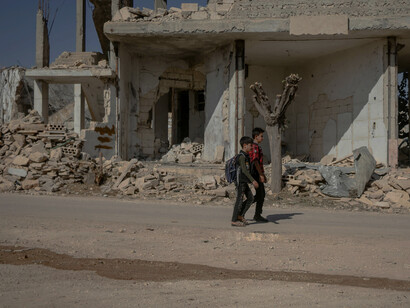
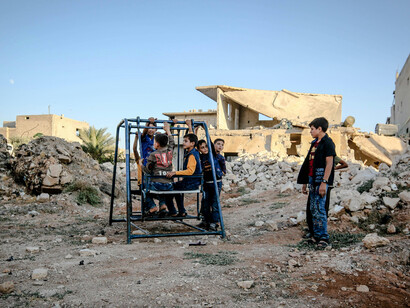
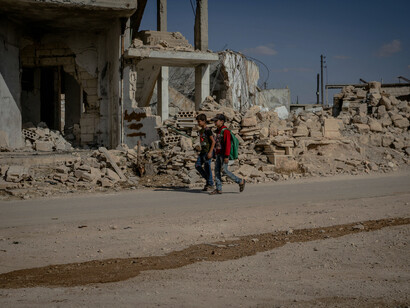
We live in an era where warfare has moved from the battlefield to the living room. The "front line" is no longer a distant trench; it is the elementary school, the hospital ward, and the basement shelter. This systematic erasure is not an accident of war; it is a calculated byproduct of a world that has begun to value geopolitical leverage over human life.
The "Golden Pretexts": how aggressors justify the unjustifiable
Modern warfare rarely presents itself as naked aggression. Instead, it wears the mask of legality and "strategic necessity." To raise public awareness, we must deconstruct the linguistic and tactical covers used to target civilians:
The "Human Shield" Narrative: This is the most common cover. By claiming that combatants are embedded within civilian populations, aggressors grant themselves a "moral license" to strike schools and apartment blocks. While international law forbids using human shields, it also forbids the indiscriminate killing of civilians even if combatants are present.
Dual-Use Infrastructure: Aggressors often label power plants, water treatment facilities, and bridges as "dual-use" (serving both military and civilian needs). Striking these targets isn't just a military move; it is a systematic attempt to break the civilian will by inducing starvation and disease.
The "Precision Strike" Myth: The marketing of "smart bombs" suggests surgical accuracy. In reality, the "surgical" nature of these weapons is often used to justify high-yield explosives in hyper-dense urban areas, where the "margin of error" involves hundreds of lives.
Counter-Terrorism Exceptionalism: By labeling every opponent a "terrorist," states often feel emboldened to bypass the Geneva Conventions, treating entire cities as "hostile zones" where no one is truly innocent.
The timeline of systematic erasure: chronicling the darkness
The "death train" has traveled a bloody path where civilians are consistently prioritized as targets. To understand the gravity, we must look at the scars left on history:
The Al-Amiriyah Shelter, Baghdad (1991): The bombing of the Al-Amiriyah shelter remains one of the darkest chapters in modern military history. Two "smart bombs" targeted a reinforced civilian bunker, resulting in the deaths of over 400 civilians—mostly women, children, and the elderly. The aggressors justified the strike by claiming it was a "command and control center," a pretext later debunked by human rights reports and international press, revealing an early pattern of misleading global public opinion to justify the slaughter of non-combatants.
Grozný, Chechnya (1999–2000): Where entire urban centers were leveled by indiscriminate shelling, setting a precedent for the "scorched earth" policy in the 21st century.
Sanaa, Yemen (2015–Present): Where "precision strikes" on funeral halls and busy marketplaces have decimated the social fabric of an entire nation.
Mariupol, Ukraine (2022–Present): The deliberate targeting of the Drama Theatre, clearly marked as a civilian shelter, proving that the architecture of protection has become the architecture of a tomb.
Gaza Strip (2023–2024): A relentless campaign that has redefined modern urban warfare, turning densely populated residential blocks into "kill zones" and resulting in the highest rate of journalist and aid-worker casualties in modern history.
The special tragedy of children
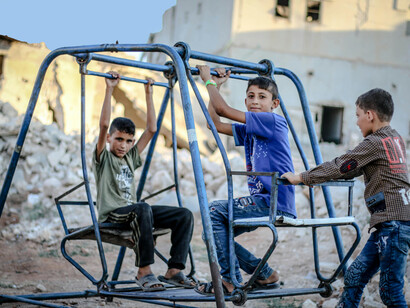
Children are the ultimate barometer of a conflict's cruelty. Beyond the immediate deaths, the psychological erasure of a generation is a crime against the future.
The My Lai Massacre (Vietnam): Where hundreds of unarmed civilians, including children, were murdered by soldiers.
Balat al-Shuhada School, Baghdad (October 1987): During the senseless "War of the Cities" between Iraq and Iran, an Iranian surface-to-surface missile struck the courtyard of the Balat al-Shuhada Primary School in the densely populated Al-Dora district. The playground, bustling with children during their break, was transformed into a scene of blood and torn schoolbooks, resulting in the martyrdom of dozens of pupils and the maiming of many others. This incident remains a stark testament to how indiscriminate missile fire fails to distinguish between a military target and a child’s smile and how childhood became a cheap sacrifice for the ambitions of warring regimes.
The Syrian Chemical Attacks (Ghouta, 2013): Where children died in their sleep, suffocated by nerve agents in a war that targeted the very air they breathed.
The "Shajarat al-Tayyiba" School (Minab, Iran – Feb 28, 2026): A precision strike turned a sanctuary of learning into a mass grave. Targeting a girls' school is a specific type of evil—it is an attack on the intellectual future of a people.
The double-edged sword: crimes and follies
While the external aggressor bears the brunt of the criminal act, internal authoritarian systems provide the "golden pretext" through the following:
Political recklessness: engaging in uncalculated regional adventures that draw fire toward their own people.
Weakening the internal front: suppressing domestic freedoms and killing dissent, leaving society fractured and unable to organize its own defense.
Strategic sacrifices: positioning military assets within civilian infrastructure, effectively turning citizens into pawns in a failed ideological game.
A call to awareness: the people’s duty
The greatest weapon against systematic erasure is not a missile but public consciousness.
Demand accountability: we must stop accepting "collateral damage" as a valid term. It is a linguistic mask for homicide.
Refuse polarization: do not let national or religious bias blind you to the suffering of "the other." A child in Minab is no different from a child in Mariupol or Gaza.
Educate on IHL (International Humanitarian Law): every citizen should understand the basics of International Humanitarian Law (IHL) to recognize when their leaders—or their enemies—are committing war crimes.
References
International Committee of the Red Cross. Rule 7: The Principle of Distinction.
United Nations. Protect Schools and Hospitals.
Human Rights Watch. The Al-Amiriyah Bombing Analysis.
Amnesty International. Documenting Modern War Crimes.
“Iranian Missile Kills 32 at Baghdad School.” The New York Times, October 25, 1987, Section 1, p. 14.