English
 Español
 Français
 Deutsch
 Italiano
 Português
The concept of the artistic canon has long served as a foundational structure within art history and museum practice, defining which works and artists are considered exemplary, worthy of preservation, and central to cultural heritage. Traditionally shaped by institutions such as museums, academies, and influential critics, the canon has historically reflected a narrow set of values rooted in Western, male-dominated perspectives. However, in the 21st century, this once relatively stable framework has undergone profound transformation. Political movements, cultural shifts, and technological developments have destabilised traditional authority, prompting critical reassessment of who and what is included in the canon.
This paper argues that the canon of art and artists is increasingly fluid, shaped by contemporary political movements, identity-based cultural discourse, and the democratising influence of digital media. These forces challenge longstanding institutional gatekeeping while also introducing new tensions around representation, authority, and value. Through an examination of theoretical frameworks, historical precedents, and contemporary case studies, this paper situates the evolving canon within broader debates in art history and museum studies, highlighting both its possibilities and its contradictions.
Understanding the shifting nature of the canon requires engagement with theories of cultural production and institutional power. Pierre Bourdieu’s concept of cultural capital provides a key framework, emphasising how taste and aesthetic value are socially constructed and reinforced by dominant institutions. Museums, galleries, and academic disciplines historically function as arbiters of legitimacy, shaping public perception of artistic importance.
Postmodern and postcolonial critiques have further destabilised the notion of a fixed canon. Scholars such as Edward Said and Homi Bhabha have challenged the universality of Western cultural standards, arguing that canonical frameworks often serve colonial and imperial ideologies. In art history, this has led to increased scrutiny of Eurocentric narratives and the marginalisation of non-Western artistic traditions.
Additionally, feminist and intersectional theories have exposed systemic exclusions within the canon, particularly regarding gender, race, and class. Linda Nochlin’s seminal question, “Why Have There Been No Great Women Artists?” underscores how structural barriers, not lack of talent, have historically shaped artistic recognition.
Together, these frameworks reveal the canon not as an objective collection of the “best” art, but as a dynamic construct shaped by power, ideology, and social context.
The traditional Western canon emerged through a combination of artistic academies, patronage systems, and later, museum institutions. From the Renaissance through Modernism, artistic value was largely defined by adherence to certain aesthetic ideals, technical mastery, innovation within established forms, and alignment with dominant cultural narratives. This canon systematically excluded many groups. Women artists were often denied access to formal training and exhibition opportunities, while artists from colonised regions were categorised as producers of “ethnographic” objects rather than fine art. Museums reinforced these hierarchies through acquisition practices and exhibition design, often presenting Western art as the pinnacle of cultural achievement. Challenges to this system began to emerge in the 20th century. The feminist art movement of the 1970s sought to recover overlooked women artists and critique institutional biases. Similarly, postcolonial scholarship began to question the categorisation of non-Western art, advocating for more equitable representation. Despite these efforts, the canon remained relatively stable until the late 20th and early 21st centuries, when broader social and political changes accelerated its transformation.
In recent decades, political movements have played a central role in reshaping the canon. The Black Lives Matter movement, for example, has prompted museums to critically examine their collections and institutional histories. This has led to increased efforts to acquire and exhibit works by Black artists, as well as reinterpret existing collections through a more inclusive lens.
Similarly, the #MeToo movement has raised questions about the ethical implications of celebrating artists whose personal conduct is deeply problematic. Institutions have grappled with whether it is possible or appropriate to separate artistic achievement from moral accountability. This has resulted in reevaluations of artists such as Pablo Picasso and others whose legacies are entangled with allegations of abuse or exploitation.
Decolonisation efforts represent another significant political influence. Debates over the repatriation of cultural artefacts, such as the Benin Bronzes, have challenged the legitimacy of Western museum collections. These discussions highlight how colonial histories have shaped the canon and call for a more equitable redistribution of cultural heritage.
At the same time, these shifts are not without controversy. Critics argue that politicising art risks reducing aesthetic value to ideological alignment. Others contend that such changes are necessary corrections to longstanding injustices. This tension reflects the broader challenge of balancing historical context, ethical considerations, and artistic evaluation.
Beyond overt political movements, broader cultural shifts have also influenced the canon. Increasing emphasis on identity, particularly in terms of race, gender, and sexuality, has reshaped how art is produced, interpreted, and valued. Artists who foreground their lived experiences are often celebrated for contributing to a more diverse and representative cultural landscape.
This shift has expanded the definition of who qualifies as an artist. Community-based practices, socially engaged art, and activist interventions are increasingly recognised within institutional contexts. Such approaches challenge traditional notions of artistic autonomy, emphasising collaboration and social impact over individual genius.
Museums have responded by rethinking exhibition strategies and interpretive frameworks. Labels and wall texts now often include discussions of identity, context, and power dynamics, reflecting changing audience expectations. Visitors increasingly demand representation and transparency, prompting institutions to adopt more inclusive practices. However, this emphasis on identity also raises concerns about tokenism and essentialism. There is a risk that artists may be valued primarily for their demographic characteristics rather than the complexity of their work. Navigating these challenges requires careful consideration of both representation and artistic integrity.
Digital media has fundamentally altered the mechanisms of canon formation. Social media platforms such as Instagram and TikTok enable artists to reach global audiences without relying on traditional gatekeepers. This has democratised visibility, allowing emerging and marginalised artists to gain recognition outside institutional frameworks.
At the same time, digital culture introduces new forms of gatekeeping. Algorithms, virality, and platform dynamics influence which artists gain prominence, often privileging visually striking or easily consumable content. This can create a parallel canon driven by popularity rather than critical evaluation.
Globalisation has further complicated the canon by facilitating cross-cultural exchange. Artists increasingly draw on multiple cultural influences, creating hybrid forms that resist categorisation. This challenges the traditional organisation of museums along national or regional lines, prompting new approaches to curatorial practice.
While these developments expand the scope of the canon, they also raise questions about sustainability and depth. The rapid pace of digital circulation can obscure historical context and critical engagement, emphasising immediacy over lasting significance.
Several contemporary examples illustrate the shifting nature of the canon. The removal and reinterpretation of public monuments associated with colonialism and slavery reflect broader societal efforts to confront historical injustices. These actions demonstrate how the canon extends beyond museums into public space, shaping collective memory.
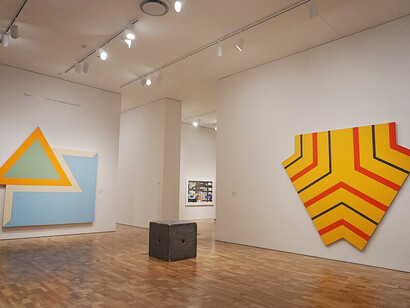
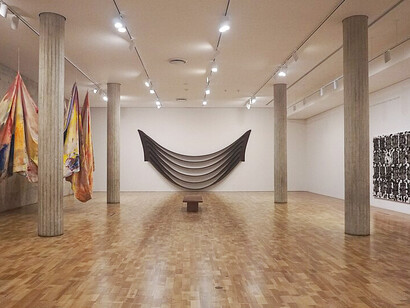
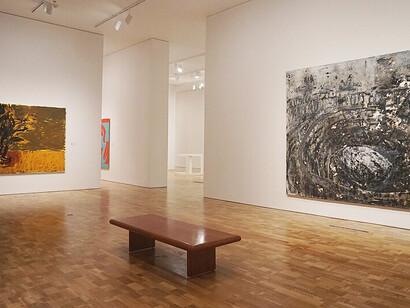
Museum rehanging initiatives provide another example. Institutions such as the Museum of Modern Art (MoMA) have reorganised their collections to integrate works by women and non-Western artists alongside canonical figures. This approach challenges hierarchical narratives and highlights previously overlooked connections.
The rise of digital art and NFTs represents a more recent disruption. Artists working in digital media have gained unprecedented visibility and market value, challenging traditional definitions of art and authorship. While controversial, this phenomenon underscores the evolving nature of artistic legitimacy.
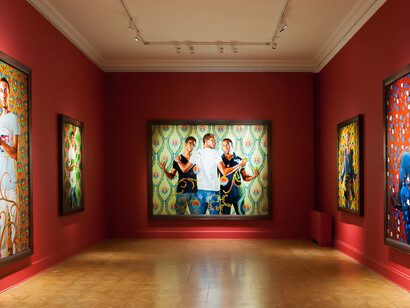
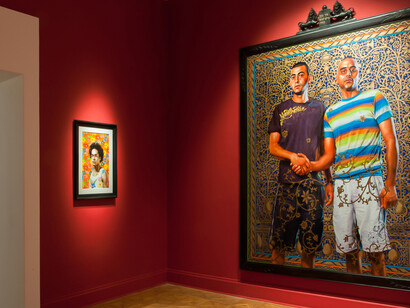
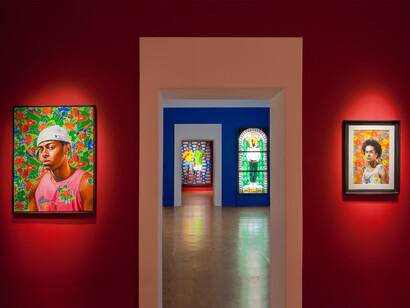
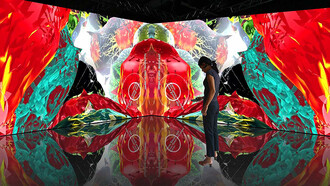
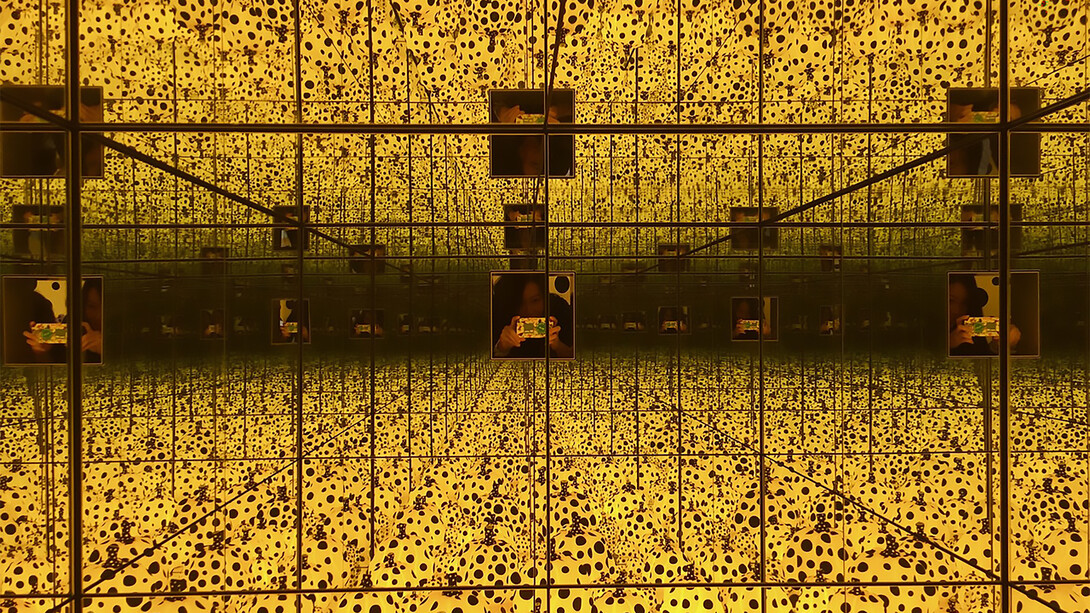
Contemporary artists such as Kehinde Wiley and Yayoi Kusama further exemplify these shifts. Wiley’s reinterpretations of classical portraiture foreground Black subjects within historically exclusionary formats, while Kusama’s immersive installations reflect globalised aesthetics and audience engagement. Both artists have achieved canonical status through practices that challenge traditional norms.
Despite its transformative potential, the evolving canon is marked by significant tensions. One major concern is the risk of over-politicisation, where artistic value becomes secondary to ideological considerations. While political engagement can enrich artistic meaning, it may also constrain interpretation if applied reductively.
Tokenism presents another challenge. Institutions may prioritise diversity in a superficial manner, incorporating marginalised artists without addressing deeper structural inequalities. This can result in symbolic inclusion rather than meaningful change.
Market forces further complicate the situation. The art market often capitalises on trends related to identity and social justice, potentially commodifying political discourse. This raises questions about authenticity and the relationship between artistic intent and economic value.
Finally, the emergence of an “anti-canon” highlights a paradox. Efforts to dismantle traditional hierarchies can inadvertently create new forms of canonisation, establishing alternative standards that may be equally exclusionary. Recognising this dynamic is essential for developing more flexible and inclusive approaches.
Looking ahead, it is unlikely that the canon will disappear entirely. Instead, it is becoming more pluralistic and contested, reflecting diverse perspectives and ongoing debates. Museums will play a crucial role in this process, serving as sites of negotiation between historical preservation and contemporary relevance. Educational institutions are also adapting, incorporating more diverse curricula and interdisciplinary approaches. This shift will shape future generations of artists, scholars, and audiences, influencing how the canon continues to evolve. Digital technologies will remain a key factor, offering both opportunities and challenges. Balancing accessibility with critical rigour will be essential for maintaining meaningful engagement with art.
Ultimately, the future of the canon depends on the ability of institutions and individuals to embrace complexity, acknowledging both historical legacies and contemporary transformations.
The canon of art and artists is no longer a fixed or uncontested entity. Shaped by political movements, cultural shifts, and technological developments, it has become a dynamic and evolving framework that reflects broader societal changes. While this transformation challenges traditional authority, it also opens new possibilities for inclusion, reinterpretation, and dialogue.
At the same time, the shifting canon is marked by tensions that require careful navigation. Questions of representation, authenticity, and value remain central, highlighting the need for ongoing critical engagement. In this context, the canon can be understood not as a static list of masterpieces but as a living discourse, one that continues to evolve in response to the changing world it seeks to represent.
Bibliography
Bourdieu, Pierre. Distinction: A Social Critique of the Judgement of Taste. Cambridge: Harvard University Press, 1984.
Bhabha, Homi K. The Location of Culture. London: Routledge, 1994.
Nochlin, Linda. “Why Have There Been No Great Women Artists?” ArtNews 69, no. 9 (1971): 22–39.
Said, Edward W. Orientalism. New York: Vintage Books, 1978.
Smith, Terry. What Is Contemporary Art? Chicago: University of Chicago Press, 2009.
Pollock, Griselda. Differencing the Canon: Feminist Desire and the Writing of Art’s Histories. London: Routledge, 1999.
Enwezor, Okwui. “The Postcolonial Constellation.” In The Short Century: Independence and Liberation Movements in Africa, 1945–1994. Munich: Prestel, 2001.
Duncan, Carol. Civilising Rituals: Inside Public Art Museums. London: Routledge, 1995.
Jones, Amelia. Seeing Differently: A History and Theory of Identification and the Visual Arts. London: Routledge, 2012.
Graw, Isabelle. High Price: Art Between the Market and Celebrity Culture. Berlin: Sternberg Press, 2009.