English
 Español
 Français
 Deutsch
 Italiano
 Português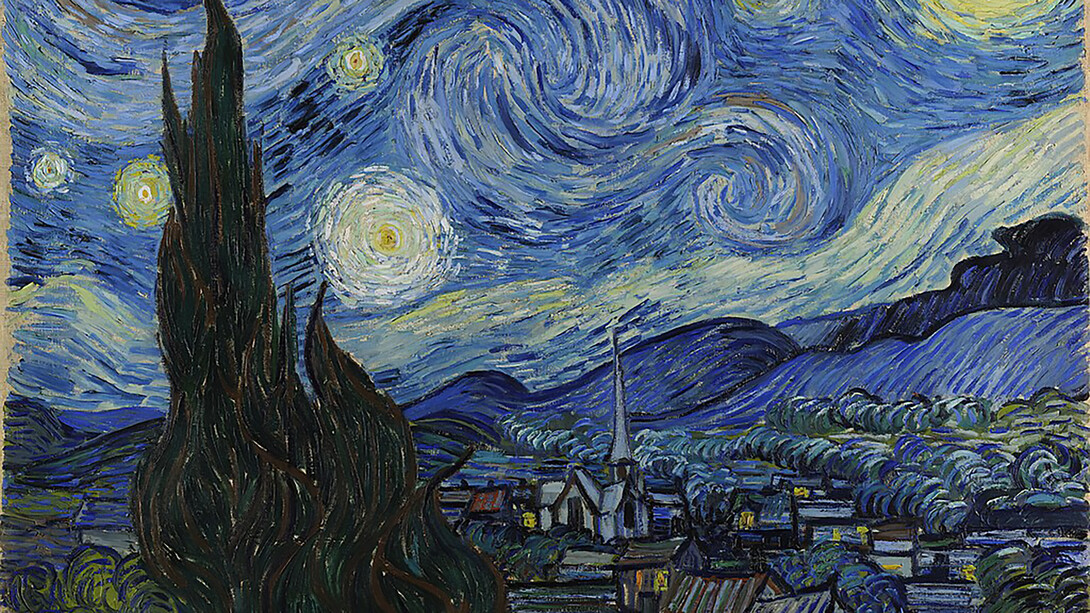
Vincent van Gogh holds a special place as my second favorite Dutch painter, celebrated for his emotionally charged and vibrant use of color. His iconic masterpiece, 'The Starry Night,' has been a constant source of inspiration in my life, with its swirling skies and deep emotional resonance captivating my imagination. Van Gogh's remarkable talent for capturing the beauty of his world, often reflecting his own struggles, strikes a chord within me. 'The Starry Night' is a culmination of his artistic journey, a representation of his unique style and emotional depth. Each time I gaze at his artwork, I uncover new details and layers that invite me to reflect and delve deeper, ensuring his presence remains a significant part of my artistic journey.
I doubt anyone needs an introduction to him, as he is a highly regarded painter known for his tumultuous life and the infamous incident in which he cut off part of his left ear. However, I’d like to take a moment to explore the key aspects of his life that influenced his artistry.
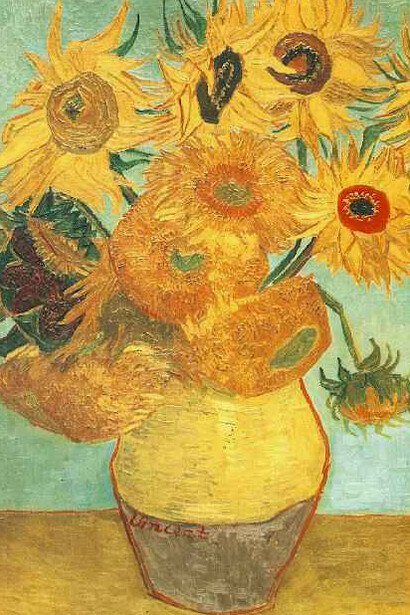
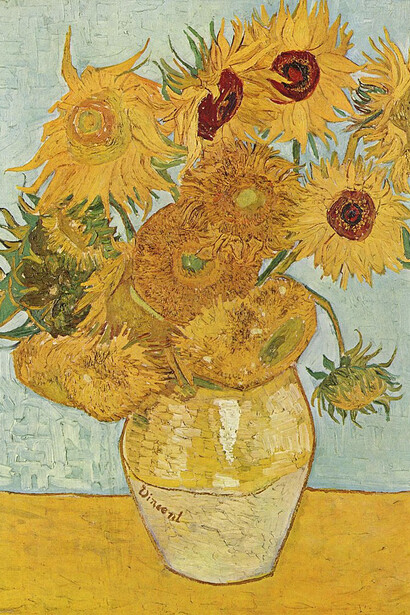
Vincent van Gogh, born in the enchanting landscapes of the Netherlands in 1853, lived a life marked by profound struggles, including the challenges of mental illness and the hardships of poverty. Yet, despite these obstacles, he created an extraordinary collection of over 2,000 works of art, with iconic masterpieces such as "Starry Night" and "Sunflowers" showcasing his unparalleled talent. Van Gogh’s intense emotional experiences, combined with his innovative techniques in color and brushwork, have left a lasting impact on the art world, establishing him as one of the most significant and transformative figures in Western art history. His art continues to inspire and resonate with audiences around the world.
Although he recognized that his painting style was distinctly personal, he also realized that some aspirations are far too ambitious for any individual to tackle alone. While in Paris, he hoped to establish a separate Impressionist group alongside Gauguin, Toulouse-Lautrec, and others with similar visions. To entice them to join him, he rented and decorated a house in Arles, aiming to create a collaborative community dubbed “The Studio of the South.” Gauguin arrived in October 1888, and the two artists worked together for two months. However, their partnership soon deteriorated due to clashing ideas and incompatible personalities.
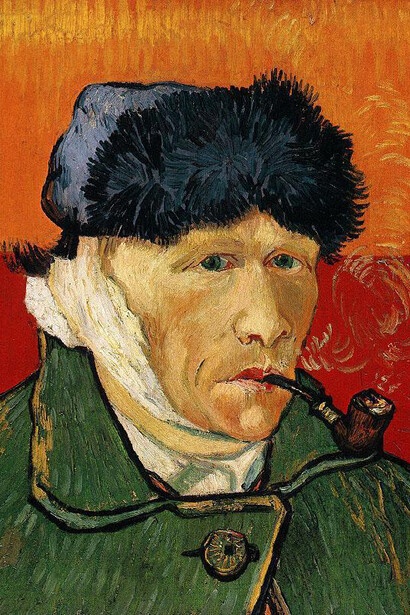
On Christmas Eve 1888, worn out both physically and emotionally, van Gogh reached his breaking point. Following a heated argument with Gauguin, he reportedly chased him with a razor before infamously cutting off part of his own left ear. A sensational news story claimed that, seemingly disturbed, van Gogh visited a local brothel and handed the bloody ear to a woman named Rachel, urging her to 'guard this object carefully.' In contrast, 21st-century art historians Hans Kaufmann and Rita Wildegans suggested in “Van Goghs Ohr: Paul Gauguin und der Pakt des Schweigens” (2008) that Gauguin may have accidentally cut Van Gogh’s ear with a sword during an argument — a claim still debated by scholars. This controversy adds a layer of complexity to van Gogh's life and the interpretation of his art. Regardless of the truth, van Gogh took the blame for the incident and was subsequently hospitalized, while Gauguin returned to Paris.
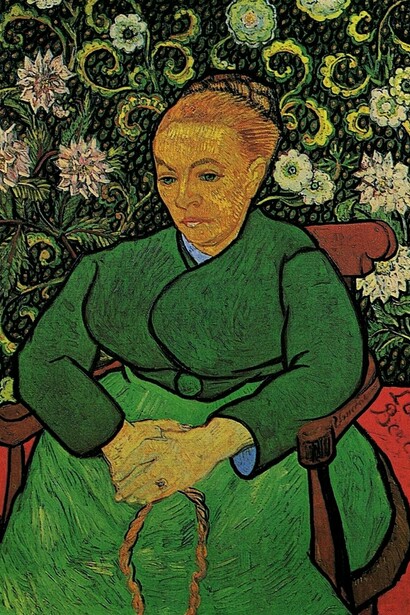
After spending two weeks in the hospital, Van Gogh went back home and resumed painting. He created notable works, including Self-Portrait with Bandaged Ear and Pipe (January 1889), several still lifes, and La Berceuse (1889). However, in the weeks that followed, he displayed severe signs of mental distress, prompting another hospitalization. Van Gogh's mental illness, which scholars variously describe as bipolar disorder, temporal lobe epilepsy, or acute psychosis, had a profound impact on his art. By late April 1889, worried that he might lose his regained ability to create, which he viewed as a sign of his sanity, he sought temporary confinement in the Saint-Remy-de-Provence asylum for medical supervision.
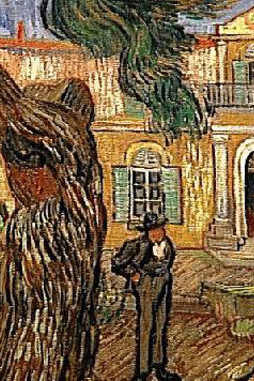
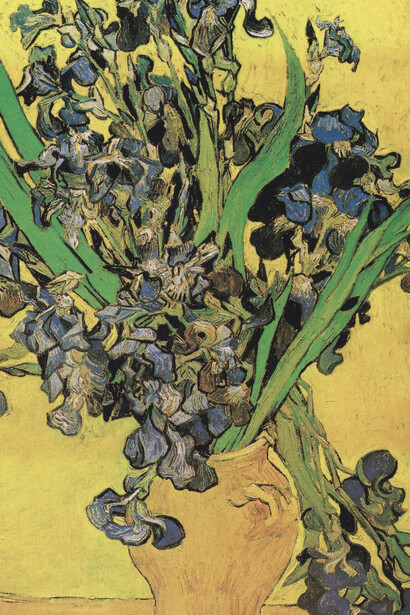
The Starry Night was painted in mid-June 1889, drawing inspiration from the view outside Van Gogh’s bedroom window at the Saint-Paul-de-Mausole asylum. This former monastery had been converted into a mental hospital where Van Gogh voluntarily admitted himself on May 8, 1889, following a mental breakdown and the infamous act of self-mutilation he committed in late December 1888. When he arrived, the facility, primarily catering to well-off patients, was less than half full, allowing Van Gogh to secure a second-floor bedroom along with a ground-floor studio. During his year-long stay, he produced a remarkable body of work, including Irises, a self-portrait, and, of course, The Starry Night.
The painting features celestial elements, notably Venus, which was visible in the night sky at the time, although the moon’s depiction isn’t astronomically accurate. The cypress trees in the foreground are indeed larger than in most of his other works; his letters show he found them both aesthetically striking and spiritually expressive, describing them as “beautiful as Egyptian obelisks.” The village in The Starry Night is largely imaginary, inspired by memory and imagination, since the actual view from his window faced east, not toward the village of Saint-Rémy.
The Starry Night has sparked a variety of interpretations, from religious symbolism to reflections of Van Gogh’s emotional struggles. Some art historians connect the swirling sky to contemporary astronomical discoveries, while others interpret it as a manifestation of Van Gogh’s personal battles. Interestingly, Van Gogh himself critiqued the painting, calling it a "failure" in his correspondence with his brother, Theo.
After Vincent’s death in July 1890, The Starry Night passed to his brother Theo, who died six months later in January 1891. Theo’s widow, Jo van Gogh-Bonger, sold the painting to Émile Schuffenecker around 1900–1901, then reacquired it in 1905 to include it in a Van Gogh retrospective in Amsterdam. From 1906 to 1938, it belonged to Georgette P. van Stolk in Rotterdam. In 1938, art dealer Paul Rosenberg acquired it and, in 1941, sold (not exchanged) it to the Museum of Modern Art (MoMA) in New York, where it remains today and is rarely loaned out. Scientific analysis of the painting has confirmed that Van Gogh used ultramarine and cobalt blue for the sky, along with Indian yellow and zinc yellow for the stars and the moon.
This painting is stunningly beautiful, revealing an entirely different meaning to me compared to what van Gogh might have intended. For me, it embodies the essence of a serene summer evening, characterized by a gentle coolness in the air as the sun sets. I can vividly imagine the soft golden light spilling across the landscape, creating a calming atmosphere. The evening is enriched further by the enjoyment of a nice glass of robust red wine, its deep flavors perfectly complementing the peaceful surroundings. It brings to mind the gentle rustle of leaves in the breeze and the sweet scent of blooming flowers, capturing a moment filled with tranquillity and reflection, inviting me to savor the simple joys of life.