English
 Español
 Français
 Deutsch
 Italiano
 Português
Forty years ago, contemporary art traded steadily on a long-standing romantic premise: the singular artist, wrestling originality from history, was rewarded by critics and collectors who believed that cultural value and market value would, in time, faithfully converge.
Here, and somewhat regrettably, I propose that this premise has become increasingly frangible. What has replaced the solid cycle of creative production, critical acclaim, and connoisseur consumption is no longer a clear system but a volatile mix of global finance, accelerated taste cycles, digital reproduction, and, most recently, the asphyxiating panopticon of artificial intelligence. The result is a future that looks nothing like what artists, institutions, or markets imagined, even ten years ago.
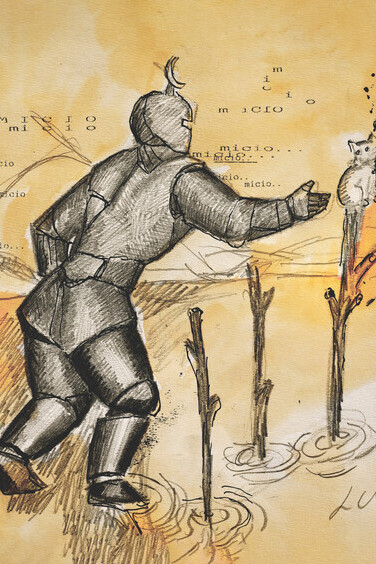
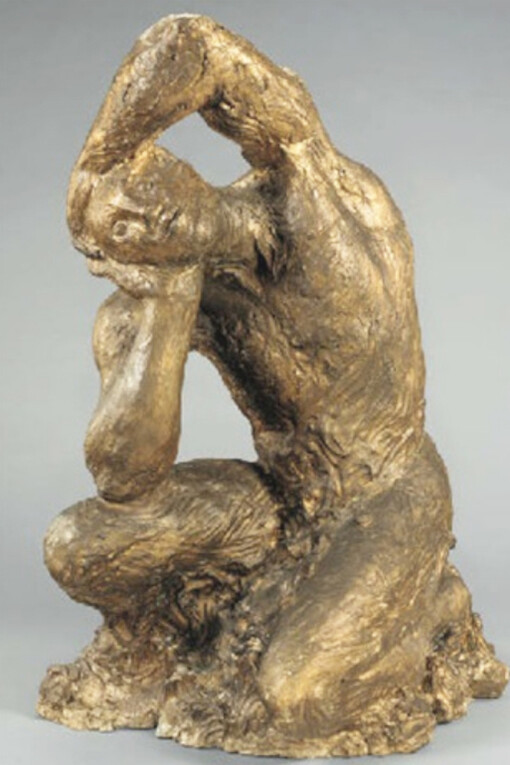
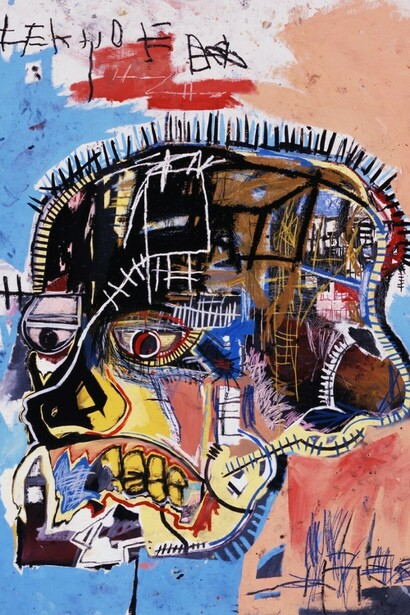
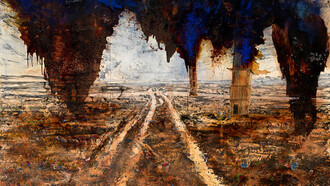
In the early 1980s, the art world was reshaped by a return to painting, playful linguistic sculpture, installation, and artists with ‘personality.’ Movements such as Neo-Expressionism revived the figure of the heroic individual after the cool austerity of Minimalism and the failed integrity of Conceptual art. Artists like Jean-Michel Basquiat, Julian Schnabel, and Anselm Kiefer, along with Italy’s Transavanguardia painters, were celebrated for reintroducing myth, gesture, color, and bravura. Works were magnificent and at scale, prices rose quickly, and museums followed collectors; critical attention worked in concert to reinforce market success. For a time, the system appeared reassuringly coherent, at least for the beneficiaries. But this coherence proved temporary. Sandro Chia’s trajectory is instructive. In the 1980s, his paintings were widely collected, auctioned confidently, and discussed as part of a new European vitality. By the 1990s and 2000s, tastes shifted. Saatchi sold the Italian artist’s work en masse, flooding the market and creating a crisis of confidence.
Younger collectors associated the ‘movement’ with excess, speculation, and a particular historical moment they no longer wished to inherit. Works were quietly sold, sometimes by heirs embarrassed by their parents’ speculative purchases. Market results softened, critical discussion thinned, and a few artists, once emblematic of the future, became charred markers of the past.
This pattern isn’t new, of course, and has repeated across decades/centuries/millennia. Artists whose work once commanded attention have found themselves stranded between generations, while others, overlooked at the time, have been rediscovered and dramatically, posthumously revalued. The late renaissance of artists such as Klint or, more recently, overlooked women and artists of color illustrates how cultural narratives can be rewritten, often long after markets initially passed judgment. In these cases, critical reassessment has driven value upward. In others, market fatigue has overwhelmed critical loyalty.
What has changed most radically is the speed and scale of these reversals. The globalization of the art market since the 1990s has introduced new buyers, new real and virtual fairs, NFTs, and new financial expectations. Art became an asset class, traded alongside luxury goods, coffee futures, and real estate. Auction houses expanded aggressively, promoting artists less as cultural figures and more as brands. This rewarded work that reproduced well, circulated easily on screens, filled museum walls, and could be understood, at least superficially, instantly—conditions that subtly discouraged complexity and long-term engagement.
For artists, the consequences have been severe and may well become existential threats for many. A contracting middle (art) market has hollowed out sustainable careers. While a small number of still “blue-chip” names, i.e., Kiefer, Gormley, Ai Wei Wei, Kusama, and Hockney, continue to command extraordinary prices, the majority struggle with unstable income, rising production costs, and diminishing institutional/philanthropic support. Galleries close or consolidate. Museums rely on sponsors whose interests may not align with artistic risk or ethical punters. The old promise, that persistence and originality would eventually be rewarded, feels like a Victorian construct of porcelain filigree.
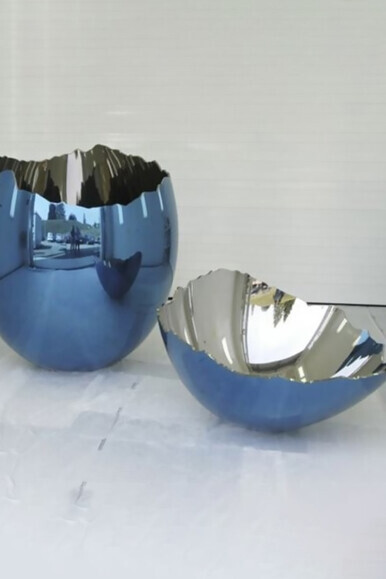
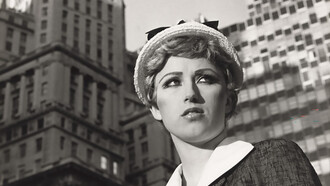
In case you think my argument is hypothetical, it is worth noting that works by Jeff Koons—whose Balloon Monkeys and dogs once commanded record prices—have seen significant reverses over the past decade, with values of around 60% of their original sale/auction prices. Even safe havens such as Andy Warhol have seen auction revenues halve during 2022 to 2023, driven partly by the absence of blockbuster estate works that previously inflated totals. The legendary genius Cindy Sherman, whose chromogenic prints sold in the nineties and noughties for 7-figure totals, has seen auction prices yielding dramatically lower results, with major items selling for way less than $500,000.
Into this instability has entered the specter of artificial intelligence, not as a distant threat but as an active participant and persistent grave robber rampant in the repositories of cultural production. AI systems can absorb vast archives of visual history, trawl artists’ styles, remix influences, and generate convincing images/critical narratives at astonishing speed. What once took years of looking, failing, soul-searching, and refining can now apparently be simulated in seconds. Here, I emphasize the term "simulated" as a result of first-hand suffering through art school education, but also slightly in hope rather than expectation. AI does not simply challenge artists technically; it challenges the very idea of individual creativity as a scarce and revered resource.
The creative and market implications are profound. If visual novelty can be produced endlessly and cheaply, originality loses its economic premium. Already, we see aesthetics designed to be “made to measure”: customized, trend-responsive, and disposable. Platforms and brands such as Shein or Temu offer a useful and frightening analogy. They do not sell timeless objects; they sell fast responses to data. In this emerging model, art risks becoming less about inspiration and more about optimization driven by consumer searches.
This shift unsettles the traditional hierarchy of art history. For centuries, Old Masters derived value from scarcity, craftsmanship, and cultural/religious authority. But if markets increasingly prioritize relevance, adaptability, and scale, even historical anchors will weaken. This is not to say Rembrandt will disappear overnight, but one might suggest that value is no longer guaranteed by lineage alone—as endorsed by Gombrich et al. As tastes evolve and digital experiences rival physical encounters, reverence itself becomes contingent.
Critically, this moment marks a movement beyond both conceptualism and postmodernism. Where conceptual art questioned the object and its democratization, postmodernism questioned authorship and originality. Today’s paradigm questions whether human authorship/readership remains central at all to the notion of unique, human creative production, regardless of impulse. The artist is no longer merely competing with peers or traditions but with systems that learn, iterate, assimilate, synthesize, and replicate without fatigue.
I am arguing, then, perhaps controversially, that the future, as we were brought up to conceptualize it in the late 20th and early 21st centuries, cannot be realized; the future isn’t what it was because the assumptions that underpinned it no longer hold. Tradition cannot be relied upon, markets cannot be predicted, and originality cannot be taken for granted. Artists must navigate not only aesthetic choices but also technological and economic ones, while audiences must reconsider what they value and why. In this new landscape, art’s meaning may matter more than its maker—or less than the system that delivers it. Either way, the ground has shifted, and the past offers no guarantee of stability.
Artists, as versatile and authentic as they have always been, now face a greater material and conceptual challenge from the all-seeing and all-plagiarizing ‘AI.’ Some refuge from this and the inevitably accompanying private equity needs to be found; otherwise, art will become little more than algorithmically driven products such as car insurance, financial services, or mortgage offers jockeying for optimization positions in search engines. The challenge is real and imminent.