English
 Español
 Français
 Deutsch
 Italiano
 Português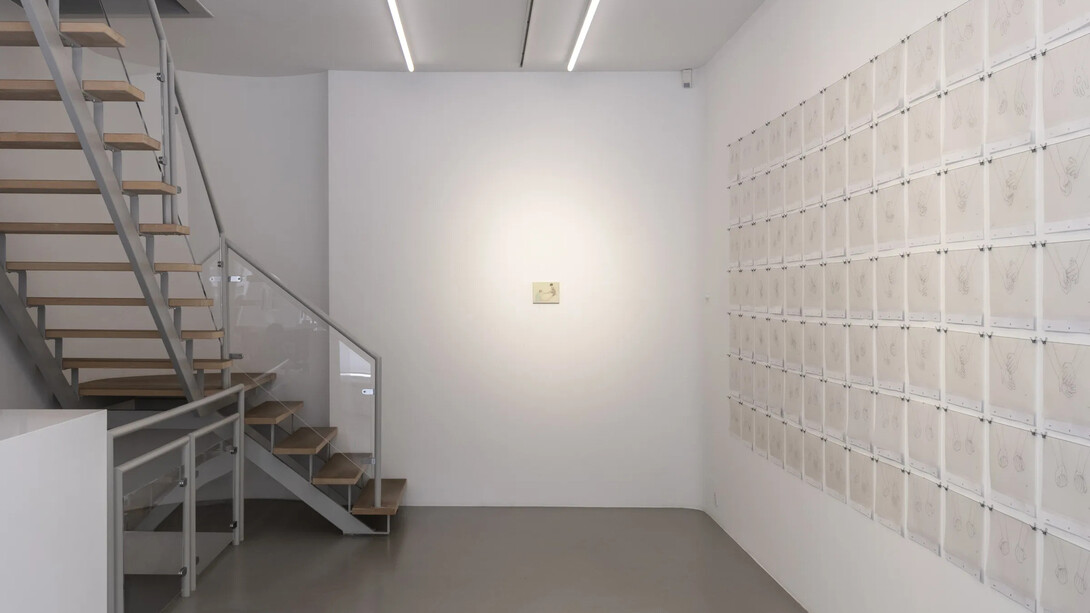
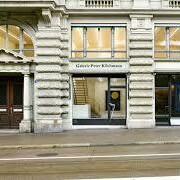
Galerie Peter Kilchmann is pleased to present Handspiele (Hand games), the fifth solo exhibition by Francis Alÿs (b. 1959, Antwerp, Belgium; lives and works in Mexico City). It is the first exhibition at the gallery dedicated specifically to the artist’s animations. Seven new animations, accompanied by original drawings from the animation Bolita manos (2025), several small-scale paintings, and an installation, will be on view in the gallery in the Rämistrasse. The animations, centred on hand games and the choreographed movements of hands, are closely connected to Alÿs’s well-known and ongoing Children’s games series (1999–present). This body of work comprises videos of children at play in public spaces across diverse regions of the world. Through these works, Alÿs explores the universality of play and demonstrates how, among other things, “creativity can transform the trauma and chaos of the world into manageable systems.1” At the 59th Venice Biennale in 2022, Alÿs presented The nature of the game in the Belgian Pavilion, a comprehensive presentation of the Children’s games series. The current exhibition advances this line of inquiry by turning to one of the most elementary and universally shared forms of play: hand games.
The artist's new animated series highlights the fundamental role of the hand in the world of games and play. The hand is reimagined through the distinctive monochromatic language of hand games. Composed of hundreds of individual pencil drawings on Mylar paper, each work is brought to life through the meticulous, labor-intensive, and artisanal process of traditional animation. In doing so, the series stands in deliberate contrast to the digitally created Children’s games. Detached from the body, the hand is rendered autonomous, while the game projected before the viewer is removed from its original context and distilled to its most elemental gesture. These animations underscore the fact that hands, which conventionally appear in pairs, are always experienced relationally: first and foremost in relation to one another, but also to the body to which they are connected and to the world they touch. By isolating and choreographing these gestures, the animations draw attention to the intricate web of relationships through which meaning, interaction, and embodied experience are constituted2.
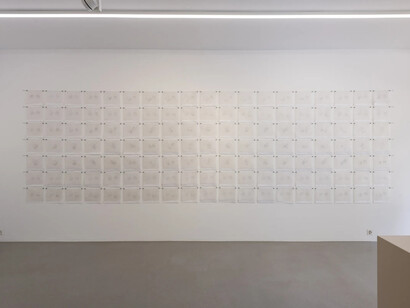
On the ground floor, visitors encounter the drawings used in the production of the animation Bolita manos (2025). Referencing the animated works on view on the upper floor, they reveal the intensity of the labour-intensive process behind each animation. Closely linked to the Children’s games series, the painting Mexico (2025, 15 × 19.2 cm) is installed on a separate wall nearby. Set against a pale pistachio-green ground, two boys sit facing one another, playing with a pair of classic black-and-white dice. Fully absorbed in their game, they remain unaware of their surroundings.
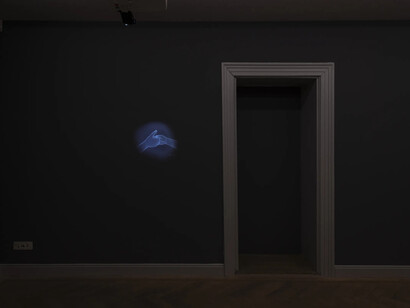
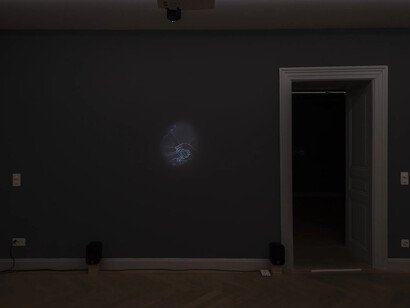
On the upper level, the exhibition condenses into a spatial ensemble: in darkened rooms, the seven animations appear as individual points of light. Bolita manos (Little ball in the hand, 2025) – exhibited for the first time – distils play to a fundamental gesture of concealment and revelation. A small ball passes between two hands, disappearing into a closed palm only to emerge again moments later. The work's apparent simplicity evokes forms of communication in which meaning is generated not through language, but through gesture and embodied exchange. A soft, incessant clicking sound announces the animation Hand stack (2019–2024), which stands in direct relation to Children’s game #21: hand stack, Iraq (2019). In the video, four Iraqi children stack their hands on top of one another at an increasingly rapid pace. The animated version reduces this action to the isolated movement of the hands: a growing stack forms and collapses again, while the bottom hand repeatedly withdraws and returns to the top. Through repetition, the game is transformed into a cyclical structure of order, dissolution, and renewal. In In thumb war (2023–2024), two interlocked hands engage in a playful contest as their thumbs attack, evade, circle one another, and attempt to pin and hold their opponent. In Finger walk (2024), the thumb and index finger of one hand revolve around the index finger and thumb of the other, creating a delicate diamond-shaped form in the air as the fingers repeatedly touch and reconnect. In these works, there is neither beginning nor end; the gesture is perpetually unfolding3. The hands in these animations are therefore less invested in the accumulation of symbolic meaning than in gesture itself. They are, above all, what Jacques Derrida refers to as ‘’touching fingers4’’. Additional animations on view on the upper floor include Incy wincy (2023), Lullaby (2024), and Se tourner les pouces (Thumb twiddling, 2025).
On the lower floor, visitors enter an intimate space reminiscent of a living room or artist’s studio. Armchairs and a coffee table, laid out with the artist’s exhibition catalogues, invite visitors to linger. Displayed throughout the room— on the walls and arranged within the space—are various works by the artist, including the installation Guerrero, MX (2014), which consists of a small-scale painting and 26 works on paper laid out on a table. The painting depicts an expansive, empty view from a beach across the sea. The works on paper are studies for the painting featuring additionally a boy holding a rifle in various poses. Yet none of these sketches of the boy with the rifle ultimately found their way into the final work—the reason for their omission remains unanswered. Additional small-scale paintings in the room depict the hands of adults, recalling the playful movements of the animations. Some motifs are rendered with meticulous precision, while others remain visible as delicate, sketch-like outlines, lending the works themselves the character of studies or tentative explorations.
Over the years, Alÿs has repeatedly worked with animation, with Song for Lupita (1998) marking his first exploration of the medium. In Handspiele (Hand games), the artist foregrounds a haptic language while shifting productivity into the background. In doing so, Alÿs questions the marginalisation of certain forms of action and expression, as casual gestures and hand games have historically been regarded as unproductive in everyday life. Yet it is precisely through these seemingly purposeless games that children engage with the world around them and actively shape it through play. In this sense, a subtle critique of Fordist ideas of productivity and value flows quietly through the works5.
Notes
1 Ben Eastham ‘’Art agenda reviews’’, 59th Venice Biennale, The national pavilions, 2022.
2 Vgl. Florence Ostende (ed.). Francis Alÿs: Ricochets, Prestel, 2024, p. 201.
3 Vgl. Florence Ostende (ed.). Francis Alÿs: Ricochets, Prestel, 2024, p.201 -203.
4 Vgl. Florence Ostende (ed.). Francis Alÿs: Ricochets, Prestel, 2024, p. 204; Jacques Derrida, On touching – Jean-Luc Nancy, trans. Christine Irizzary (Standford, CA, 2005), p. 162.
5 Vgl. Florence Ostende (ed.). Francis Alÿs: Ricochets, Prestel, 2024, p. 198.