English
 Español
 Français
 Deutsch
 Italiano
 Português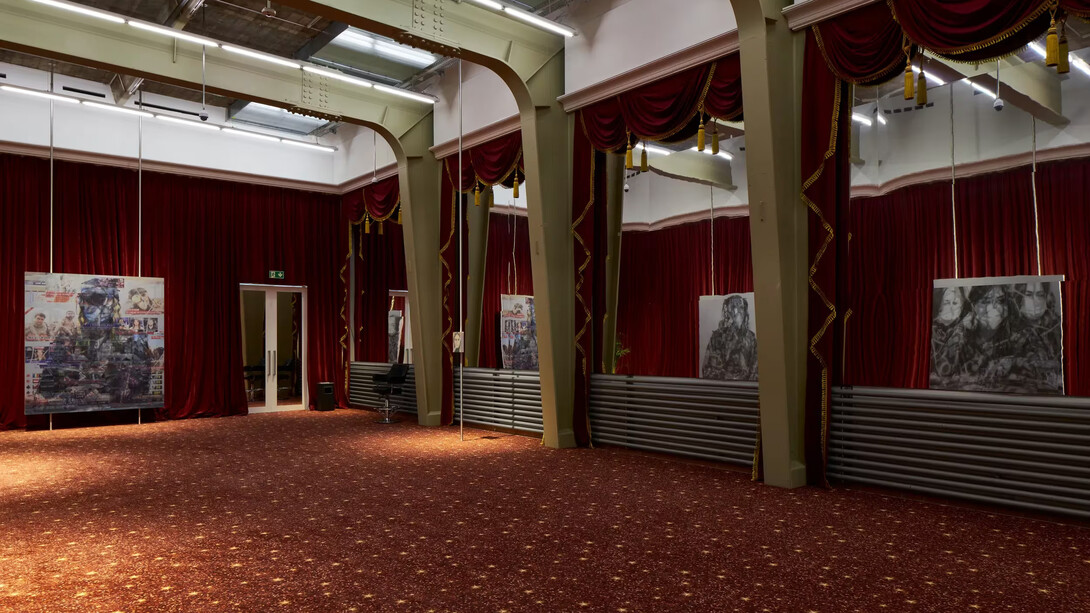
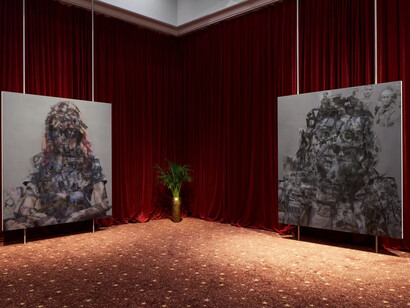
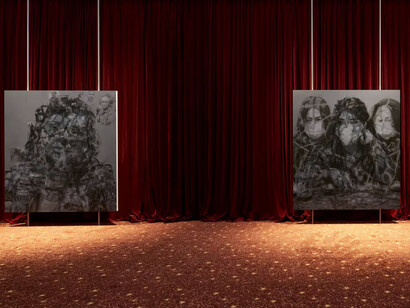
For Zurich Art Weekend 2026, US artist Avery Singer presents new paintings and a site-specific architectural intervention transforming the upstairs Zurich gallery into a space reminiscent of a casino—a charged environment shaped by surveillance.
Incorporating AI-based tools into her painting process for the first time, War_overlays examines how media and accelerating technologies shape our consciousness, destabilizing the boundaries between perception and reality. Following on from Singer’s body of work reconciling with her personal memories of 9/11, the new paintings reflect on the artist’s experience growing up amid televised conflict in the early 2000s, using distorted, AI-influenced imagery to evoke the mediated violence of the era.
Influenced by Jean Baudrillard’s writings on the Gulf War, the exhibition considers how conflict in the West is primarily experienced as a media spectacle, constructed and construed through images rather than direct encounters. This dissonance is heightened by the seemingly disparate nature of the casino setting, complete with long red curtains, tiled carpet and staged CCTV cameras, and the unsettling content of Singer’s paintings.
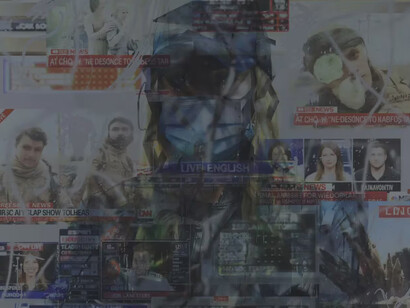
Throughout the works, Singer’s Poker player motif recurs as a central figure: a stand-in for the artist who navigates risk by reading patterns, anticipating outcomes and perceiving what others overlook. This figure is overlaid with a mosaic of AI-influenced imagery drawn from images of contemporary warfare, bringing into focus the harsh realities that persist beyond the studio—or casino—yet are easily ignored in everyday life.
Singer’s use of AI to develop the prompts and keywords that initiate aspects of the image generation process further implicates themes of memory, truth and knowledge, underlining the paradoxes of the digital era. The resulting images are characterized by what Singer terms an ‘AI slop aesthetic,’ revealing uncanny distortions that underscore the limits of algorithmic systems (for example, in the work Solver (2026), a U.S. marine is depicted wearing a keffiyeh).
Working initially in ComfyUI, the artist develops custom LoRAs trained on individuals to create a base character. These subjects are further refined before becoming the painting’s central figure. The tiled imagery across the surface comes from training AI models to mash together specific imagery with AI slop aesthetics: war fetishization, LAN parties and other aspects of real world, digital culture, alongside semi-autobiographical subject matter.
As Singer states on the final outcome, ‘I thought it would be interesting if the viewers could look at the paintings and recognize an AI system that was malfunctioning. Maybe there’s poetry to be found in the breakdown of this highly developed technology.’