English
 Español
 Français
 Deutsch
 Italiano
 Português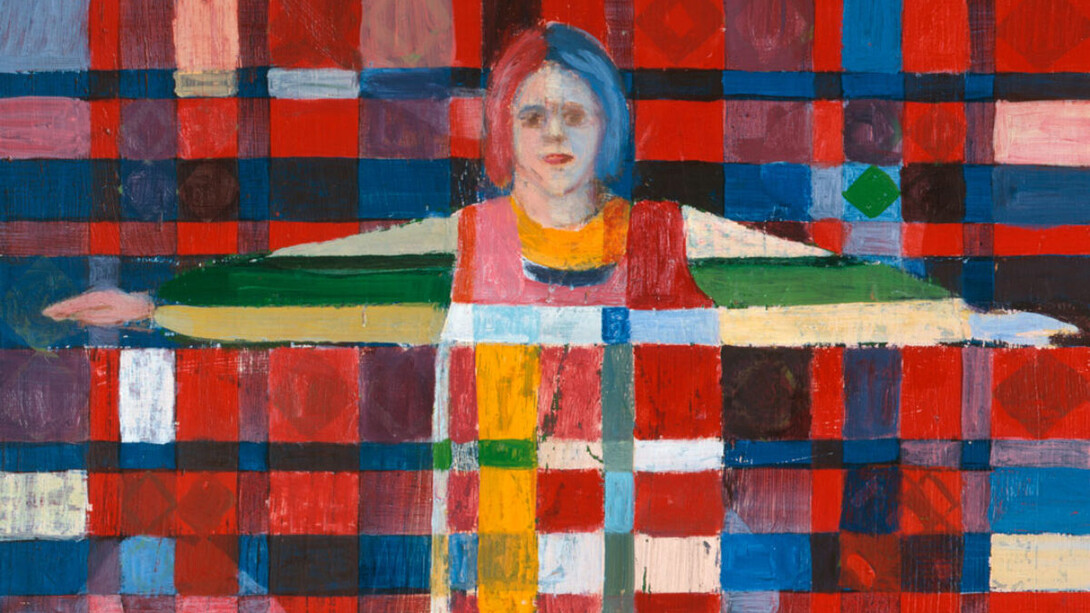
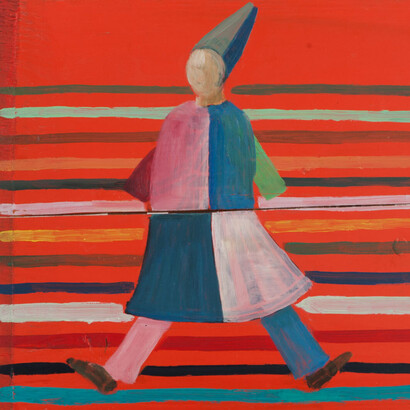
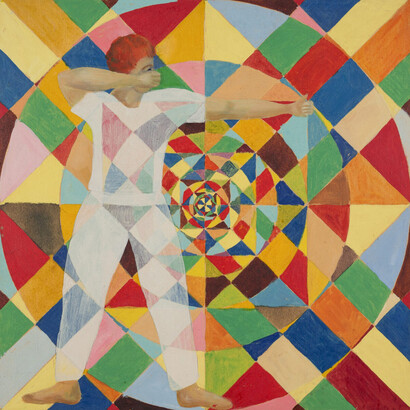
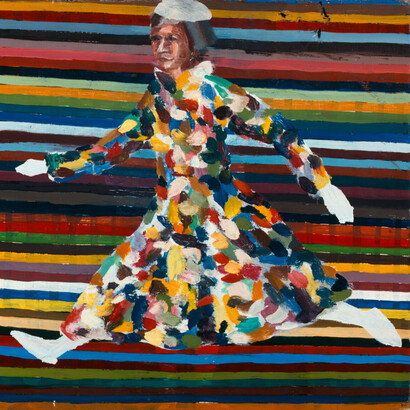
The small formats of Aargau artist Gabi Fuhrimann (1958–2021) draw viewers in. The mostly square, geometrically constructed paintings are laid out like a mosaic and often have a woman as the central motif, her body almost disappearing in the colour structure – but not quite. Our proximity to the painting creates an intimate viewing experience, like a devotional image, where we see the figure reading, dancing, and spreading her arms. This woman could be any one of us – and so the painting also becomes a reflection, even a mirror.
The Aargauer Kunsthaus collected works during the artist’s lifetime and has dedicated a section of its collection to her.
Bringing together a selection of these works, the exhibition highlights the distinctive visual language that Fuhrimann developed over the course of her career. Through carefully balanced compositions and subtle variations of colour, her paintings create spaces that feel both personal and universal, inviting viewers to slow down and engage in a quiet dialogue with the image.
The recurring female figures occupy an ambiguous position between presence and disappearance, individuality and archetype. Emerging from intricate geometric structures, they suggest moments of introspection, movement and everyday experience. In this way, Fuhrimann’s paintings encourage reflection not only on the figures depicted, but also on the viewer’s own perceptions, memories and sense of self.