English
 Español
 Français
 Deutsch
 Italiano
 Português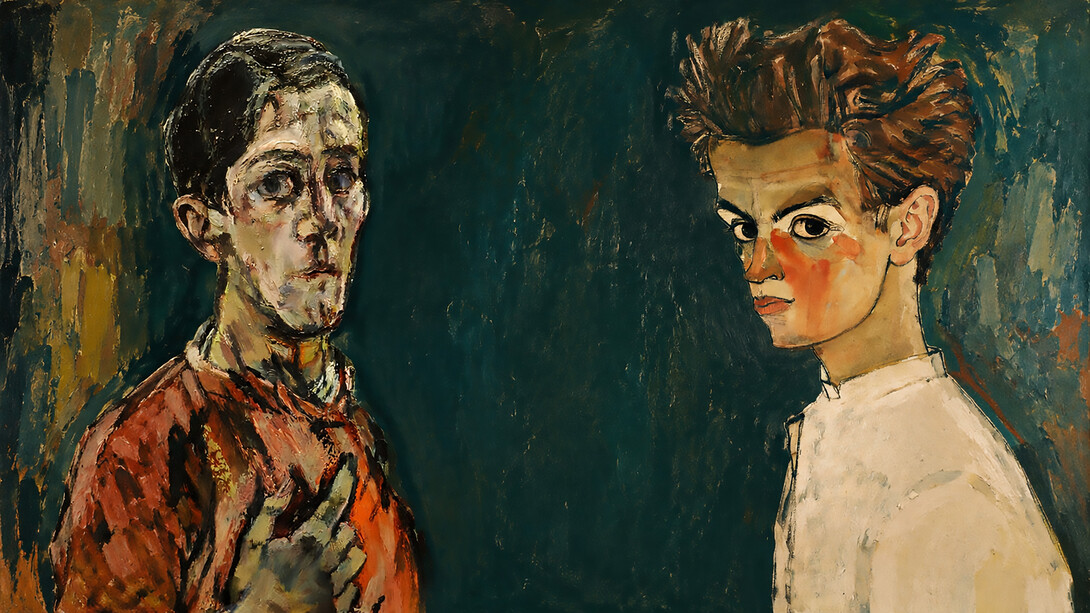
At the beginning of the twentieth century, Vienna became one of Europe’s most extraordinary cultural laboratories. Beneath the refined elegance of the Austro-Hungarian Empire, profound tensions were reshaping society: political instability, scientific discoveries, psychoanalysis, and the collapse of traditional values generated a climate of uncertainty that transformed the arts forever. Within this environment emerged two of the most radical painters of Austrian modernism, Egon Schiele and Oskar Kokoschka, artists whose works explored the fragility of the human condition with unprecedented emotional intensity.
A recent publication1 reveals how Schiele’s work cannot be understood solely through the lens of provocation or biography; rather, it belongs to a broader modernist attempt to redefine the representation of the self. In many ways, Kokoschka shared the same ambition. Although their artistic languages differed considerably, both painters transformed portraiture into a psychological and existential investigation.
Born only four years apart, Schiele and Kokoschka experienced the same intellectual climate yet responded to it in remarkably different ways. Both emerged from the cultural legacy of Gustav Klimt and the Viennese Secession, but both ultimately rejected decorative aesthetics in favour of a more emotionally charged expressionism. Their paintings no longer aimed to idealise beauty or social status. Instead, they exposed anxiety, vulnerability, desire, and isolation.
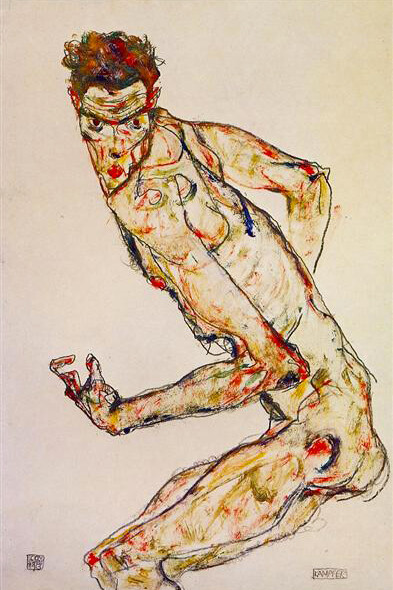
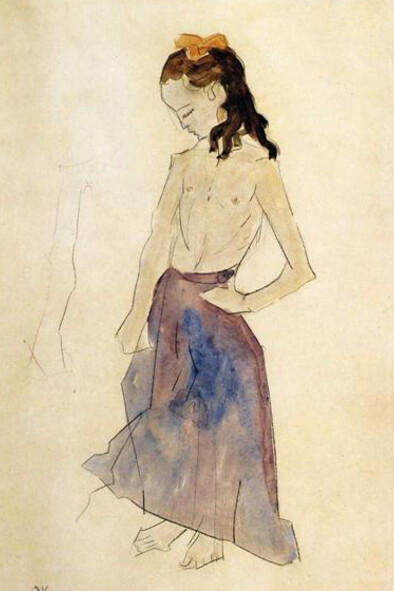
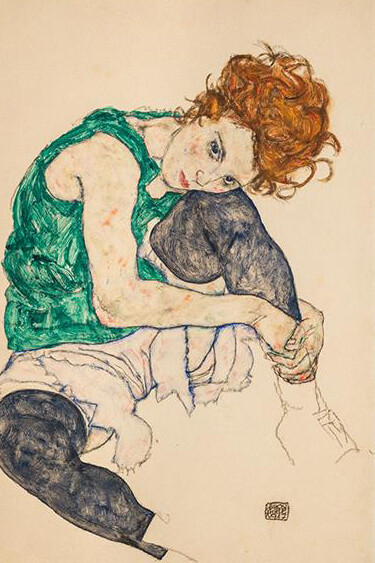
Schiele’s figures appear suspended between eroticism and mortality. Thin, angular bodies twist across empty spaces, stripped of all comforting context. His line is sharp and nervous, almost surgical in its precision. Flesh becomes fragile matter, marked by decay and emotional tension. Looking at Schiele often feels like witnessing an inner collapse made visible. His self-portraits are particularly unsettling because they refuse every form of heroic self-representation. The artist depicts himself as fragmented, vulnerable, and sometimes grotesque. Identity is never stable in Schiele’s work; it constantly dissolves and reconstructs itself.
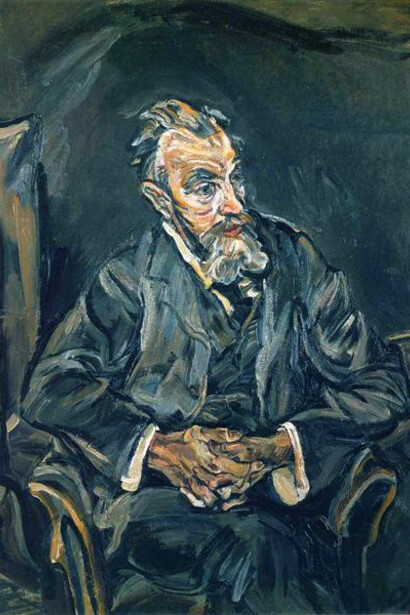
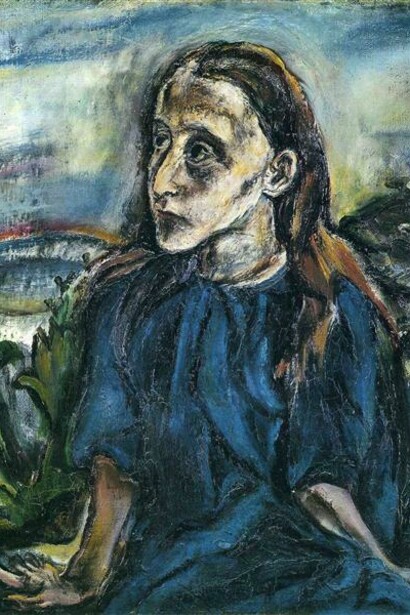
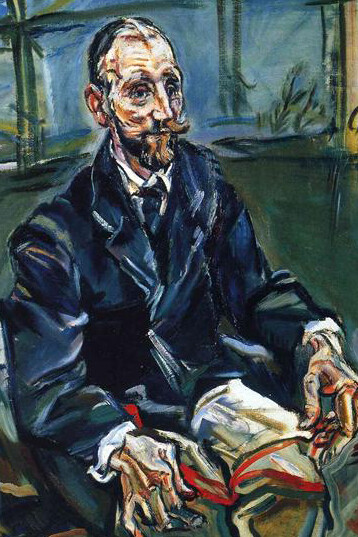
Kokoschka approached the human figure differently. If Schiele dissected the body, Kokoschka attempted to capture psychological movement itself. His brushwork is turbulent, fluid, almost violent in its energy. Faces vibrate with emotional intensity, while backgrounds dissolve into expressive storms of colour. Kokoschka’s portraits do not freeze a moment in time but instead evoke the instability of perception and emotion. His celebrated portraits of Viennese intellectuals transformed portraiture into psychological theatre, anticipating later developments in expressionism.
Despite these stylistic differences, both artists were deeply influenced by the emerging theories of psychoanalysis developed by Sigmund Freud. Vienna at the turn of the century had become obsessed with the unconscious, sexuality, dreams, and hidden emotional states. Schiele and Kokoschka absorbed this atmosphere completely, translating psychological complexity into visual form. Their paintings reject surface appearances in favour of emotional truth.
One of the most revealing parallels between the two artists lies in their treatment of the gaze. In Schiele’s portraits, subjects often confront the viewer directly with expressions that feel accusatory or painfully exposed. The gaze becomes a form of tension between observer and observed. Kokoschka’s figures, by contrast, frequently seem lost within their own emotional worlds, as though caught in moments of psychological turbulence. Yet both artists challenge the viewer’s comfort, forcing an encounter with vulnerability and instability.
Their representations of women further demonstrate both affinity and divergence. Schiele’s female figures have often generated controversy because of their explicit sensuality and confrontational poses. However, contemporary scholarship increasingly interprets these works not merely as erotic provocations but as explorations of corporeality, desire, and existential fragility. Kokoschka’s depictions of women, especially those connected to his tumultuous relationship with Alma Mahler, are equally intense but more emotionally narrative. In works such as The Bride of the Wind, love becomes an overwhelming psychological force, rendered through swirling movement and dramatic colour contrasts.
The theme of emotional suffering permeates both oeuvres. Yet while Schiele often emphasises isolation and bodily fragility, Kokoschka focuses on emotional conflict and spiritual unrest. Schiele’s empty backgrounds intensify the sense of existential solitude. Kokoschka instead immerses his figures within dynamic, painterly environments, suggesting emotional interaction between subject and surrounding space.
Their landscapes also reveal fascinating correspondences. Schiele’s landscapes, particularly his views of towns and nature, possess an eerie stillness. Houses tilt precariously, trees appear skeletal, and fields become symbolic spaces charged with metaphysical tension. Nature in Schiele’s art reflects mortality and transience. Kokoschka’s landscapes, especially those painted after the First World War, are more atmospheric and fluid. Cities, rivers, and mountains seem animated by emotional energy, transformed into expressive visions of instability and movement.
The experience of war marked both artists profoundly. Kokoschka served directly during the First World War and suffered severe injuries that deeply affected his psychological state and artistic development. His postwar paintings reveal intensified emotional turbulence and political anxiety. Schiele, although not sent to the front, experienced military service and witnessed the collapse of imperial Europe from within. During his final years, his style evolved toward greater compositional balance and emotional restraint, suggesting an artist moving toward a new phase of maturity.
This interrupted evolution remains one of the great tragedies of modern art history. Schiele died in 1918 at only twenty-eight years old, a victim of the Spanish flu pandemic that also claimed the life of his pregnant wife Edith. Kokoschka, by contrast, lived until 1980, witnessing decades of political catastrophe and artistic transformation. This difference inevitably shaped their historical reception. Schiele became the mythic young genius whose career ended abruptly at its peak, while Kokoschka evolved into a long-standing witness to the traumas of the twentieth century.
Yet contemporary exhibitions and scholarship increasingly place the two artists in dialogue rather than opposition. Both sought to redefine what painting could express in an age of uncertainty. Both abandoned idealised beauty in order to confront psychological reality. And both understood that modern identity could no longer be represented through harmony or stability.
The publication emphasises precisely this aspect of Schiele’s legacy: his ability to transform emotional and existential tension into visual language. When viewed alongside Kokoschka, Schiele’s work appears not as an isolated phenomenon but as part of a broader Viennese exploration of modern consciousness.
More than a century later, the works of Schiele and Kokoschka continue to resonate because they confront questions that remain unresolved today: the instability of identity, the fragility of the body, the complexity of desire, and the psychological consequences of social crisis. Their paintings do not offer reassurance. Instead, they reveal the human condition in all its vulnerability and contradiction.
In the fractured world of early twentieth-century Vienna, Schiele and Kokoschka developed two distinct but complementary visions of modernity. One reduced the body to its essential nervous tension; the other transformed paint into emotional movement. Together, they created some of the most penetrating explorations of psychological experience in the history of modern art.
Notes
1 Bauer, C., & Reinhold, B. (Eds.). (2026). Egon Schiele and Oskar Kokoschka: Networkers and rivals. Hirmer Verlag.