English
 Español
 Français
 Deutsch
 Italiano
 Português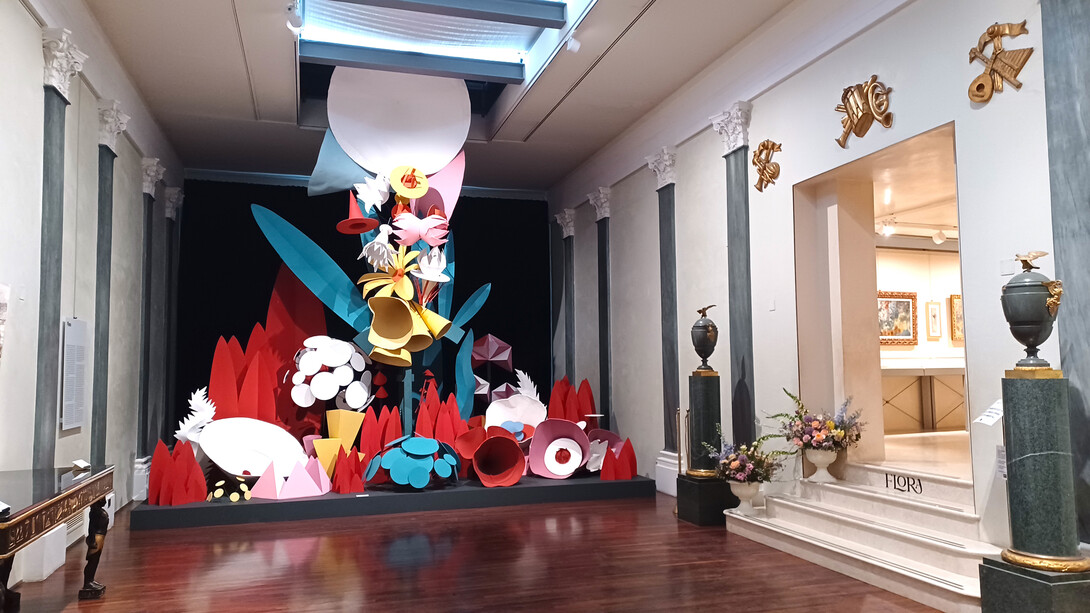
Upon hearing of the latest curatorial venture to be held at the impressive Magnani-Rocca Foundation at Villa dei Capolavori, I have to confess to feeling a little flat; the theme of flowers, or the floral, is hardly one that sparks the imagination in the way that their more recent forays into Surrealism and Futurism, to name but two, do. The first day of FLORA also featured torrential rain, enough to dampen even the most ardent fan of painted flowers.
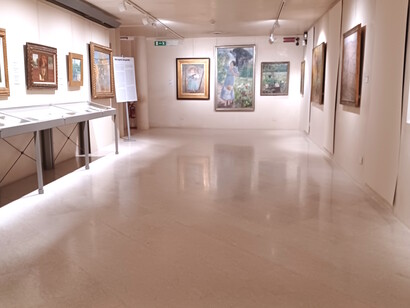
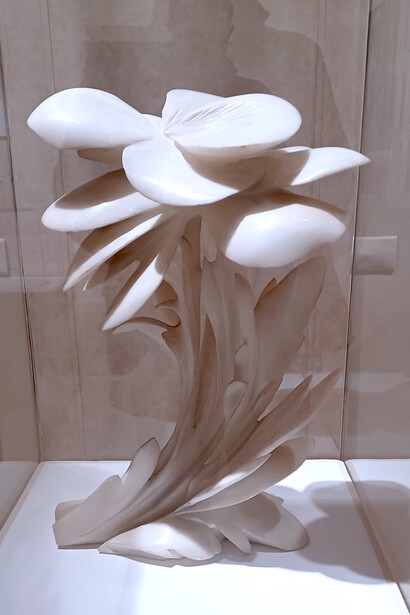
However, I will state here for the record that my assumptions were all wrong: The exhibition is simply outstanding and exquisitely curated. The show is substantial; the curators, Daniela Ferrari and Stefano Roffi, have assembled a dazzling array of some 150 significant works primarily by Italian artists, and quite frankly, there isn’t a stocking-filler damp squib in any of the rooms. Every work is a choice; the voyage through the venue is made easy by the constant highlights. Usually, paintings shown in museums make my feet ache, so the fact that I didn’t feel a thing was surely a good sign! The show opens with the magnum opus reproduction stage set Flora Magica by the futurist Fortunato Depero. This construction of card, paper, and wood appears entirely contemporary in its feel and a suitably celebratory entry greeting.
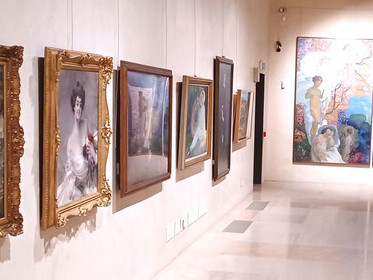
In fact, this work sets the tone for the whole show. Far from this being the usual curatorial apologists' view of flower painting, we are brought in with a bang and a challenge to our expectations of floral art and all related chocolate box connotations. On entering the main gallery spaces dedicated to changing exhibitions rather than the permanent collections, we instantly recognize Boldini’s sumptuous portrait of the celebrated Baronessa de Gunzburg (d. 2004), who would later marry into the Mumm champagne dynasty. Boldini’s painting reflects the luminosity of ‘Minda,’ as she was known to her friends. A supremely intelligent, powerful, and generous woman whose love of life is celebrated so adeptly in this portrait.
Umberto Boccioni’s Donna in Giardino is a stunning rhapsody in red cedar with matching paint; the image shocks with its use of painterly color and the natural tones of the timber panels and frame. This work is almost redolent of Piero della Francesca’s panels in its material sensibility and serene composition. The vibrancy of this work stuns and dances on the retina beyond the exhibition.
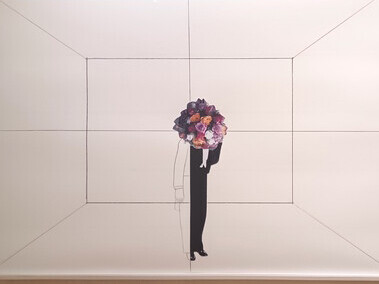
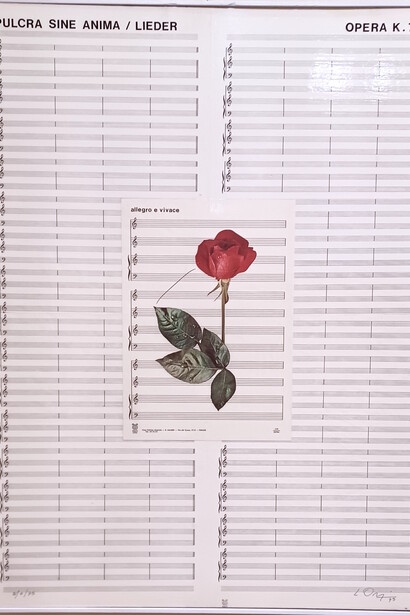
In reality, there are just too many highlights in this exhibition; the sniper accuracy of Kounellis’ outsize, monochromatic, and unromanticized view of flowers is the perfect antidote to even the vaguest notions that this is the sweet and sickly end of the art world. As ever, Paolini reminds us that abstraction, futurism, and the Italian contemporary tradition/sensibility are never far away, and of course, that the style is unmistakable. In Paolini’s L’artista ringrazia (The artist thanks…), the diagrammatic collides with the romantic, lending a coolness that is more reminiscent of real-world relationships perhaps than Boldini, but nonetheless still a floral tribute.
Other spaces feature incredible works by Tito, Zandomeneghi, Balla, Marussig, Fontana, and Pasolini; and of course, no exhibition at Magnani-Rocca could be complete without Morandi, but he is by no means the star of this particular selection. Segantini, Longoni, and Fornara masterfully tackle hydrangeas, whilst renditions of the dahlia by Previati and Donghi are extraordinary in their vision and virtuosity. The galleries of the Villa are curated in much the same way as an accomplished gardener would manage shrubs and floral beds, and this angle injects both humor and elegance into the horticulturally curated displays.
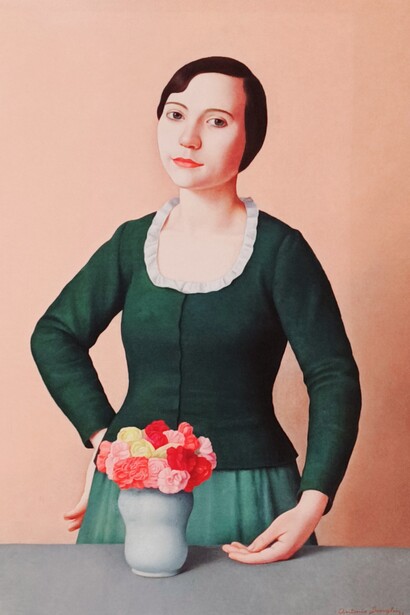
There are other standout works too that linger after leaving the building; Donghi’s Figura di donna is an absolutely extraordinary portrayal that invites and withstands even the closest scrutiny in terms of clarity and dexterity. This image is as memorable as it is consummate and seems to have almost the same compositional and utilitarian dynamic as a postage stamp of wondrous scale. Casarati’s fleur-de-lys are possessed of a rare intensity that is so difficult to achieve with the color blue. Whilst you may think me odd in this observation, there are relatively few artists who manage this color well. Perhaps Matisse and most certainly Yves Klein, whose pigmented intensity is perhaps closest in my mind to Caserati’s most expressive use of color.
I will leave almost the last words to the curator:
There is no painter of the twentieth century who has not painted flowers, following an intimate vocation and a very personal interpretation, a representative challenge. The flower is a simple subject, but it is also a universe of complex symbols, of sophisticated forms and for this reason irresistible.
(Daniela Ferrari)
But from my perspective, see this show before you die, or before it leaves; it is truly life-enhancing and a joy to behold. I haven’t said that about many art shows recently.