English
 Español
 Français
 Deutsch
 Italiano
 Português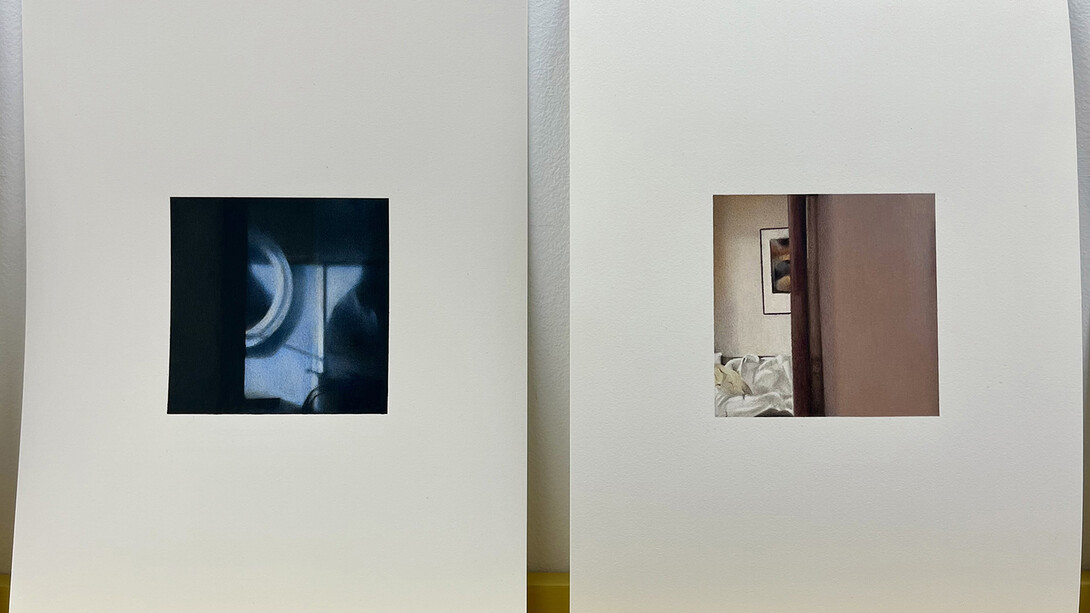
Augana é a palabra que os e as limiás usaban, se cadra aínda o fan, para sinalar un nenúfar cando na Antela florecían. Nós, nacidas no ano da desecación, nunca as vimos, moito nos prestaría escoitar a alguén vivo ou defunta pronunciar augana e de vez ver cos ollos da lembranza o referente flotando sobre as augas.
(Fragment from the poem “Stalker”, by Chus Pato)1
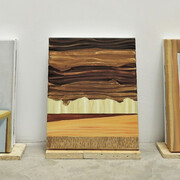
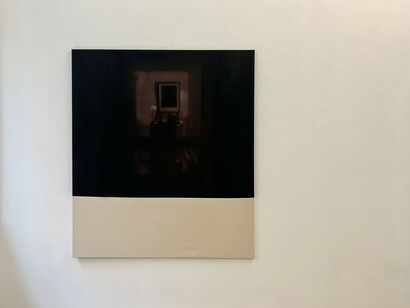
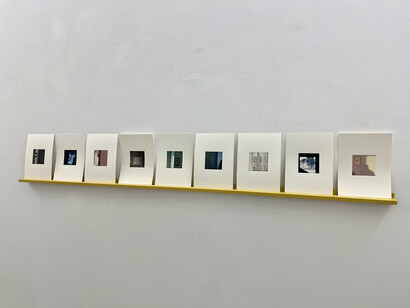
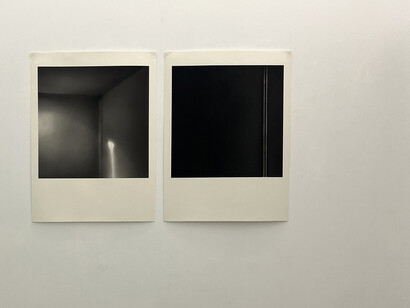
From Patti Smith to Ryuichi Sakamoto, from Rui Chafes to Chus Pato… There is a curious common thread among some contemporary artists when it comes to ‘referencing’ Andrei Tarkovsky in their work. Far from seeking to pay homage to him or create compositions in memory of Tarkovsky, what they aim to do is to recall, in their work, starting from (or through) him and his cinema. Rarely does one encounter this gesture executed with such purity as in this exhibition by Irene González. Here, the artist recovers fragments from The mirror (1975), Nostalghia (1983) and The sacrifice (1986) because, in those cinematic shavings she works with—even though they are other people’s dreams—she has glimpsed corners of a house that no longer exists… except in her memory.
You’re right. In each of Tarkovsky’s films, there are regions that act as breeding grounds for dreams or memories. What is extraordinary is that they are not reserved solely for the director’s own reveries and memories. Anyone can discover traces of their own memories there. But how should we react when we realise that one of our own memories is speaking to us from such a (seemingly) distant place? Some people try to explore the whole scope of that memory, to find its depths or its reverse side. To feel their way towards the link that connects what we have seen reflected in ourselves, within the film, with its past.
In other words, there are those who attempt to explore the image in depth, until they arrive at its “reference point floating on the water”. Irene González uses drawing precisely for this purpose. And drawing fulfill this role, among other reasons, because this artist’s drawings possess a fragility comparable to that of a memory. This allows her to bring them so close to her own memory. Thus, through drawing, she performs a ritual by which she manages to touch the memory without it being scorched.
In his well-known collection of essays entitled Sculpting in time, Andrei Tarkovsky records this confession from an anonymous female viewer, sent to him by letter regarding The mirror: “That’s exactly how my childhood was... But how did you know? There was the same wind back then, and a similar storm... The darkness in the room... The oil lamp went out too. My soul was filled with the anticipation of my mother’s return. How beautifully your film captures the awakening of a child’s consciousness! My God, how true it all is!” Had she had the chance, I am convinced, Irene González would have sent a similar letter to the filmmaker. In a way, that very impression is the closest thing to a ‘plot’ that these drawings present. The confession of the amazement felt at the veracity with which she senses her past there, amidst those films. These drawings pull at a thread, emerging from that sense of vividness to lead their creator back to the original source of the memory.
Drawings, then, that reveal to the artist (and to us, observers of what she observes in Tarkovsky) how to make our way, if necessary, towards so many houses that do not exist. As if these drawings were the swinging pendulum of a dowser. Or better still, without straying from the imagery constructed by Tarkovsky himself, as if her drawings operated in the manner of the handmade probes that the Stalker fashioned. Bear in mind the image of this prowler and guide of the Zone, in that other film, tying strips of worn cloth, or bandages, to metal nuts. He used those small devices, flinging them like slingshot-lures, to recognise and navigate the muffled, indescribable danger of a space that is at once inhospitable and familiar. The collection of drawings encompassed by this exhibition traces the coordinates of a place where the dreams and memories of its Stalker, Irene González, rest. Are they not, after all, scraps of ‘Tarkovskian fabric’ tied to mnemonic counterweights that she hurls into the depths of her own memory?
(Text by José Manuel Mouriño. Spanish representative of the Andrei Tarkovsky International Institute)
Notes
1 “Augana is the word the Limiás people used—and perhaps still do—to refer to a water lily when it bloomed in the Antela. We, born in the year of the drainage, never saw them; we would love to hear someone, living or dead, say ‘augana’ and at the same time see, through the eyes of memory, the image floating on the water” (translation into Spanish by Gonzalo Hermo). The demonym “limiá” refers to the region of Limia, in the province of Ourense. The poet’s family origins lie in that place, where she herself spent a significant part of her childhood. The area was dominated by the Antela lagoon, which was eventually drained in the 1950s.