English
 Español
 Français
 Deutsch
 Italiano
 Português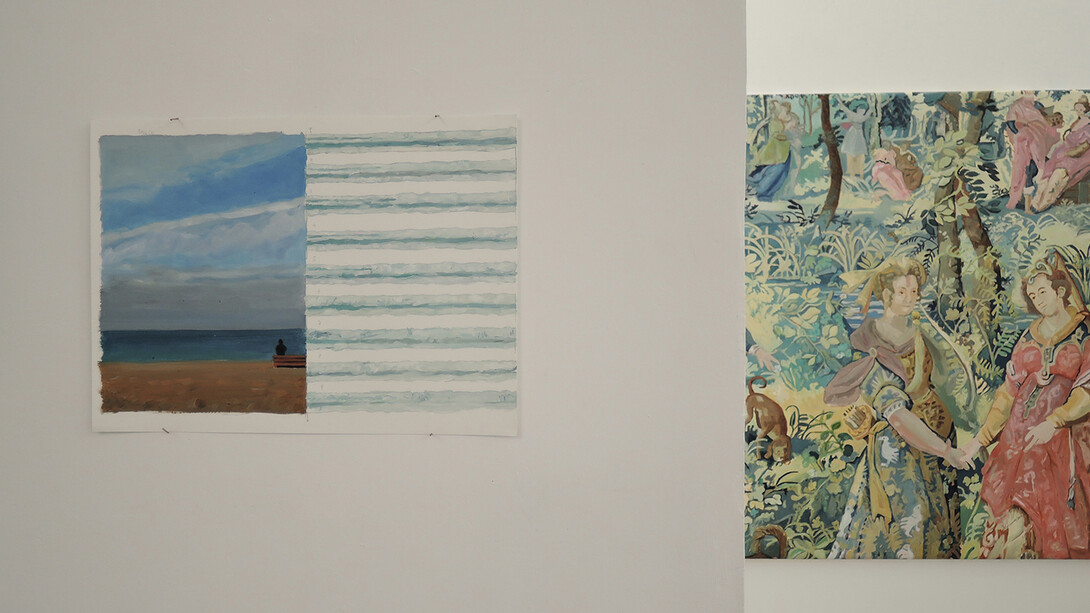
When I write Martinho in Portuguese and translate it into Spanish, it becomes Martiño. An nh becomes an ñ. One image is replaced by another to represent something very similar; a slight distortion. Two images for an almost identical sound, but fundamentally different.
Painting is like dancing. For more than a century, painting has been an end in itself. It does not need to be testimonial or referential. It just has to be painting. That is why Martinho can respond to painting with painting. Not everything needs to be explained: painting is a language that is difficult to translate into words. We must allow ourselves to be immersed in the paste and its forms.
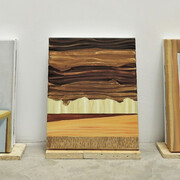
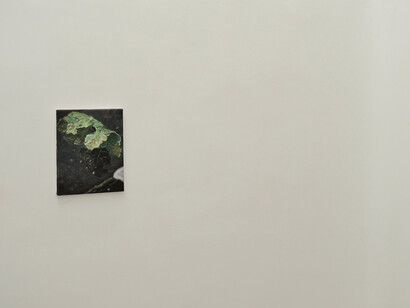
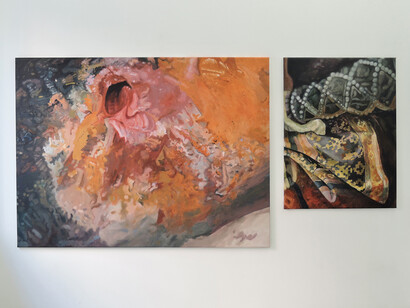
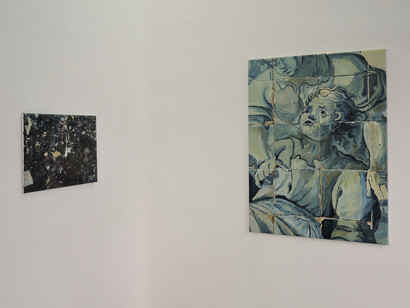
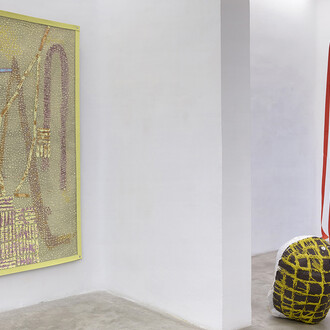
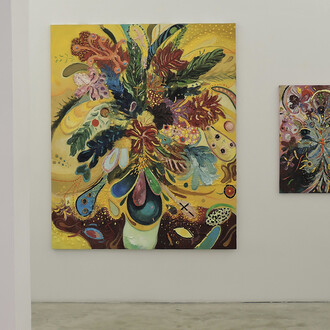
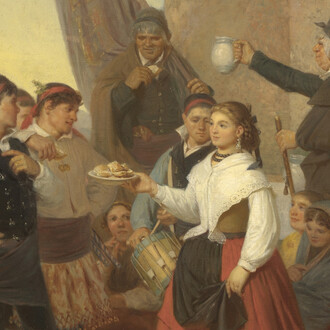
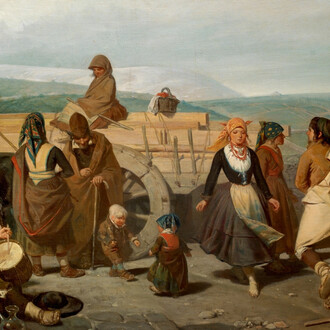
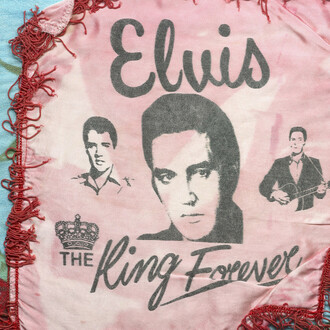
In this exhibition, the painting speaks for itself. Martinho refers to other paintings that took shape in a tapestry and which he returns to in a clearly transformed pictorial form. There are also small fragments of paint found in the street or details from Dutch paintings. Martinho paints what he loves, twists and distorts it, like a musician sampling part of a song to create a new piece. He approaches a tiny piece of painting and gives it an almost sacred appearance, confronting us with the idea that painting is painting, something that viewers sometimes forget.
Contemporary painting is guilty of relying on a false strangeness: producing it artificially, contrasting themes, creating tension between colour and form, overusing theatricality; resources that seek impact and produce a painting that is quick to process. Martinho, for me, does not work that way. His work is strange for more subtle reasons: because of the choice of pieces of painting he decides to paint, small or large, and above all because of how he paints them. It may seem simple when you think about it, but it is extremely complicated to do, because the strangeness here is difficult to define and it captivates you. It does not need to be accompanied by forced gestures to justify itself. It is strange because it is, not because it tries to prove it to us. It is direct, honest communication without any forced posturing. Not trying to be strange is the fundamental condition of being different.
In this exhibition, Martinho works with transformative painting. Humans are replicas, distorted copies of our parents. Here we can see that, or simply painting enjoying itself. Replicas, copies and modifications have given us great joy: Mafalda was the daughter of Snoopy and Las Meninas of the Arnolfini Marriage. All art, in one way or another, is a distortion of what came before. Martinho does not hide this: he brings it to the fore and turns this universe of influences into his own canvas in which we can lose ourselves.
The titles refer to the music he listens to while painting and determine or influence how we read his work. It is a way of accepting randomness, of embracing uncertainty, like when a painter's coffee spills onto the canvas and he decides to leave it there as a sign that creation is not mathematical. We can thus construct an imaginary playlist in which the names name the music and the music names the painting.
I hope you enjoy, as I have, stepping into the world of Dream distortion.
(Text by Antonio M. Xoubanova)