English
 Español
 Français
 Deutsch
 Italiano
 Português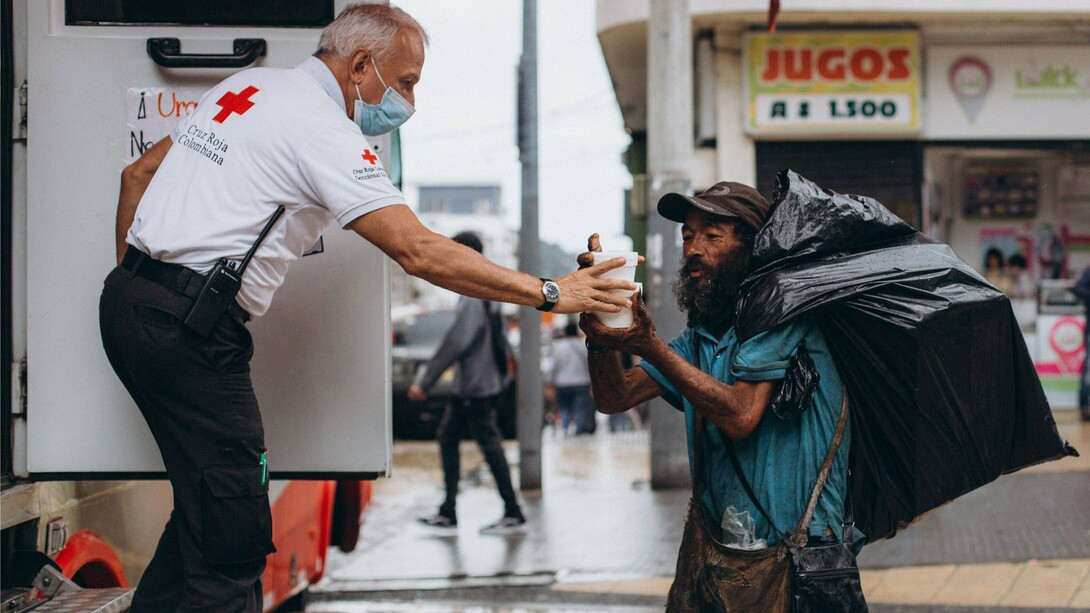
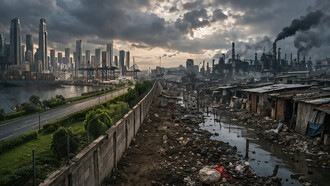
It has been pointed out repeatedly. There is a clear preference in today's world to define 'poverty' as something 'multidimensional'. And it is true, of course, that a lack of money or income never stands alone. It is the cause and subsequently the consequence of numerous other problems, from access to healthcare and education for children to having a roof over one's head and, inevitably, psychosocial problems. All these problems are identical in the North and South, although they may present themselves in different concrete forms.
However, the majority of these problems are not exclusive to poor people. There are also people with jobs and incomes who are homeless, and there are people who live too far away from a decent hospital or a quality school. Psychosocial problems can occur throughout society.
One problem, however, is exclusive to poor people: hunger and malnutrition, and it is precisely this problem that is rarely or never mentioned in relation to 'multidimensionality.'
There is much to be said about the definitions of poverty. Whichever way you look at it, no one can escape poverty without financial and economic autonomy, without being able to stand on their own two feet. You can offer someone a roof over their head, but without an income, that person will remain 'poor,' even if that roof helps them to look for solutions. However, as soon as someone has sufficient income, they will be able to eat.
It should be clear that definitions of poverty would be better limited to what really determines poverty in any market economy. That is income – from work or benefits – and food. Anyone who wants to combat poverty must ensure that people become self-reliant, that they can go through life without worrying about their next meal or tomorrow. Because, once again, anyone who has sufficient income can take the bus to go to the city and see a doctor and can send their children to school.
Of course, any poverty policy worthy of the name will also provide public services, roads, schools, and housing. Focusing exclusively on partial aspects can never yield positive results, and the economic and financial dimension is often overlooked. In any market economy, money is needed to purchase essential goods and services, and food, in the very first place.
Poverty and hunger
What is striking about all these multidimensional definitions of poverty is that they rarely or never mention food. People talk about energy poverty and transport poverty, but almost never about food poverty. Yet food is the most important thing for keeping someone alive, and the link between hunger and poverty was officially established long ago. Hunger is the only 'dimension' that only affects poor people. Those who have some money will buy food first. This has been established in all research into the effect of cash transfers for poor people.
The 1996 Rome Declaration on World Food Security clearly established the link between poverty and growing food insecurity.
"We consider it intolerable that more than 800 million people throughout the world, and particularly in developing countries, do not have enough food to meet their basic nutritional needs."
Objective 2.1 of § 19 of the action plan explicitly mentioned 'to pursue poverty eradication' as a strategy to also guarantee food security.
A.K. Sen's famous book, Poverty and Famines, published in 1981, also makes it clear that famines rarely or never have to do with the availability of food but rather with people's lack of purchasing power to access the food that is available and/or even exported.
How can this selective blindness be explained?
The FAO's 2025 annual report states, "Prevalence of Undernourishment had begun to rise slowly in 2017 and then increased sharply in 2020 and 2021 in the wake of the pandemic. However, the latest assessment points to encouraging progress from 2022 to 2024. An estimated 8.2 per cent of the global population may have faced hunger in 2024, down from 8.5 per cent in 2023 and 8.7 per cent in 2022. It is estimated that between 638 and 720 million people (7.8 to 8.8 per cent of the global population) faced hunger in 2024. Considering the point estimate (673 million), this indicates a decrease of 15 million compared to 2023 and of 22 million compared to 2022. The progress seen at the global level is driven by notable improvement in South-eastern Asia, Southern Asia – which mainly reflects the impact of new data from India – and South America... Unfortunately, this positive trend contrasts with the steady rise in hunger in most subregions of Africa and in Western Asia. The PoU in Africa surpassed 20 per cent in 2024, and in Western Asia it rose to 12.7 per cent. According to the current projection, 512 million people in the world may be chronically undernourished in 2030, of whom nearly 60 per cent will be in Africa."
But how is poverty evolving in the world?
This is what the World Bank says: "From 1990 to 2025, the total number of people worldwide living in extreme poverty declined from around 2.3 billion to around 831 million. The sharp decline over this period was largely driven by robust, broad-based economic growth in East Asia and South Asia. However, the pace of global poverty reduction has slowed substantially in the last decade. Extreme poverty has become increasingly concentrated in Sub-Saharan Africa and places affected by conflict and fragility. Starting in 2022, the majority of people living in extreme poverty will be in fragile and conflict-affected states." (Poverty and Inequality Update 10/2025)
Statistics should always be taken with a pinch of salt, because it is certainly not easy, especially when it comes to poverty, to produce accurate figures.
It is clear, however, that we are not exactly on the right track.
Inequality
Much of this has to do with another problem that is often mentioned but rarely addressed: inequality.
The fight against poverty is progressing at an agonizingly slow pace, except in East Asia; however, the fight against inequality is virtually non-existent.
The 2015 Sustainable Development Goals do include chapter 10 on combating inequality: 'to achieve higher income growth among the bottom 40 per cent of the population than the national average'. However, this means that only the bottom of society is being looked at, while the top is left untouched. Yet a fair wealth tax system could achieve much faster results in this area.
The latest report from Swiss bank UBS states, "In 2024, 287 billionaires were added. There are now 2,919 in total, with a combined wealth of US$15,800 billion. That is an increase of 13% in one year! In 2022, there were only 35. One third of them come from the US, 470 from China and 76 from Hong Kong. Europe has 'only' 547 billionaires."
Add to that the fact that in many areas it is a futile struggle. Development aid has been reduced in almost all rich countries. OECD: "The OECD projects a 9-17% drop in net official development assistance (ODA) in 2025, following a 9% decline in 2024. The projected decline is driven by announced cuts from major providers, and it would hit the poorest countries hardest: bilateral ODA to least developed countries and sub-Saharan Africa may fall by 13-25% and 16-28% respectively, and health funding could drop by up to 60% from its 2022 peak. Coordinated, transparent action is urgently needed to mitigate the consequences of cuts in ODA for the poorest and most vulnerable populations.
While debt levels continue to peak: “Between 2022 and 2024, approximately US$741 billion more flowed out of developing economies in debt repayments and interest than flowed into them in the form of new financing. It was the largest debt-related outflow in more than 50 years. The human toll has been steep: among the 22 most highly indebted countries, one out of every two people today cannot afford the minimum daily diet necessary for lasting health" (International Debt Report, foreword).
Why cannot food poverty be ignored?
There are few reasons to remain optimistic. With US President Trump making national egoism a major policy priority and devoting less than half a page to Africa in his National Security Strategy 2025, it is difficult to expect Africa, the poorest continent, to receive much support.
The BRICS countries have been trying to work on an alternative for several years, but geopolitical tensions, including within the group itself, make this difficult.
International attention for social policy is waning. Rich countries are dismantling their welfare states. A global transition is underway from economic and social rights to militarization. 'Everyone must contribute,' it is said, but the rich remain untouched.
Poverty is certainly a major problem. Inequality is an even bigger problem, with a significant political dimension. Inequality undermines democracy and human rights.
The fact that people are starving at a time when more food is being produced and wasted than ever before is an unimaginably huge moral problem. However, it is also a rational legal problem because there is indeed a 'right to food.'
Just one example: The US produces far more agricultural products than it consumes itself, but Trump's aggressive trade policy has blocked many foreign markets for farmers. China, the largest buyer of American soybeans, now sources most of its soybeans from South America following a trade dispute with the White House. As a result, tonnes of American soybeans are at risk of going to waste in silos.
This is a point that urgently needs to be included in thinking about social justice. Food is not an additional dimension of poverty but touches on the core of the problem itself. There are no rich people who go hungry; hunger and malnutrition are indeed the monopoly of poor people. All other dimensions are not.
By not mentioning this, people continue to avoid the real problem and can pretend to be fighting poverty without really wanting to eradicate it. People can get vouchers and culture cheques, but in the meantime they are going hungry.