English
 Español
 Français
 Deutsch
 Italiano
 Português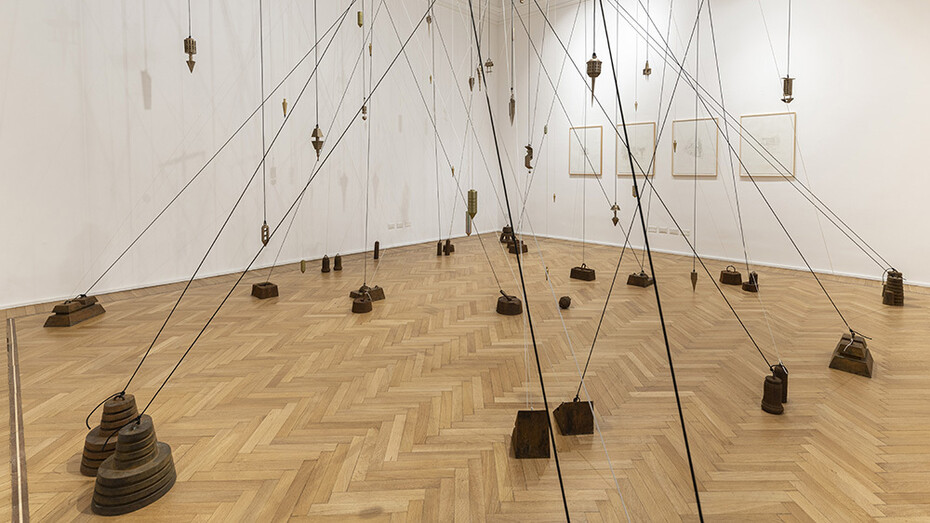
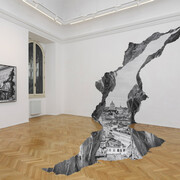
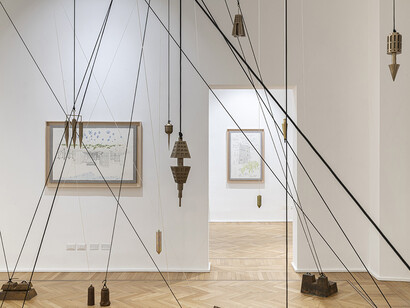
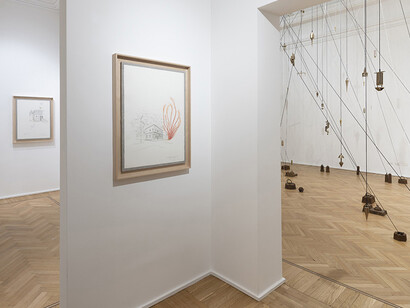
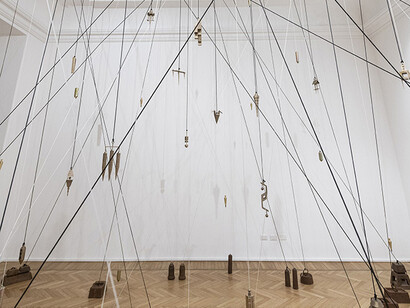
Galleria Continua is pleased to present a solo exhibition by one of the most influential voices on the international art scene, Carlos Garaicoa. The exhibition, titled I giardini di Piranesi and specially conceived by the Cuban artist for the gallery’s Roman venue, brings together a new series of drawings, watercolors, paintings, and a large-scale installation, Contrapeso (Ciudad Plomada). Comprising small metal weights anchored to the ground, reminiscent of miniature buildings, and shimmering brass counterweights of various shapes and symbols suspended above them, the installation immediately draws the viewer’s eye through the visual tension created by intersecting diagonals and the harmonious interplay of forms.
At the core of Carlos Garaicoa’s practice has always been the city, understood as a complex and layered organism, shaped by tensions between memory, transformation, and possibility. The artist observes architecture and urban landscapes, grasping their underlying structures, their wounds, and their dreams—both those that have been abandoned and those still yet to be realized— and then reworks them through a creative process that weaves together past and future. From this emerge new perspectives and lines of flight, in which the collective dimension and the multitude take center stage in a continuous process of becoming.
The work of Giovanni Battista Piranesi resonates in the recent practice of Carlos Garaicoa, finding a particularly compelling synthesis in this new exhibition. The project can be understood as a form of homage and a shared line of inquiry, especially in the use of drawing as a tool for analyzing urban reality and in the idea of the ruin as a starting point for artistic investigation. As in the celebrated visions of Piranesi, Garaicoa conceives the city as a critical device—a narrative territory in which structural order intertwines with ruin, utopia, and a symbolic excess that continually destabilizes its meaning.
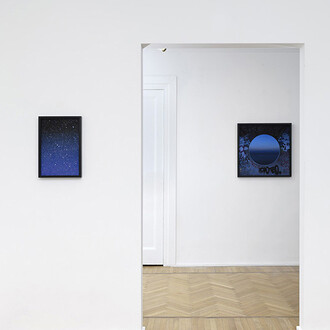
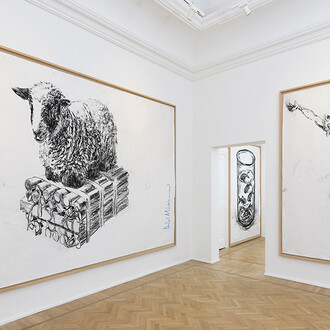
At the core of the exhibition is a new series of drawings and paintings in which carnivorous and poisonous plants, deliberately oversized, grow to match—or threaten—the scale of the decaying buildings of Havana with which they coexist. This reversal of visual hierarchies prompts a symbolic reading in which the organic element ceases to be merely decorative and instead takes on an active, almost aggressive role, set against the space of modern architecture in decline. In this context, the dialogue with Piranesi becomes more explicit: the eighteenth-century artist not only imagined prisons and cities overwhelmed by their own monumentality, but also conceived the garden as a space of power, order, and representation, as demonstrated by his intervention at the Villa Magistrale dei Cavalieri di Malta on the Aventine Hill. Similarly, in Garaicoa’s work, vegetation invades the urban environment, becoming a critical metaphor for the fragility of the modern project and the social conflicts that emerge between utopia and survival.
This line of inquiry is further developed in the installation Contrapeso (Ciudad Plomada), which extends Piranesi’s legacy by proposing the image of a city suspended between balance and threat. Here, the promise of stability and architectural perfection reveals its darker side, evoking the Venetian artist’s visions of impossible cities and carceral spaces as a powerful allegory for the political, social, and existential tensions of contemporary life.