English
 Español
 Français
 Deutsch
 Italiano
 Português
Once upon a time, crime shows were designed to traumatize you. Blood on the walls, body parts in the freezer, a detective chain-smoking their way through PTSD while mumbling about “the darkness within.” By the end of an episode, you needed chamomile tea and maybe a therapist.
But recently, something curious has crept in: light crime. The whodunits and capers still deal with murder, drugs, and dodgy cops, but with a wink, a joke, or at least a cozy sweater. They’re smart enough to keep you guessing, funny enough to keep you entertained, and mercifully low on existential despair.
Currently, the trend is everywhere. The new wave of crime shows proves that sometimes audiences don’t want to dive into the abyss: they just want a clever caper that lets them sleep at night.
What exactly is “light crime”?
Let’s be clear: this isn’t Hallmark fluff where a detective solves a murder while baking cupcakes. Light crime is crime storytelling stripped of relentless misery. It’s sharp, witty, and occasionally dark, but it never forgets that crime is supposed to entertain, not crush your spirit.
The DNA is part cozy mystery (Miss Marple, Midsomer Murders) and part dramedy (Castle, Veronica Mars). But the 2025 versions lean into cultural commentary and character quirks rather than gritty realism. These shows understand that audiences crave stimulation without the emotional hangover. In other words, you want a corpse, but you also want a laugh.
What’s trending in Crime Buffet: quirky, clever, and surprisingly comforting
Death Valley (BBC One)
Set in Wales, this series pairs a retired actor-turned-amateur sleuth with a socially awkward detective sergeant. Yes, there are murders. No, it doesn’t feel like homework. The banter is dry, the tone is playful, and the backdrop is gorgeous enough to make you book a cottage holiday while wondering who poisoned the vicar.
It’s witty, eccentric, and oddly soothing, exactly what you need after doom-scrolling the news.
Good Cop/Bad Cop (The CW/Prime Video)
This one had every reason to fail: yet another buddy-cop procedural. But instead of wallowing in clichés, it embraces them with comedic self-awareness. The “good cop” isn’t saintly, and the “bad cop” isn’t evil: they’re just flawed, funny humans bouncing off each other while solving cases.
The show is slick enough to win prizes at Monte Carlo but breezy enough to watch with a glass of wine after work. Think less True Detective, more “odd couple with guns.”
Pushers (Channel 4)
Now here’s where petty crime gets teeth. Pushers follows a disabled woman who starts dealing drugs, not as gritty realism, but as biting social satire. It’s dark, yes, but told with comedy sharp enough to slice through clichés about who gets to be a criminal mastermind.
It’s proof that light crime isn’t about avoiding issues. It’s about telling them sideways, through humor and irony. Pushers critiques ableism, class, and capitalism while still giving you the thrill of watching someone outsmart the system.
Deli Boys (Hulu)
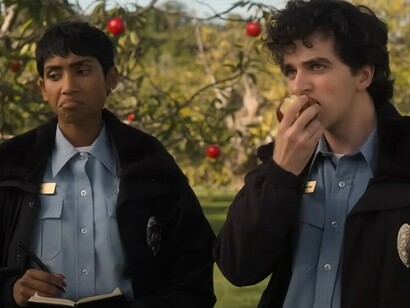
This British-American hybrid is basically a sitcom with a criminal twist: immigrant brothers hustling through gangland and deli counters with equal absurdity. It’s funny, fast-paced, and unapologetically chaotic.
At its heart, Deli Boys is about family, identity, and belonging, but instead of wrapping it in trauma porn, it wraps it in crime capers and comedic banter. Watching it feels like hanging out with cousins who get into too much trouble, but you can’t stop laughing.
Poker Face (Peacock)
Okay, technically, Poker Face is not brand-new (season 1 came several years ago), but Natasha Lyonne’s human lie detector deserves a mention. Poker Face is the poster child for light crime: episodic mysteries, quirky settings, and a snarky heroine who solves crimes not because she’s broken inside, but because she can’t help herself.
It’s the anti-prestige crime drama: no endless serial-killer arcs, no therapy bills, just clever puzzles solved by a woman who swears as well as she sleuths.
Why we crave crime that doesn’t drown us in trauma
The last decade gave us Mindhunter, The Night Stalker, and enough true-crime podcasts to make us all amateur FBI analysts. But constant exposure to real-world horror has consequences. Audiences are burned out.
Cultural fatigue: political chaos, pandemics, climate disasters… Do we really need our entertainment to add more despair?
Psychological comfort: light crime provides stimulation without triggering every trauma nerve. You still get the intellectual satisfaction of solving puzzles, but without lying awake imagining dismembered corpses.
Escapism that feels safe: these shows let you laugh, empathize, and engage without paying the price in nightmares. Light crime is the crime show you can watch with your mom. And in 2025, that’s exactly what many people want. Looking across Death Valley, Good Cop/Bad Cop, Pushers, Deli Boys, and Poker Face, a pattern emerges:
Quirky characters: retired actors, disabled drug dealers, immigrant hustlers: characters you’d never see in a grimdark procedural.
Balanced tone: serious enough to matter, funny enough to enjoy. Violence exists, but it isn’t fetishized.
Cultural relevance: pushers tackles disability and systemic bias. Deli Boys explores immigrant identity. Even Poker Face quietly comments on gender and class.
Bingeable brevity: these aren’t sprawling sagas of endless trauma. They’re sharp, self-contained, and satisfying.
It’s not that audiences don’t want depth; they just don’t want despair disguised as depth.
Is light crime just escapism?
Of course, critics will ask, “Isn’t this just fluffy escapism?” Not really. Light crime doesn’t ignore serious issues: it reframes them. It’s satire, irony, and subversion hidden inside murder plots and drug deals. Pushers critiques systemic ableism more effectively than most prestige dramas, precisely because it makes you laugh while you squirm.
Light crime isn’t a cop-out. It’s a way of exploring darkness without drowning in it.
The rise of light crime proves one thing: audiences don’t need to suffer to engage with crime stories. They want wit, empathy, and clever puzzles, not just another tortured detective muttering about “demons.”
Shows like Death Valley and Poker Face prove you can solve a murder without trauma porn. Pushers and Deli Boys prove comedy and crime make powerful bedfellows. Good Cop/Bad Cop proves even clichés can be fun if you lean into them.
In short, light crime is comfort TV with a criminal twist. It lets us enjoy the intrigue of crime without the exhaustion of despair. And that’s exactly the crime we need right now.