English
 Español
 Français
 Deutsch
 Italiano
 Português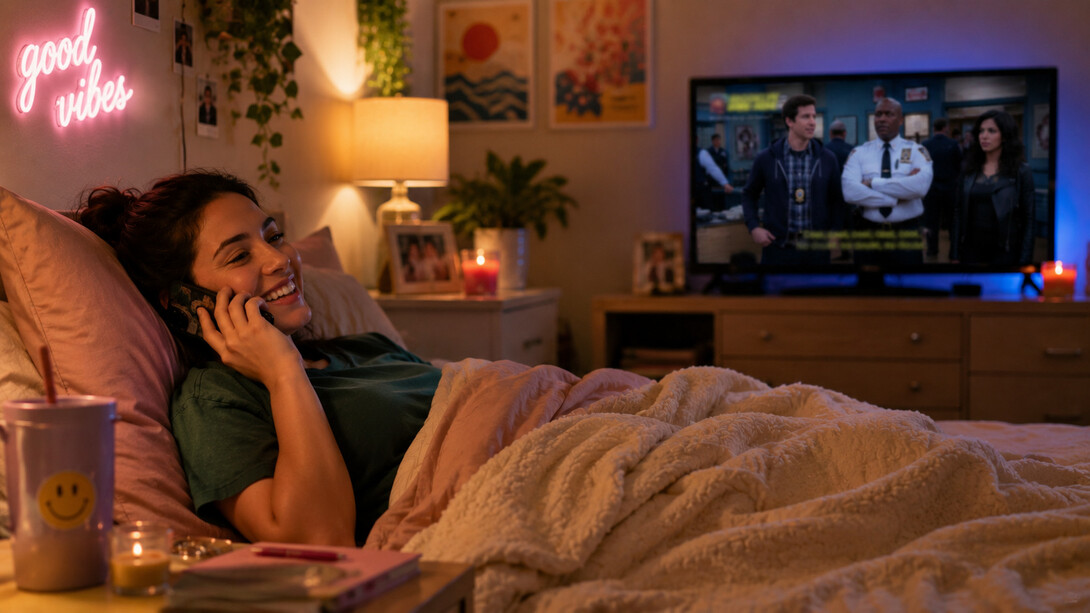
If you stepped into a typical apartment on a night during the week, you would most probably hear the witty banter from Gilmore Girls or the usual, upbeat theme song of The Office. However, if you take a closer look, it's likely that you're going to discover that nobody is really watching the television screen. The viewer is either folding laundry, scrolling through their phone, or in the kitchen cooking dinner.
This phenomenon is known as "ambient TV". It is a strange behaviour in modern times where the main event is not the television or the series playing on it but rather a soothing background soundtrack to our lives. In this current era, there is more high-quality entertainment on television than there ever has been before. So, why are lots of people deciding on re-watching the same old shows that we already know by heart?
The paradox of peak TV: more content, less attention
We all presently live in an era known as the "Golden Age of Television". Thousands of critically acclaimed series are being offered by streaming services. Each of those series grabs our attention with cinematic grandeur and complex plots. However, a strange fatigue tends to set in when people are faced with endless choices.
Perhaps viewers feel as if they are actively working when they have to choose a new show. Such choices of what to watch and when come with their own cognitive loads because you are forced to invest in an unknown story and learn new characters.
After spending a long day battling with decision-making, there doesn't seem to be any appeal in something new because it has easily lost out to an embrace for a show that is reliable, warm, and familiar, a show that we've watched several times over before. Such viewers have no interest in finding out what is going to happen next. They are more concerned with the enjoyment they can derive from what they already know is going to happen.
Meet the 'comfort shows': the anatomy of a background binge
It is not all shows that can be recognised for this special role. There is a specific recipe that exists in every perfect "ambient" show. Here it is:
The stakes are low: There is no peril in the world. The biggest dilemma might be a misplaced memo or a burnt pot of soup.
The rhythm is predictable: There are familiar beats in the stories, and the dialogue has a cadence that is reassuring and musical.
The cast is an ensemble: A group of characters who are well loved and feel like genuine, old friends.
No commitment is needed: You can miss five minutes (or five episodes) while you attend a project at work and later on slip back in without being confused.
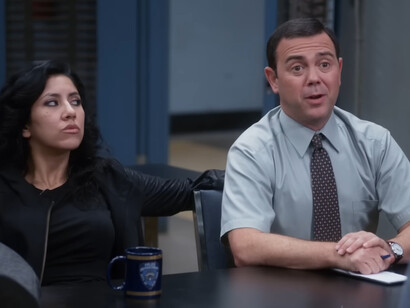
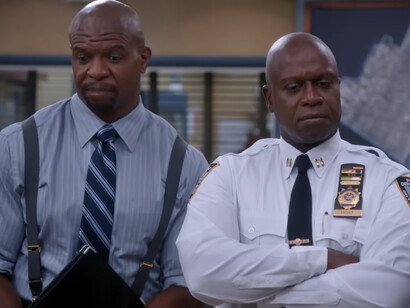
Prime examples of these shows are Brooklyn Nine-Nine, The Great British Baking Show, Friends, and Parks and Recreation. They are the TV equivalent of a sweater that has been well-worn.
It's not laziness; it's a regulator: the neuroscience of comfort viewing
Anyone would miss the point if they called this habit a simple lack of attention. Psychology and neuroscience have suggested that it's a sophisticated self-regulation strategy.
When we view a show that is familiar, our brains know what is going to happen. Such predictability:
Lowers cortisol, the hormone associated with stress, because there are no surprises in the narrative.
Creates a cognitive safe space, which releases mental energy for other activities while providing a subtle buffer from overwhelming thoughts or silence.
Triggers nostalgia, which has been revealed to be capable of dealing with anxiety and loneliness.
The world today is full of bad news headlines and constant notifications. A fictional world that is predictable offers a valuable and rare sense of safety and control.
The streaming algorithm's unintended masterpiece
This behaviour is not merely a trend that is psychological; it is a structural one which is actively enabled by the technology available in these modern times. Streaming platforms have turned out to be the ultimate enablers of ambient viewing. These platforms encourage this current trend through:
The auto play feature: The seamless transition to the next episode gets rid of any need for making decisions. This feature creates a loop that is effortless and endless.
Vast permanent libraries: Unlike the scheduled programming of the past, there is always constant availability of our favourite comfort shows.
Personalised profiles: The streaming services literally learn what our comfort preferences are and are ever ready to provide them to us.
The goal of the creators of this technology was for viewers to binge-watch their favourite shows. However, the technology has now perfected background-watching.
From active audience to passive presence: what we lose and gain
This shift in the habits of viewers leads to interesting questions being asked about our relationship with art. One of such questions is whether people are losing their capacity for deep, focused engagement with complex stories.
There is a valid concern that continuous partial attention could lead to our patience for demanding novels or challenging films deteriorating. However, perhaps it is going to be more beneficial to regard ambient TV not as a replacement for insightful engagement, but rather as a different tool for a different need. Many of us still love going to the cinemas. And there are many of us who also still enjoy watching prestige dramas at home. The truth is that many of us just seem to derive joy in using Frasier in the form of auditory wallpaper while we do our jobs in order to pay our bills.
This new form of media-aided mental management can be regarded as a valuable gain, or an added advantage. In fact, it is a way many people curate their emotional environment.
The future of 'Furniture TV': will creators start crafting background shows?
It is now becoming obvious that no one can deny this consumption pattern is now becoming widespread and well-adopted by many viewers. The question now is whether the entertainment industry is going to formally acknowledge it. No one can say for sure. However, it is very possible that we may already be on the cusp of a new genre: content deliberately designed not to be watched but only to be heard.
We might soon start seeing the following:
Shows with structures that are simpler and more repetitive.
"Soundscapes that are Visual", which blend calming imagery with gentle narratives.
"Comfort channels" that are algorithmically generated, which stitch together the most soothing scenes from different shows.
For creators, the questions they would be forced to answer would be, 'Are you going to embrace your role as a component of viewers’ comforting domestic ecosystem?' Or are you going to fight for the full attention of the viewers?
Conclusion: the new sound of home
The rise of ambient TV is a cultural adaptation, not just a quirky habit. It is a reflection of our deep-rooted need for predictability, comfort, and a low-grade sense of connection in a world that is fragmented and usually stressful.
These shows are the auditory furniture of the life that we live. These shows are no longer mere stories. They fill the silence, soothe our nerves, and make our personal spaces feel more like home. Do not think of it as not paying attention when next you put on an old favourite for the hundredth time. Rather, think of it as using media in a way that is new and deeply personal: as a well-being tool, one predictable and comforting moment at a time.